
What Is an AI Agent
A practical definition of AI agents, how they work, and when they are worth using in real workflows.
This guide explains what an AI agent actually is, how it differs from simpler chat or automation setups, and when teams should care about it. It is written for readers who want a clear operational definition rather than broad marketing claims.
Related Tools


Details
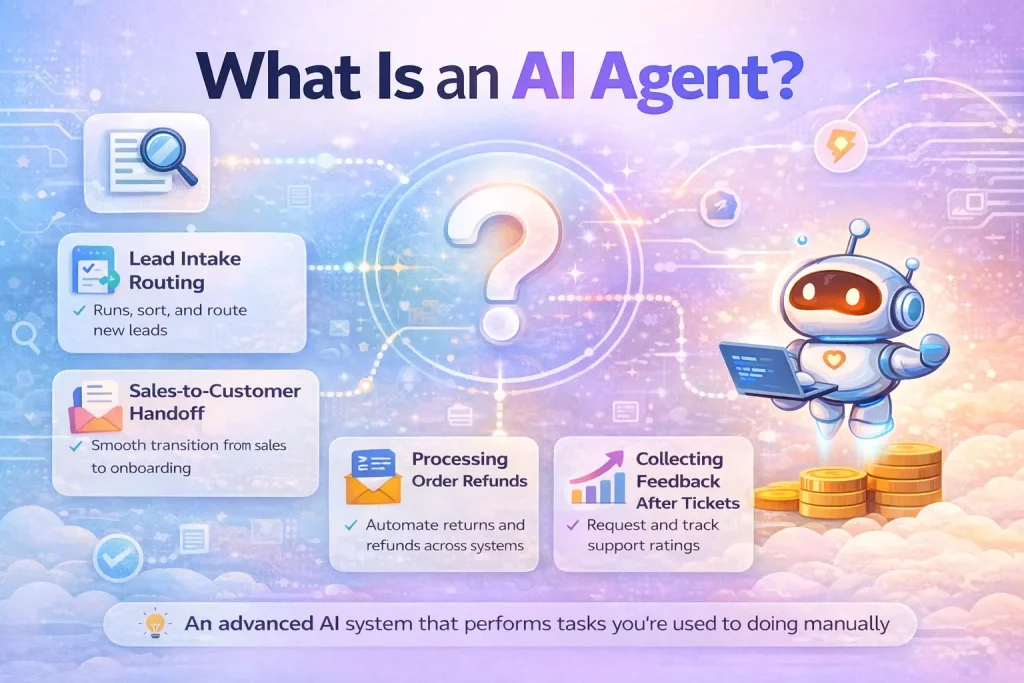
An AI agent is a software system that uses a language model to pursue a goal, decide what to do next, and take action through tools such as APIs, databases, web browsers, or internal business systems. In practice, an agent is more than a chatbot. It does not just answer a prompt once. It can plan, call tools, inspect results, and continue working until it reaches an output or a stopping condition.
That distinction matters for workflow automation. A normal prompt-response app is useful when the task is short and mostly text-based. An agent becomes useful when the task is multi-step, tool-heavy, or ambiguous enough that fixed rules break down. That is why agent discussions now sit next to workflow tools, MCP, approval flows, and orchestration platforms rather than only next to chat interfaces.
What an AI agent does in practice
In an operational workflow, an agent usually starts with a goal such as qualifying an inbound lead, researching a company, triaging a support ticket, or preparing a draft response for human review. It receives instructions, reads available context, and decides whether it needs to call a tool. That tool might search a CRM, fetch a spreadsheet row, retrieve knowledge-base content, or trigger another system.
The important part is the loop. The model does not stop after one answer. It can observe the tool result, update its understanding of the task, and choose the next action. Modern agent frameworks and APIs treat this loop as a core primitive because the usefulness of an agent often depends on its ability to take several steps before returning a final output.
How AI agents work
Most agent systems are built from four basic elements:
- Model: the reasoning engine that interprets instructions and chooses the next action.
- Tools: functions, APIs, retrieval systems, or UI controls the model can use to do real work.
- State or memory: the working context that carries user intent, prior steps, tool results, and constraints.
- Orchestration: the loop and control logic that determines when the agent continues, hands off, asks for approval, or stops.
If you strip away the buzzwords, an AI agent is simply a model operating inside that loop with access to actions beyond plain text generation.
Who AI agents are for
AI agents are useful for teams that already understand a workflow but cannot express every edge case as fixed rules. Common examples include sales operations that need lead enrichment and routing, support teams that must gather context before drafting a reply, research workflows that require multiple searches and summaries, and internal operations that combine spreadsheets, forms, tickets, and approvals.
They are less useful when the task is fully deterministic. If a Zapier or n8n workflow with clear branching logic already solves the problem, adding an agent may only increase cost, latency, and debugging difficulty.
Common use cases
- Research workflows that gather information from multiple sources before producing a brief
- Support agents that retrieve account context, classify urgency, and draft a response
- Sales assistants that inspect form submissions, enrich company data, and create CRM records
- Internal copilots that search files, policies, and knowledge bases before answering a question
- Approval-oriented workflows where the agent prepares work but a human signs off on final actions
How AI agents differ from chatbots and automation rules
A chatbot mainly responds in conversation. An automation rule mainly executes predefined logic. An agent sits between those extremes. It can reason over ambiguity like a conversational system, but it can also act across tools like an automation system. That is why agent design usually overlaps with workflow design, tool design, and governance.
The most common misunderstanding is to treat every tool-using LLM as an agent. In practice, there is a spectrum. Some implementations are tightly scripted workflows with a small amount of model reasoning. Others are more autonomous systems that choose tools repeatedly in a loop. Understanding that spectrum helps you choose the right level of complexity.
Limitations and common misconceptions
An AI agent is not automatically reliable just because it can call tools. Poor tool definitions, vague instructions, overlapping capabilities, and missing safeguards can cause the agent to select the wrong action or over-step its scope. Agents also introduce cost and latency because each run may involve multiple tool calls and model turns.
Another common mistake is using an agent where a template-based workflow is enough. If your process is stable and predictable, a prebuilt template in an automation platform may get you to production faster. Agents are strongest where judgment, context gathering, or flexible sequencing actually matter.
FAQ
Is an AI agent the same as a chatbot?
No. A chatbot can be conversational without taking actions. An agent is usually defined by its ability to use tools and work through a task in multiple steps.
Does an AI agent need memory?
It needs state of some kind, even if that state is only the current task, prior messages, and recent tool outputs. Longer-term memory is optional and depends on the use case.
Do I always need multiple agents?
No. Many production systems should start with one agent plus good tools. Multi-agent systems add coordination overhead and should be justified by real complexity.
When does a template help?
A template helps when the workflow shape is already known, such as lead routing, CRM sync, or content approval. The template gives you triggers and basic steps faster, while the agent layer can be added only where flexible judgment is needed.
Conclusion
An AI agent is best understood as a model-driven system that can reason, use tools, and continue working through a task until it reaches an outcome. It matters when plain chat is too passive and fixed automation is too brittle. If you care about workflow automation, the useful question is not whether agents are the future. It is whether a specific workflow actually benefits from model-driven decisions inside a controlled loop.
Related Guides
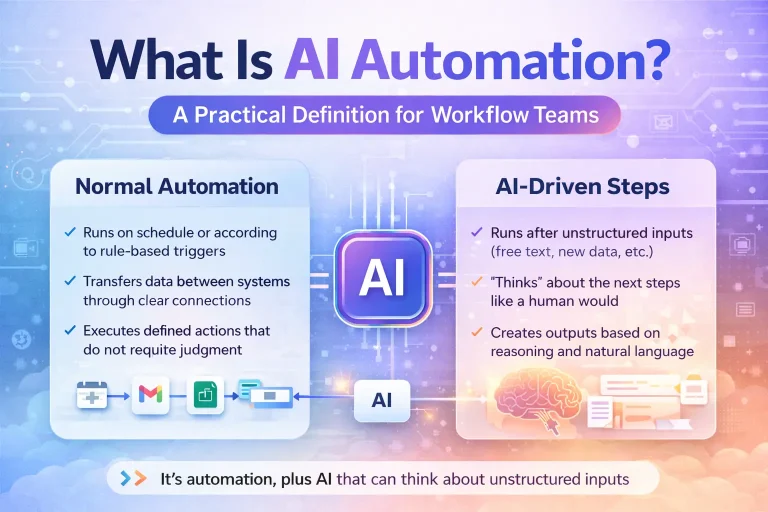
What Is AI Automation? A Practical Definition for Workflow Teams
This guide explains what AI automation actually means for workflow teams, not just in theory but in day-to-day operations. It covers how AI automation...
Read Guide
How to Build Agentic Workflows with Responses API
This tutorial explains how to build agentic workflows with the Responses API, including tool design, state decisions, approvals, and validation. It is aimed at...
Read Guide
Best AI Agent Frameworks for Self-Hosting
This guide compares the best AI agent frameworks for self-hosting, from low-level orchestration runtimes to more opinionated multi-agent frameworks. It focuses on who each...
Read Guide
What Is OpenManus?
This guide explains what OpenManus is, how it fits into the agent tooling landscape, and when it is worth using instead of a hosted...
Read Guide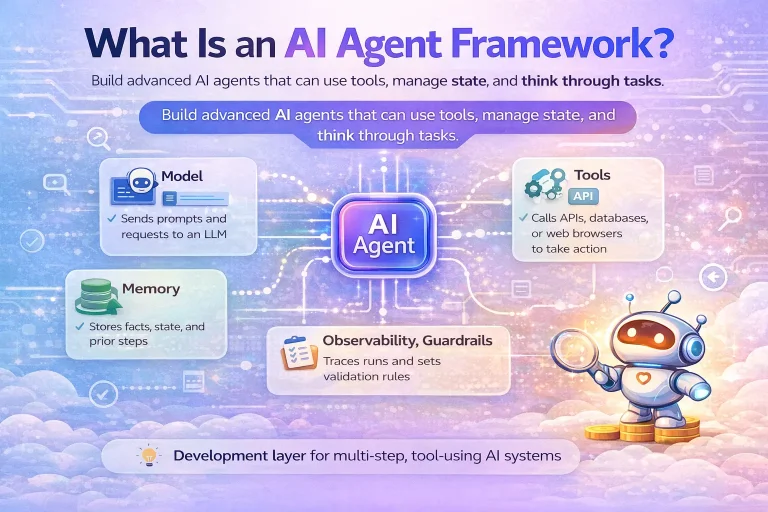
What Is an AI Agent Framework
This guide explains what an AI agent framework is, what it actually does in practice, and when a team needs one instead of a...
Read Guide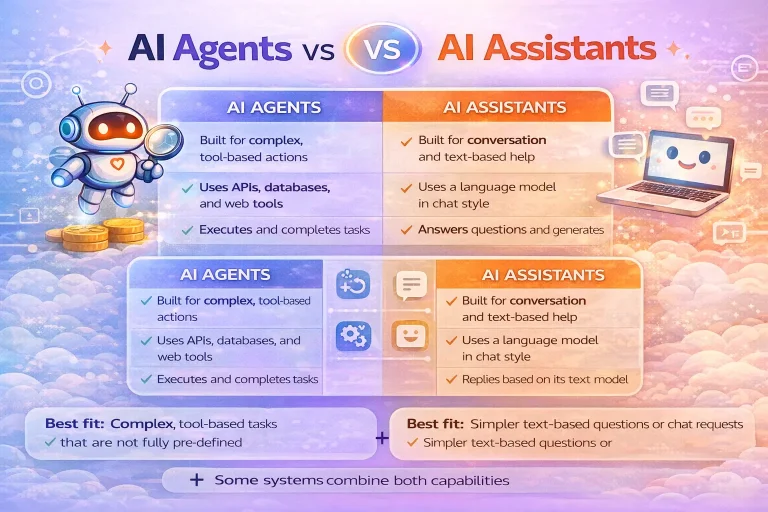
AI Agents vs Assistants
This guide compares AI agents and assistants in plain terms so you can decide which model fits your product or workflow. It focuses on...
Read Guide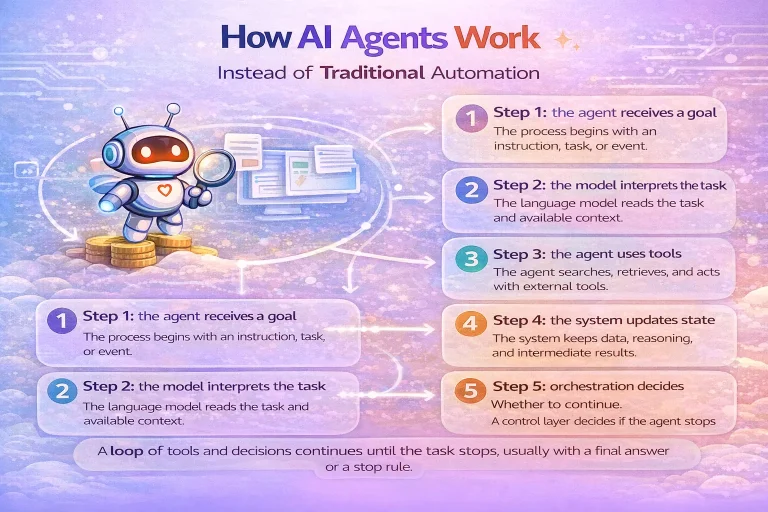
How AI Agents Work
This guide breaks down how AI agents work at an operational level so you can understand the model, tool, state, and orchestration loop behind...
Read Guide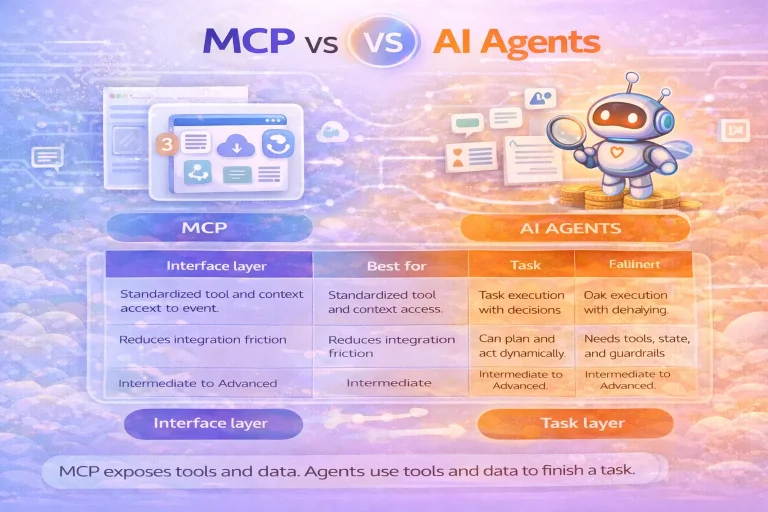
MCP vs AI Agents
This guide explains the difference between MCP and AI agents, where they overlap, and when you need one, the other, or both together.
Read Guide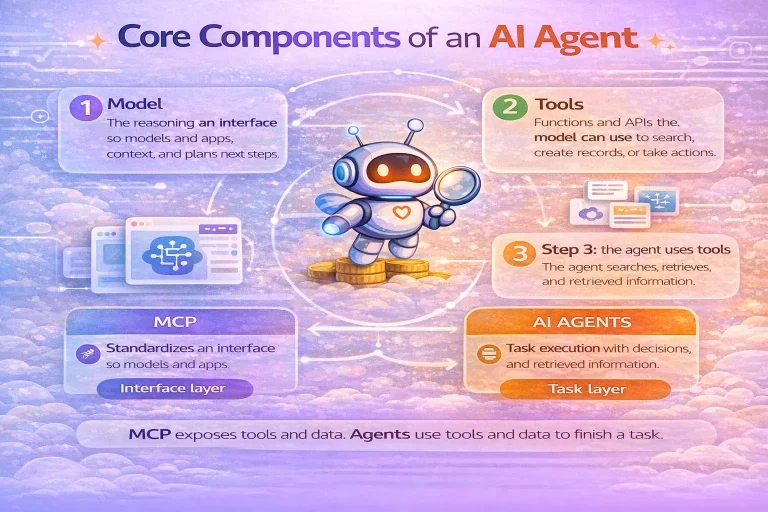
Core Components of an AI Agent
This guide explains the core components of an AI agent and why each one matters in real implementations. It focuses on architecture choices that...
Read Guide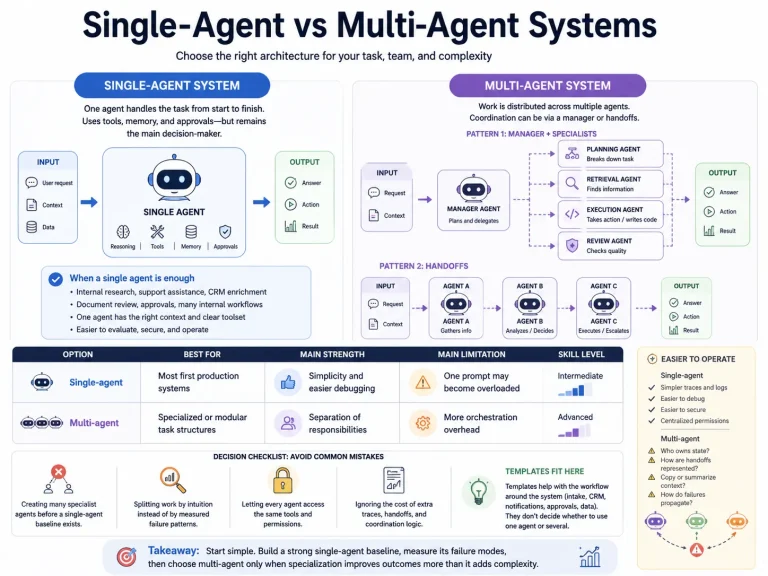
Single-Agent vs Multi-Agent Systems
This guide compares single-agent and multi-agent designs for practical workflow systems. It focuses on when extra orchestration improves outcomes and when it only adds...
Read Guide