
MCP vs AI Agents
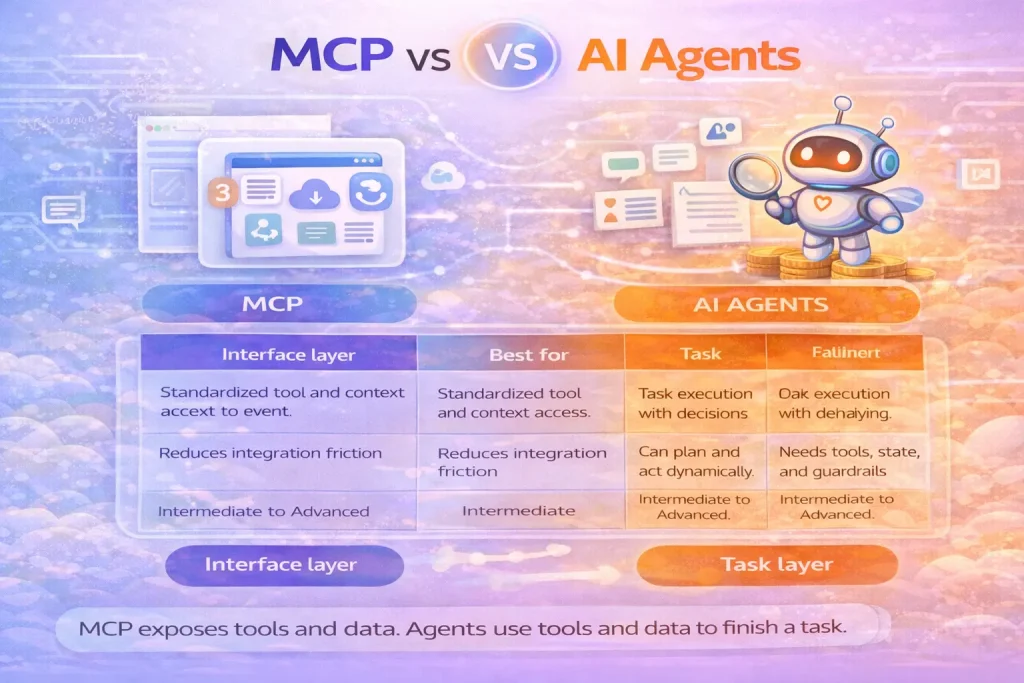
MCP is a protocol for exposing tools and context to models, while AI agents are systems that decide how to use tools, memory, and execution flow.
This guide explains the difference between MCP and AI agents, where they overlap, and when you need one, the other, or both together.
Related Tools

Details
MCP and AI agents solve different problems. MCP, short for Model Context Protocol, is a standard way to expose tools, data, and context to models and AI applications. An AI agent is the system that decides what to do, which tool to use, and how to continue after seeing results.
The shortest way to think about it is this: MCP is an interface layer, not an autonomous reasoning layer. It helps tools become easier to discover and call. Agents use tools, memory, and execution logic to complete tasks. An agent can use MCP, but MCP is not itself an agent.
Quick comparison table
| Option | Best for | Main strength | Main limitation | Skill level |
|---|---|---|---|---|
| MCP | Standardized tool and context access | Reduces integration friction | Does not manage agent behavior by itself | Intermediate |
| AI agent | Task execution with decisions and tools | Can plan and act dynamically | Needs tools, state, and guardrails around it | Intermediate to Advanced |
What MCP is
MCP is a protocol that helps models and apps connect to external capabilities through a standard structure. Instead of writing a custom integration every time, a system can expose tools and resources in a more consistent way. That makes it easier for agent runtimes, desktop AI apps, and developer tools to plug into the same surface.
What an AI agent is
An AI agent is a runtime pattern where a model can inspect a task, call tools, update state, and decide what to do next. Some agents are simple tool-using assistants. Others include memory, tracing, approvals, handoffs, or multi-agent delegation.
Main difference
MCP standardizes access. Agents standardize behavior. If you removed the decision layer from an agent and left only the tool interface, you would still have something like MCP. If you removed the tool interface but kept the decision loop, you would still have an agent pattern, though it would be less useful.
When MCP is enough
MCP may be enough when your main problem is exposing internal tools or context to a model-driven application in a clean, reusable way. For example, a team may want a coding assistant, desktop agent, or internal tool to access docs, tickets, or APIs through a common interface. In that case, the protocol itself is the main win.
When you need an agent
You need an agent when the system must evaluate a task, choose between tools, maintain thread or task state, and decide how to proceed after each step. Support copilots, research agents, and task automation assistants usually need more than just tool access.
How they work together
MCP often becomes part of an agent stack. The agent runtime handles planning, memory, and execution. MCP exposes tools and context in a structured way so the runtime can access them more easily. This can reduce custom integration work, especially in environments with many internal systems.
Tradeoffs
MCP does not remove the need for guardrails, policy, retries, or application logic. It also does not guarantee that the agent will choose the right tool. On the other side, an agent without a clean integration layer can become brittle and expensive to maintain because every tool connection is bespoke.
FAQ
Is MCP an alternative to agents?
Usually no. It is more accurate to treat MCP as complementary infrastructure.
Can a non-agent app use MCP?
Yes. MCP can be useful anywhere a model-driven application needs structured access to tools or resources.
Do workflow builders need MCP?
Not always. Many workflow tools already connect to apps directly. MCP becomes more relevant when tool access needs to be shared across multiple AI surfaces or agent runtimes.
Conclusion
MCP and AI agents are not competing concepts at the same layer. MCP makes tools and context easier to expose. Agents make decisions and run tasks. If your problem is integration standardization, start with MCP. If your problem is autonomous task execution, start with an agent runtime. In many real systems, you will use both together.
Related Guides
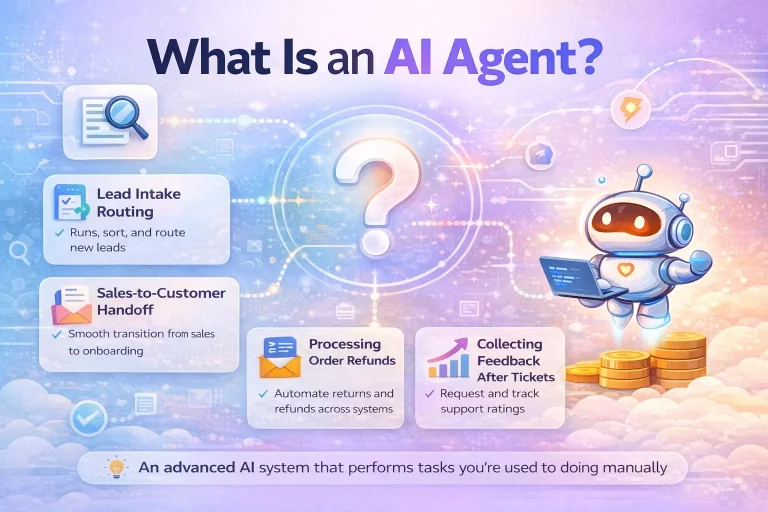
What Is an AI Agent
This guide explains what an AI agent actually is, how it differs from simpler chat or automation setups, and when teams should care about...
Read Guide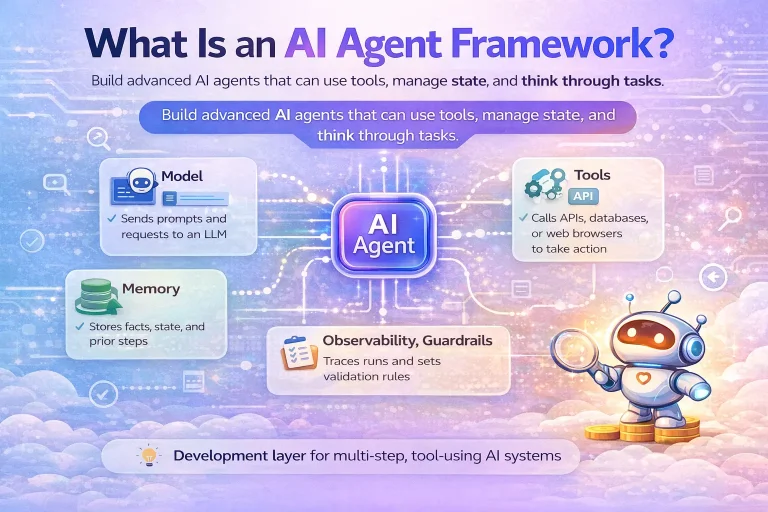
What Is an AI Agent Framework
This guide explains what an AI agent framework is, what it actually does in practice, and when a team needs one instead of a...
Read Guide
How to Build Agentic Workflows with Responses API
This tutorial explains how to build agentic workflows with the Responses API, including tool design, state decisions, approvals, and validation. It is aimed at...
Read Guide
What Is OpenManus?
This guide explains what OpenManus is, how it fits into the agent tooling landscape, and when it is worth using instead of a hosted...
Read Guide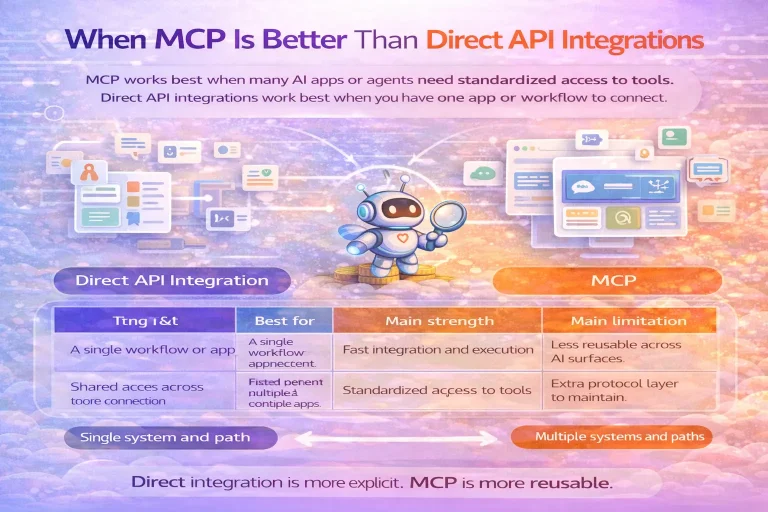
When MCP Is Better Than Direct API Integrations
This guide compares MCP with direct API integrations and explains when the protocol layer creates real leverage and when it only adds extra complexity.
Read Guide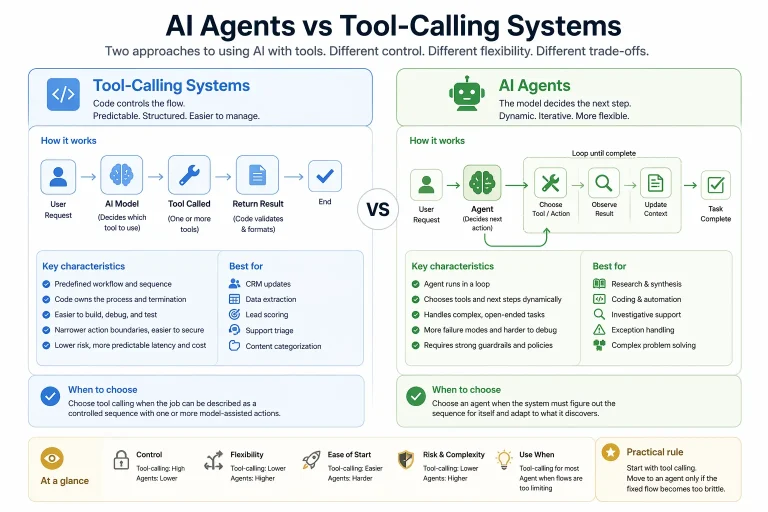
AI Agents vs Tool-Calling Systems
This comparison explains the operational difference between AI agents and tool-calling systems. It is aimed at readers deciding whether they need autonomous orchestration or...
Read Guide