
When MCP Is Better Than Direct API Integrations
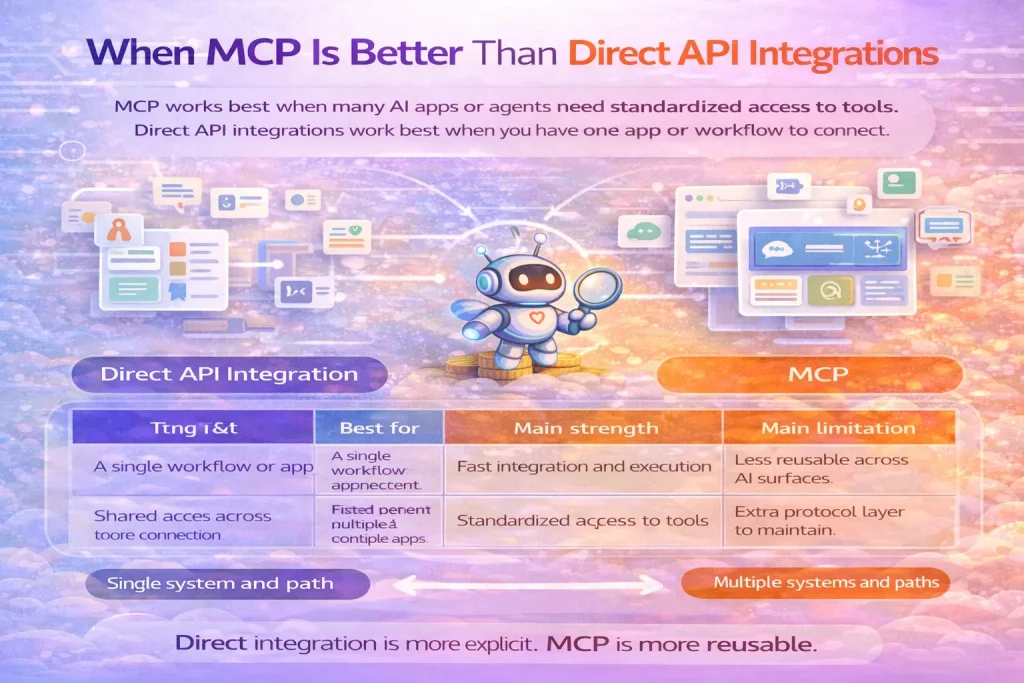
MCP is better than direct API integrations when the goal is reusable tool access across multiple AI surfaces, not one-off custom wiring for a single workflow.
This guide compares MCP with direct API integrations and explains when the protocol layer creates real leverage and when it only adds extra complexity.
Related Tools


Details
MCP is better than direct API integrations when you need the same tools or context exposed to more than one AI application, agent, or client surface. If you only need one system to call one API in a controlled workflow, direct integration is often simpler. If you need a reusable, standardized access layer for many AI consumers, MCP starts to make more sense.
The practical difference is scope. Direct integrations optimize for one implementation path. MCP optimizes for shared interoperability. That does not make MCP automatically better. It just means the payoff is larger when reuse, consistency, and discoverability matter.
Quick comparison table
| Approach | Best for | Main strength | Main limitation | Skill level |
|---|---|---|---|---|
| Direct API integration | Single workflow or app connection | Fast and explicit | Less reusable across AI surfaces | Intermediate |
| MCP | Shared tool access across agent systems | Standardized exposure of tools and context | Extra protocol layer to maintain | Intermediate to Advanced |
When direct API integrations are the better choice
Direct integrations are usually better when the workflow is narrow and deterministic. For example, if a workflow needs to create a CRM record, read a billing status, and send a Slack alert, a direct integration inside n8n, Make, or custom app code is often the cleanest solution. You know which APIs will be used and when.
They are also easier to secure and reason about when the system has only one consumer and a small number of actions.
When MCP becomes better
MCP becomes more valuable when many agent runtimes, desktop assistants, or model-driven apps need access to the same tools. Instead of teaching each app how to talk to every internal system, MCP provides a standard layer for exposing those capabilities. This can reduce duplicated integration work and make tool discovery more consistent.
A good example is an internal platform where engineering, support, and analyst agents all need controlled access to tickets, docs, customer records, and internal actions. A protocol layer can be more maintainable than many point-to-point integrations.
Main decision factors
Reuse
If a capability will be used by multiple AI clients, MCP has a stronger case.
Speed
If you need one workflow working this week, direct integration is often faster.
Governance
If you want a more uniform way to expose tools and policies to many AI surfaces, MCP can improve consistency.
Operational burden
MCP introduces another layer to design, host, and secure. If that extra layer serves only one workflow, it may not be worth it.
Common mistakes
One mistake is using MCP as an answer to every integration problem. If you are only connecting a single workflow to a stable API, a direct call is usually enough. Another mistake is overusing direct integrations in environments where many AI tools all need the same access and every team starts rebuilding the same adapter logic.
Where templates still help
Templates can speed up the workflow or orchestration layer around MCP, such as approvals, alerts, or downstream record updates. They do not remove the need to design the protocol surface or think about permissions and tool exposure.
FAQ
Is MCP more secure than direct integrations?
Not automatically. Security depends on how the tool surface, auth, and permissions are implemented.
Should small teams start with MCP?
Usually only if they already know multiple AI clients will share the same tools. Otherwise, direct integrations are often the simpler first step.
Can a workflow builder call direct APIs and MCP-exposed tools together?
Yes. Many real architectures mix both approaches depending on the task.
Conclusion
Choose direct API integrations when you need a narrow, explicit, and fast implementation. Choose MCP when you need the same tool surface reused across many AI applications and agent systems. The real decision is not protocol versus API. It is one-off speed versus shared infrastructure.
Related Guides
MCP vs AI Agents
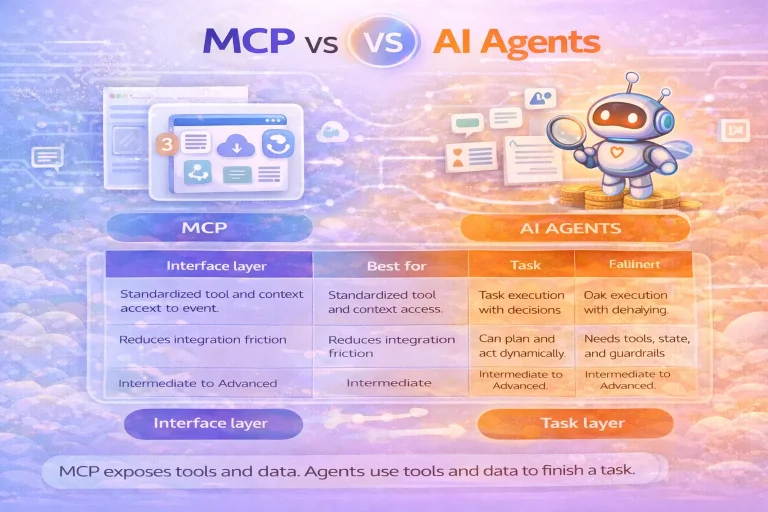
This guide explains the difference between MCP and AI agents, where they overlap, and when you need one, the other, or both together.
Read Guide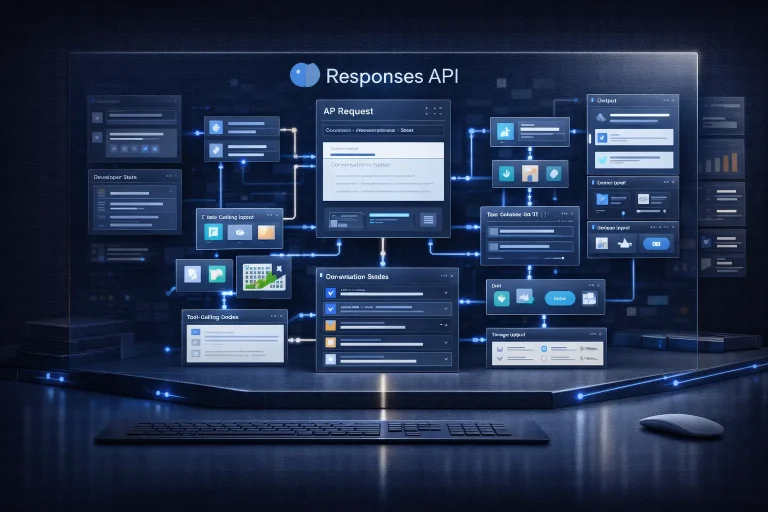
How to Build Agentic Workflows with Responses API
This tutorial explains how to build agentic workflows with the Responses API, including tool design, state decisions, approvals, and validation. It is aimed at...
Read Guide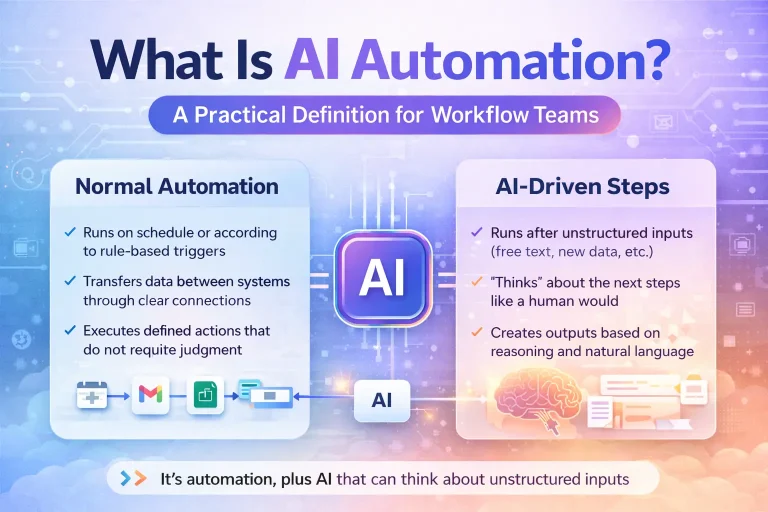
What Is AI Automation? A Practical Definition for Workflow Teams
This guide explains what AI automation actually means for workflow teams, not just in theory but in day-to-day operations. It covers how AI automation...
Read Guide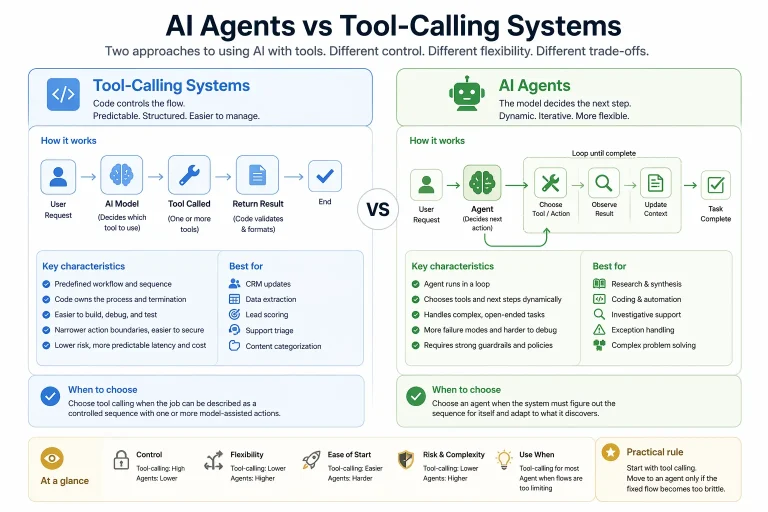
AI Agents vs Tool-Calling Systems
This comparison explains the operational difference between AI agents and tool-calling systems. It is aimed at readers deciding whether they need autonomous orchestration or...
Read Guide