What Is MCP for AI Workflows?
A plain-language explanation of what MCP means for AI workflows and why workflow builders should care about it.
This guide explains MCP for AI workflows in practical terms, including how it changes tool access, where it fits, and what it does not solve on its own.
Related Tools
Details
MCP for AI workflows means using the Model Context Protocol as a standard way for AI systems to discover and call tools, data sources, or workflow actions. In plain terms, MCP gives an assistant or agent a more structured way to interact with external capabilities than hand-built one-off integrations.
For workflow builders, the important idea is not the protocol itself. It is what the protocol makes easier: exposing useful actions in a consistent way, connecting assistants to real business workflows, and reducing the need to wire every tool separately for every client.
What MCP changes in practice
Without MCP, teams often connect an assistant to external actions through custom tool definitions, direct API code, or product-specific integrations. That can work, but it tends to fragment quickly.
MCP introduces a more standard interface. An AI client can connect to an MCP server, discover available tools or actions, understand the expected inputs, and call them in a more consistent way.
How MCP relates to workflows
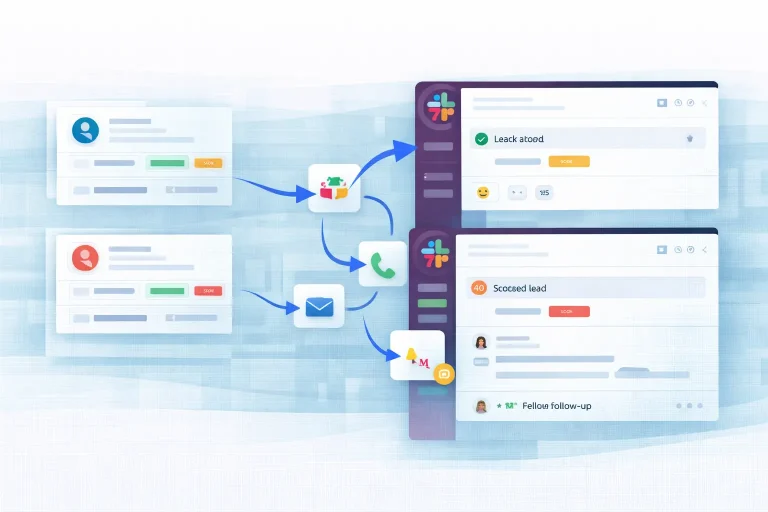
A workflow is a multi-step process that takes an input, performs actions, and produces an output. MCP does not replace workflow logic. It provides a standard way for an AI system to access workflow capabilities.
That is why workflow tools care about MCP. If a platform can expose workflows as MCP-callable tools, the AI client does not need to know every internal step. It only needs the right tool contract and the right input.
Who should care about MCP
- Teams building AI assistants that need to trigger real tools or workflows
- Workflow builders who want assistants to access business actions safely
- Teams trying to avoid bespoke tool integrations for each client or interface
What MCP is not
- It is not a workflow platform by itself.
- It is not a replacement for APIs, databases, or internal systems.
- It is not a guarantee of good agent behavior. The workflow and tool design still matter.
Common workflow use cases
- An assistant triggers a research workflow and returns a structured summary
- A sales copilot calls a lead enrichment flow
- An internal ops assistant launches a reporting or approval workflow
- A support assistant uses a workflow tool to retrieve or update records
How MCP differs from direct API integration
| Approach | Best for | Main tradeoff |
|---|---|---|
| Direct API integration | Tightly controlled custom development | More custom code and repeated tool wiring |
| MCP-based tool access | Reusable tool exposure across clients | Still requires thoughtful tool and workflow design |
Limitations and misconceptions
MCP makes tool access cleaner. It does not remove the need for permissions, validation, workflow descriptions, or output discipline. A messy workflow exposed through MCP is still a messy workflow.
It is also easy to overstate how much autonomy MCP creates. In most practical systems, the real value comes from exposing well-bounded actions rather than creating unlimited freedom.
When templates help
Templates help when you want repeatable workflow patterns behind MCP-enabled tools. They are most useful for research, reporting, and business actions with stable inputs and outputs.
FAQ
Is MCP only for developers?
The protocol side is developer-facing, but the business value matters to workflow teams because it affects how assistants access tools.
Do I need MCP for every AI workflow?
No. Many workflows work fine without it. MCP matters when external AI clients need a consistent way to discover and call actions.
Is MCP the same as an API?
No. It sits at a different level. APIs remain the underlying mechanism in many systems, while MCP standardizes how tools are exposed to AI clients.
Conclusion
MCP for AI workflows is best understood as a standard bridge between assistants and actions. It matters when you want AI systems to discover and trigger useful workflow capabilities without rebuilding tool integrations each time.