
Best AI Agent Use Cases for Operations Teams
The best AI agent use cases for operations teams are the ones that involve repeated triage, structured decisions, and tool use across multiple internal systems.
This guide covers the most practical AI agent use cases for operations teams, how to evaluate them, and where workflow builders still beat full agent setups.
Related Tools



Details
The best AI agent use cases for operations teams are not the flashiest ones. They are the tasks where someone repeatedly reads context, decides what to do next, calls a few tools, and hands off the result. That includes intake triage, internal routing, exception handling, research-heavy operations work, and approval flows.
Operations teams should not start with “fully autonomous employees.” They should start with bounded work: tasks where an agent can inspect records, gather context, prepare a recommendation, and either act within limits or wait for approval.
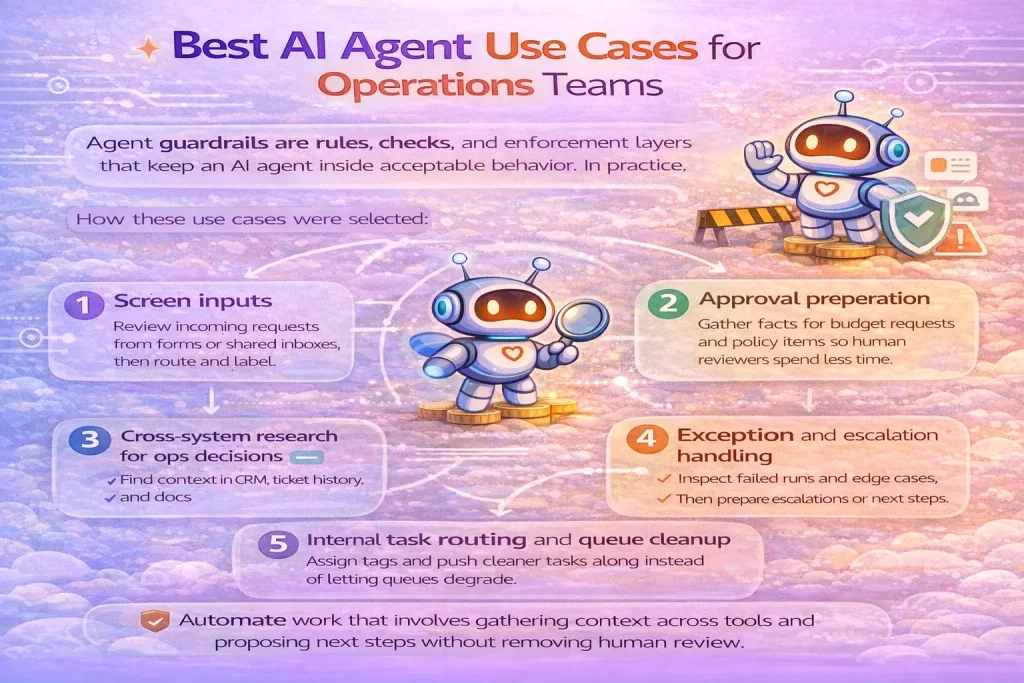
How these use cases were selected
The strongest ops use cases share a few traits: repeated inputs, clear downstream actions, access to structured systems, and enough ambiguity that a rigid workflow alone becomes clumsy. A good ops agent use case usually combines reasoning with tool use instead of relying on reasoning alone.
Summary table
| Use case | Best for | Main strength | Main limitation |
|---|---|---|---|
| Intake triage | Ops queues and internal requests | Reduces manual sorting | Needs clear routing rules |
| Approval preparation | Finance and policy-heavy workflows | Saves reviewer time | Should not auto-approve high-risk items |
| Cross-system research | RevOps, support ops, PM ops | Pulls context from many tools | Can surface stale or conflicting records |
| Exception handling | Failed runs and edge cases | Adds context before escalation | Needs strong guardrails |
| Internal task routing | Service desks and shared inboxes | Improves queue hygiene | Wrong classifications can create rework |
The best use cases
1. Internal intake triage
Requests come in through forms, email, Slack, or tickets. The agent reads the request, checks account or project context, identifies urgency, labels the request, and routes it to the right queue. This works well when the issue categories are broad but the downstream systems are structured.
2. Approval preparation
Instead of approving requests automatically, the agent gathers the relevant facts first. It can read the purchase request, budget record, policy notes, and prior approvals, then produce a draft recommendation. The human still signs off on the final step.
3. Cross-system research for ops decisions
Ops teams often need to inspect a CRM, ticket history, spreadsheets, and docs before taking action. An agent can collect and summarize that context faster than manual tab switching.
4. Exception and escalation handling
When a workflow fails, an agent can inspect logs, account state, or recent record changes, then prepare a cleaner escalation or suggest the next action.
5. Internal task routing and queue cleanup
Many shared queues degrade because no one normalizes the inputs. An agent can assign tags, detect duplicates, merge context, and push cleaner tasks into the real queue.
Which use cases are weaker?
Pure record sync is usually a weak agent use case. If the job is “copy field A to field B and notify a channel,” a workflow tool is simpler and more reliable. High-risk financial or compliance decisions are also weak starting points unless the agent only prepares recommendations.
How to choose a first ops use case
- Start where the work is repeated but not fully deterministic
- Prefer tasks with clear tool access and clear outputs
- Keep approval boundaries explicit
- Avoid high-cost mistakes in the first rollout
FAQ
Should ops teams start with autonomous execution?
No. It is usually better to start with recommendation and preparation flows, then automate selected actions later.
Do operations teams need an agent framework?
Sometimes, but not always. Many teams can start with workflow tools that include AI agent capabilities or tool-calling steps.
What is the easiest first use case?
Intake triage is often the easiest because the boundaries are clear and the human review path is obvious.
Conclusion
The best AI agent use cases for operations teams are the ones that reduce repeated judgment work without removing accountability. Start with intake, routing, approval preparation, and cross-system research. Let the agent gather context and propose action before you trust it with full execution.
Related Guides
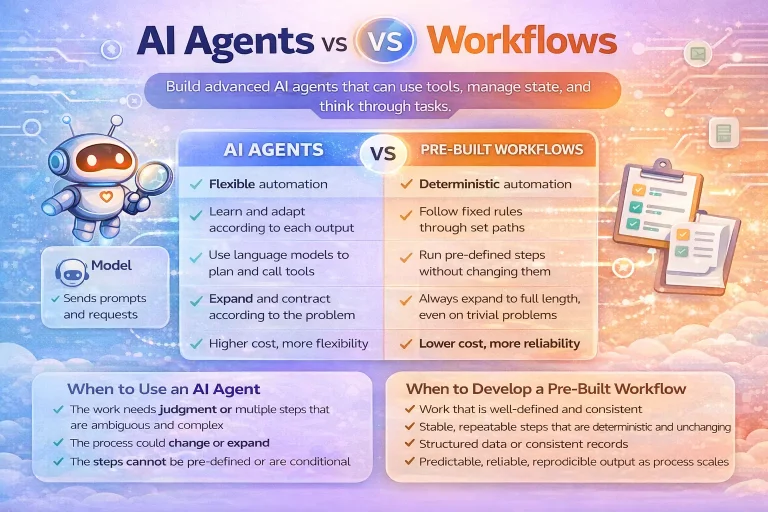
AI Agents vs Workflows
This guide compares AI agents and workflows from an implementation perspective rather than a hype perspective. It focuses on control, flexibility, setup burden, and...
Read Guide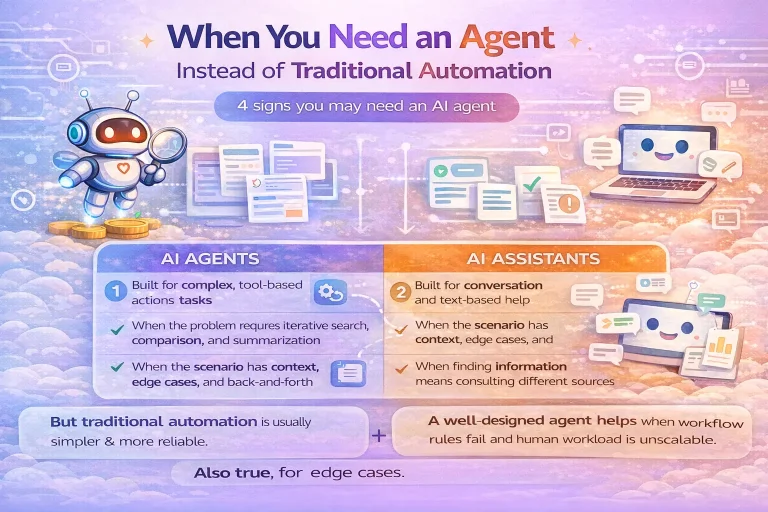
When You Need an Agent Instead of Traditional Automation
This guide explains when an AI agent is the right architectural choice and when a simpler workflow, routing system, or scripted automation will be...
Read Guide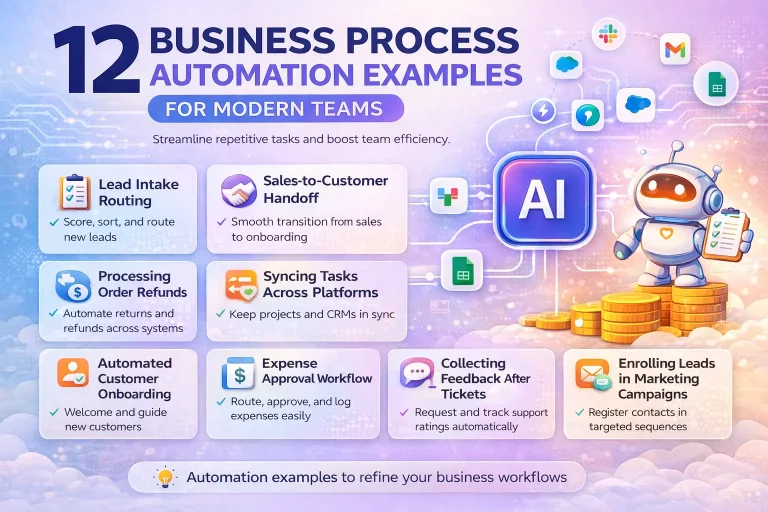
12 Business Process Automation Examples for Modern Teams
This guide breaks down business process automation examples that operations, finance, support, and go-to-market teams can actually use. It focuses on repeatable business processes,...
Read Guide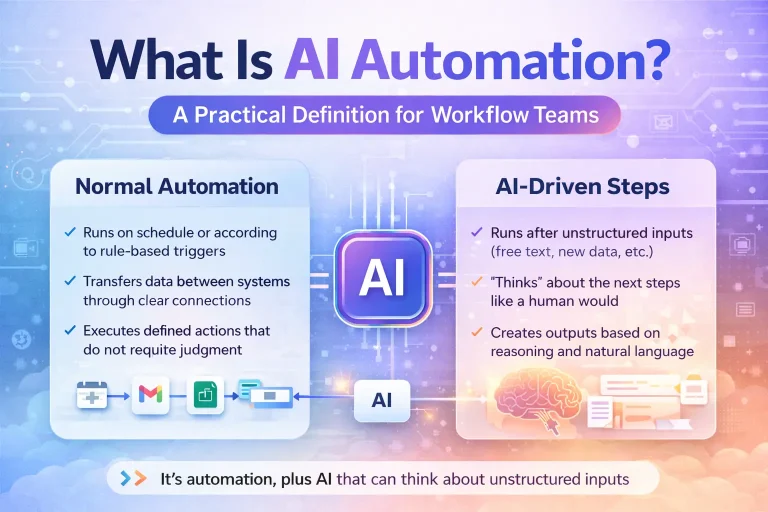
What Is AI Automation? A Practical Definition for Workflow Teams
This guide explains what AI automation actually means for workflow teams, not just in theory but in day-to-day operations. It covers how AI automation...
Read Guide