
Best Open-Source Agent Frameworks
A practical comparison of the most relevant open-source agent frameworks for self-hosted and code-first teams.
This guide compares the open-source agent frameworks most worth evaluating today, including where each one fits, where it falls short, and when a workflow platform may be enough instead.
Related Tools
Details
The best open-source agent frameworks right now depend on what you are actually building. LangGraph is one of the strongest choices for developers who want graph-based control, durable execution, and human-in-the-loop patterns. Microsoft Agent Framework is one of the most important newer options for teams that want Python or .NET support and a framework designed for multi-agent workflows.
The point is not to find one universal winner. It is to match the framework to the system shape. Some teams need a research agent with stateful orchestration. Others need enterprise-friendly multi-agent workflows. Others mostly need a workflow platform plus a few agent features rather than a dedicated framework at all.
How these frameworks were selected
- Active official documentation and current development
- Clear fit for real agent or multi-agent systems
- Meaningful differences in orchestration model, language support, and developer ergonomics
- Practical relevance for self-hosted or code-first teams
Quick comparison table
| Framework | Best for | Main strength | Main limitation | Skill level |
|---|---|---|---|---|
| LangGraph | Graph-based agent systems | Durable execution and human-in-the-loop patterns | More engineering-heavy than visual workflow tools | Advanced |
| Microsoft Agent Framework | Enterprise-oriented Python or .NET agent systems | Strong multi-agent and workflow story with Microsoft backing | Newer and still evolving | Intermediate to Advanced |
| AutoGen | Conversation-centric multi-agent patterns | Easy way to model agent interactions | Less opinionated for production workflow control than some alternatives | Intermediate |
| Semantic Kernel | Teams invested in Microsoft ecosystem patterns | Good enterprise integration story | Not always the simplest starting point for general agent orchestration | Intermediate |
| CrewAI | Role-based agent orchestration and simpler team patterns | Accessible mental model for agent collaboration | Can become limiting for deeper control | Intermediate |
LangGraph
LangGraph is a strong choice when the agent system needs explicit state transitions, checkpoints, durable execution, and the option to keep humans in the loop. It is especially appealing for developers who want agent orchestration to look like an engineered system rather than a prompt-only pattern.
Microsoft Agent Framework
Microsoft Agent Framework is now a major option to watch. Microsoft positions it as the direct successor to work from the AutoGen and Semantic Kernel teams, with support for Python and .NET plus workflow and multi-agent capabilities.
AutoGen
AutoGen still matters because it made multi-agent conversation patterns easier to reason about. It is useful for experimentation and for systems where dialogue between agents is part of the design.
Semantic Kernel
Semantic Kernel is still useful for teams with Microsoft-aligned enterprise needs, especially when orchestration needs to coexist with broader application architecture.
CrewAI
CrewAI is easier to approach than some lower-level frameworks because it gives teams a more role-oriented model. That can be useful early on, although more advanced teams may outgrow it depending on how much control they need.
Which framework is best for which user?
- Best for advanced control: LangGraph
- Best for Microsoft-oriented engineering teams: Microsoft Agent Framework
- Best for conversation-centric multi-agent experimentation: AutoGen
- Best for simpler role-based agent collaboration: CrewAI
- Best when you may not need a framework at all: use a workflow platform like n8n if the problem is mostly orchestration and actions
Common decision mistakes
- Choosing a framework because it is trendy rather than because its orchestration model fits the system.
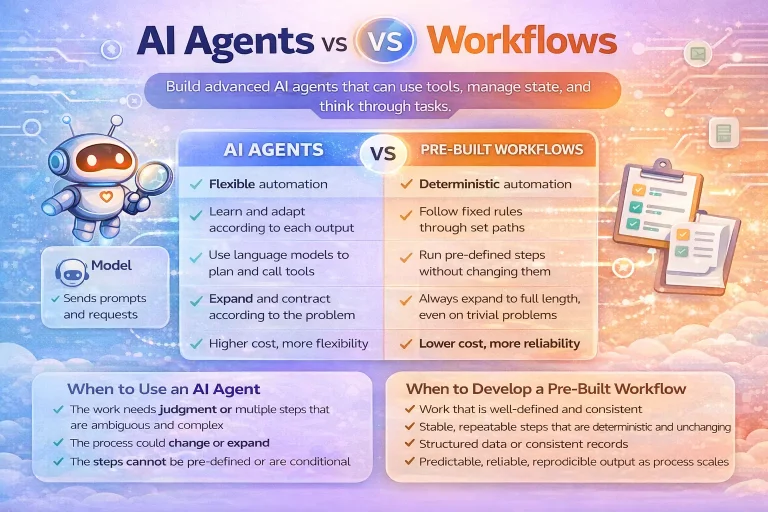
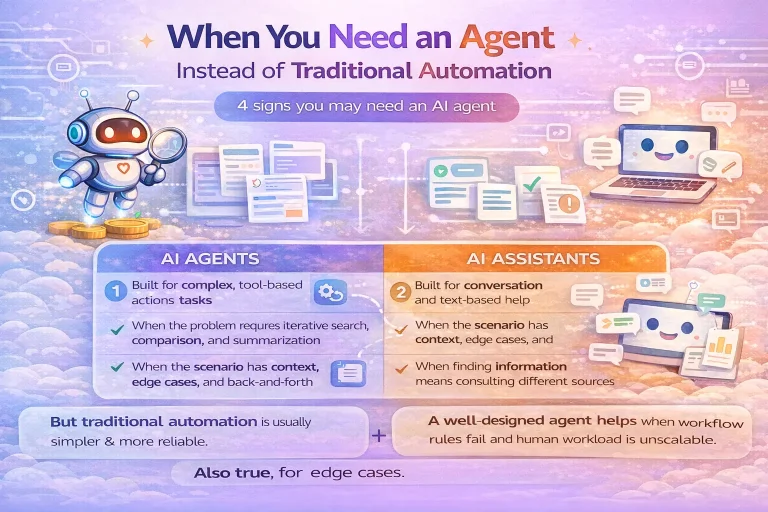
- Using a full agent framework when the use case is really a bounded workflow with tool calls.
- Underestimating production concerns such as state, tracing, approvals, and error recovery.
- Assuming open source alone makes a framework operationally simple.
FAQ
What is the best open-source agent framework for beginners?
There is no perfect beginner framework because the real question is what you are building. For many beginners, a workflow platform may be easier than jumping directly into framework-level orchestration.
What is the best option for self-hosting?
Code-first frameworks such as LangGraph and Microsoft Agent Framework are strong candidates when you want deeper control over infrastructure and runtime behavior.
Do I always need an agent framework?
No. Many practical AI automations are better framed as workflows with tool calls, approvals, and structured outputs rather than full agent systems.
Conclusion
The best open-source agent framework is the one whose control model matches the system you actually need. LangGraph leads for graph-based engineering depth. Microsoft Agent Framework is increasingly important for enterprise-oriented multi-agent workflows.