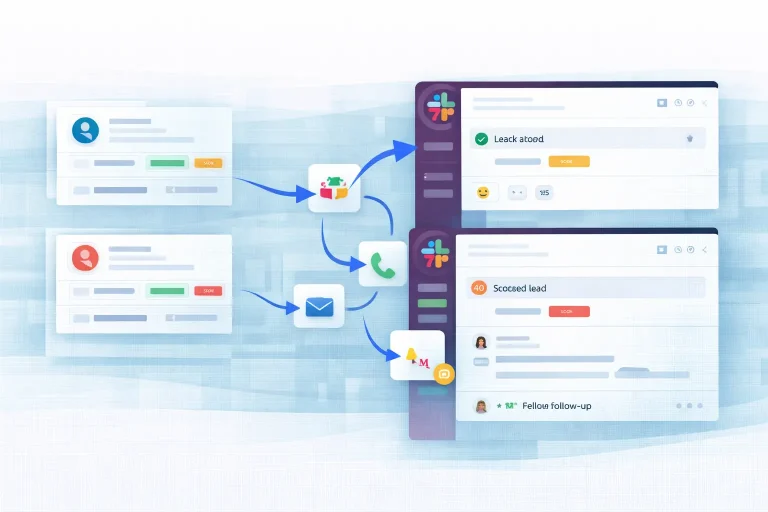
How n8n Fits Into an AI Agent Stack
A practical explanation of where n8n belongs in an AI agent stack and where dedicated agent frameworks still make more sense.
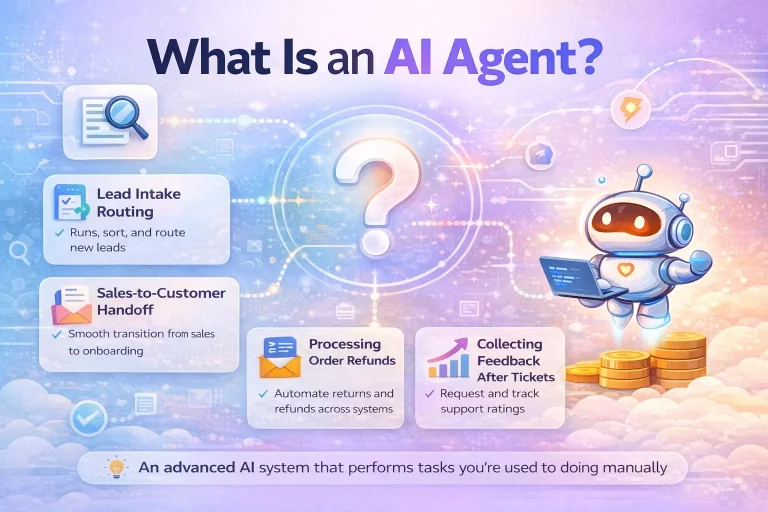
This guide explains how n8n fits into modern AI agent systems, especially when agents need to call tools, run workflows, and interact with business systems.
Related Tools
Details
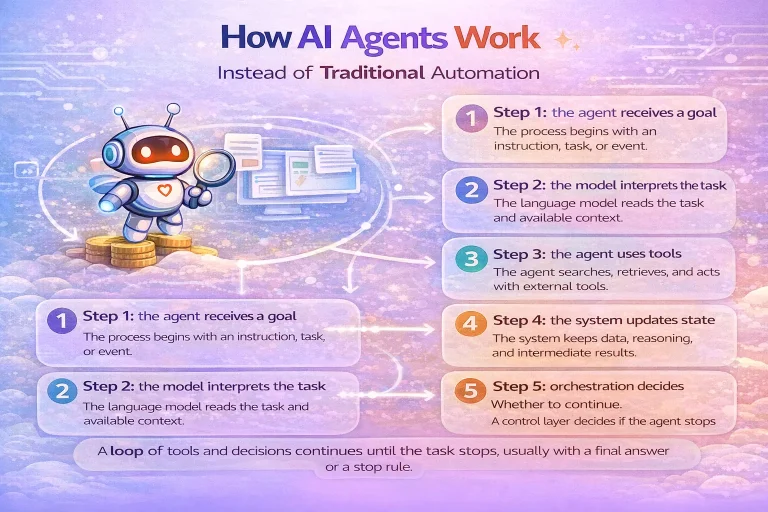
n8n fits into an AI agent stack as the workflow and action layer. It is useful when an agent needs to do real work beyond conversation: fetch records, call APIs, route requests, update systems, send notifications, or hand off to a human.
That means n8n is not usually the best tool for every agent concern. It is not the clearest choice if your main problem is agent memory architecture, custom graph orchestration, or low-level framework programming. It becomes valuable when the agent needs reliable multi-step execution tied to business systems.
The simplest way to think about the stack
| Layer | What it does | Where n8n fits |
|---|---|---|
| Model layer | Generates language or structured reasoning | Outside n8n, though n8n can call model providers |
| Agent logic layer | Decides tools, routing, and reasoning patterns | Partially in n8n for bounded workflows; deeper agent frameworks may handle this elsewhere |
| Workflow and action layer | Runs tools, APIs, business logic, and handoffs | This is where n8n is strongest |
| Data and systems layer | CRMs, databases, docs, queues, internal apps | n8n connects and orchestrates across these systems |
Where n8n is strongest
- Outcome-oriented agent actions, such as enrich this lead, summarize these records, or create this report
- Multi-step automations with approvals, retries, notifications, and record updates
- Tool orchestration across SaaS apps, APIs, sheets, databases, and internal services
- Teams that want a visual runtime rather than a code-only orchestration layer
Where n8n is weaker
- Highly custom agent memory design
- Complex graph-native agent programming
- Scenarios where every agent decision must be modeled at framework level rather than workflow level
- Cases where the team wants to stay entirely inside a code-first agent framework
When n8n may be enough on its own
n8n may be enough when the agent is really a bounded tool-using workflow: a lead research assistant, a reporting bot, a support triage flow, or an internal knowledge helper that produces structured answers and actions. In those cases, the workflow design often matters more than using a dedicated agent SDK.
When you may need n8n plus an agent framework
You may want both when the system needs richer state, long-running multi-agent patterns, framework-level memory, or more sophisticated graph orchestration, but still needs reliable tool execution and business system actions.
Examples of n8n inside an agent stack
- A research agent uses a framework for planning, then calls n8n workflows to fetch records, clean results, and deliver a final report.
- A support assistant classifies intent with a model, then hands routing, escalation, and system updates to n8n.
- A sales copilot triggers n8n flows for enrichment, CRM updates, and meeting preparation summaries.
Common mistakes
- Assuming an agent stack needs a dedicated framework before proving the workflow value.
- Using n8n as if it were only a chatbot wrapper instead of an action runtime.
- Putting every decision inside the model instead of keeping deterministic steps in the workflow.
- Overcomplicating simple tool-driven agents that could run well as bounded n8n workflows.
FAQ
Is n8n an agent framework?
Not in the same sense as LangGraph or Microsoft Agent Framework. It is better understood as a workflow platform that can power agent-like systems and act as the action layer in a broader stack.
Can n8n replace LangGraph?
Sometimes, for bounded use cases. Not usually for teams that need graph-native agent programming, deeper state handling, or framework-level control.
Can n8n work with MCP?
Yes. That makes it easier for AI clients to discover and trigger n8n workflows as tools.
Conclusion
n8n fits best where agents need to become operations. It is the layer that turns prompts and decisions into records, tasks, approvals, and system actions. If that is the gap in your stack, n8n is often the missing piece.