Methodology

This page explains how WorkflowLibrary researches, structures, and maintains its content.

The goal of WorkflowLibrary is not simply to publish more pages about tools and automation. The goal is to create content that helps readers understand how platforms, templates, and workflow patterns fit real-world use cases.

Because the site covers tools, workflow templates, comparisons, tutorials, and other editorial content, different page types require different standards. This methodology page outlines the principles behind that process.

Core Editorial Principles

WorkflowLibrary is built around a few core principles:

  • Usefulness over volume — pages should help readers make decisions, not just target keywords
  • Workflow fit over generic praise — tools are evaluated based on where they fit and what they are actually good at
  • Clarity over hype — content should explain tradeoffs, limitations, and implementation context where relevant
  • Structure over noise — information should be organized in a way that makes tools, templates, and guides easier to compare and apply
  • Ongoing refinement — pages may be updated as products evolve, categories become clearer, and better workflow patterns emerge

The site is not designed as a general-purpose software directory or a broad news feed. Coverage is selective and centered on modern workflows, automation systems, AI tooling, integrations, reusable process design, and operational execution.

How Tool Pages Are Created

Tool pages are designed to help readers quickly understand what a product does, how it fits into workflow design, and who it is best suited for.

When creating or updating a tool page, WorkflowLibrary may review information such as:

  • official product websites
  • documentation and feature pages
  • pricing pages
  • API or developer documentation where relevant
  • public positioning and ecosystem context
  • self-hosting or open-source availability where applicable

The aim is not just to repeat vendor messaging. Tool pages are structured to answer practical questions such as:

  • What type of product is this?
  • What workflow role does it play?
  • Who is it best for?
  • What are its core capabilities?
  • What are its limitations or tradeoffs?

Whenever possible, important attributes such as API availability, open-source status, and self-hosting support are checked against official or product-controlled sources. However, software products change over time, so pages may occasionally lag behind new feature releases or pricing updates until they are revised.

How Template Pages Are Created

Template pages are built to show reusable workflow patterns, system structures, and practical automation ideas.

Not every template on WorkflowLibrary is intended to function as a one-click import into a specific platform. In many cases, a template represents a workflow pattern that readers can adapt to different stacks, tools, or data sources.

Template pages are typically built around:

  • a clear use case
  • one or more primary tools or platforms
  • a realistic automation flow or system design
  • supporting integrations, data inputs, and outputs
  • practical framing around implementation and business value

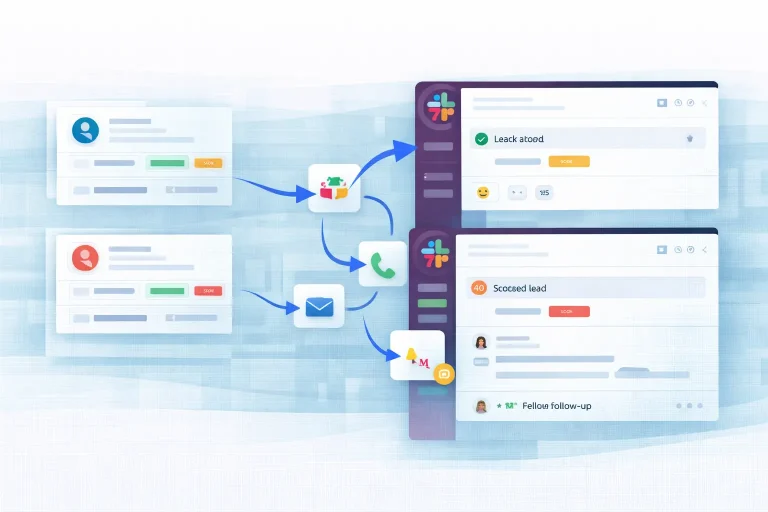
When developing template content, WorkflowLibrary focuses on workflow logic rather than empty abstraction. The goal is to show how work actually moves through a system — for example, how leads are captured and enriched, how reports are generated and distributed, how research data is collected and summarized, or how AI-driven internal workflows are structured.

Some templates are simple and tactical. Others represent more advanced operational patterns. In both cases, the objective is the same: provide a useful starting point for implementation thinking.

How Guide Pages Are Created

Guide pages include tutorials, comparisons, “what is” explainers, best-of roundups, and broader workflow strategy content.

Because these pages often influence product choices and implementation direction, they are designed to go beyond surface-level summaries.

Depending on the page type, guide creation may involve reviewing:

  • official documentation
  • pricing and plan structures
  • product feature sets
  • ecosystem and integration context
  • publicly available technical or operational details
  • workflow use case fit across different user profiles

Different guide types are handled differently:

Comparison Guides

Comparison pages are structured around meaningful differences, not just feature checklists. A tool may be stronger for business automation, while another may be stronger for agent orchestration, developer control, data handling, or self-hosted deployment. WorkflowLibrary tries to frame those distinctions around actual implementation scenarios.

Best-Of Guides

Best-of pages are not intended to suggest that one product is universally “best” for everyone. Instead, these guides typically organize tools by category fit, workflow type, user profile, or operational context. A product may be best for beginners, best for self-hosting, best for AI-heavy workflows, or best for enterprise process control rather than best in an absolute sense.

What-Is Guides

What-is pages are meant to clarify terminology, categories, frameworks, and workflow concepts in a practical way. The purpose is not just definition, but understanding — what something is, why it matters, where it fits, and when it is useful.

Tutorials and How-To Guides

Tutorial-style content is designed to make workflows, implementation logic, or strategic setup decisions easier to follow. In some cases, these pages are tactical and step-based. In other cases, they are more conceptual and focused on architecture, workflow design, or tool selection logic.

How Products and Topics Are Selected

WorkflowLibrary does not attempt to cover every software category equally. Coverage is shaped by relevance to automation, AI workflows, process design, integrations, internal operations, and reusable systems.

Topics may be selected based on factors such as:

  • importance within modern workflow stacks
  • practical relevance to builders and operators
  • search demand and recurring user interest
  • ecosystem significance
  • fit with existing content clusters on the site
  • ability to create genuinely useful content around the topic

This means some popular tools may not be covered immediately, while some smaller or more specialized tools may be included because they are especially relevant to automation or AI-native workflows.

How Workflow Fit Is Evaluated

A central concept behind WorkflowLibrary is workflow fit.

Rather than asking only whether a product is “good,” the site focuses on whether it is a good fit for a specific kind of work. That evaluation may include considerations such as:

  • ease of setup
  • technical depth required
  • visual vs developer-oriented workflow design
  • self-hosted vs hosted deployment preferences
  • integration coverage
  • AI workflow support
  • control, flexibility, and extensibility
  • team size and user sophistication
  • operational complexity
  • cost sensitivity

Two tools can both be strong products while serving very different workflow needs. WorkflowLibrary tries to make those distinctions explicit.

How Categories and Tags Are Handled

WorkflowLibrary uses categories, tags, platforms, and integrations to make content easier to navigate.

These classification systems are intended to improve discovery and relevance, not to imply hard technical boundaries. A tool may overlap multiple use cases. A template may draw on several categories. A guide may relate to more than one workflow domain.

Classification choices are made to improve clarity for readers, especially when browsing by use case, platform, workflow type, or tool ecosystem.

How Updates and Revisions Work

Software products evolve quickly. Pricing changes. Features are added or removed. Open-source projects change direction. New integrations appear. AI capabilities shift fast.

Because of that, WorkflowLibrary pages may be revised over time to reflect:

  • changes in product positioning
  • pricing updates
  • feature or API changes
  • new integrations
  • better workflow framing
  • improved categorization
  • editorial corrections or clarifications

Not every page is updated on a fixed schedule. Priority tends to go to core workflow categories, strategically important tools, major comparison topics, and pages where outdated information would meaningfully affect reader decisions.

How Affiliate Relationships Are Handled

Some pages on WorkflowLibrary may include affiliate links. If a visitor signs up through one of those links, WorkflowLibrary may earn a commission.

However, affiliate availability does not automatically determine coverage, rankings, or editorial framing. Not every tool included on the site has an affiliate program, and not every affiliate-enabled tool is included.

The editorial goal is to keep content useful and trustworthy. Monetization may support the operation of the site, but it is not intended to replace judgment about workflow fit, relevance, or content quality.

For more detail, please see the Disclosure page.

Known Limitations

WorkflowLibrary aims for practical accuracy, but no methodology is perfect.

Possible limitations include:

  • product details may change after publication
  • different users may prioritize different workflow criteria
  • some vendor claims may be easier to verify than others
  • certain implementation realities only become obvious during hands-on use
  • broad workflow categories can sometimes overlap

For that reason, readers should treat WorkflowLibrary as a decision-support resource rather than a substitute for direct product evaluation, documentation review, or technical validation where required.

Corrections and Feedback

If you believe a page contains an error, outdated information, or a misleading classification, feedback is welcome.

WorkflowLibrary may revise content based on corrections, ecosystem changes, or stronger editorial framing as the site develops.

For corrections, updates, partnership inquiries, or general feedback, please visit the Contact page.