
What Is Microsoft Agent Framework?

A clear explanation of what Microsoft Agent Framework is, how it works, and who it is meant for.

This guide explains what Microsoft Agent Framework is, why it matters, and how it differs from automation tools and other agent frameworks.

Difficulty Beginner
Read Time 10 minutes

Related Tools

Details

Microsoft Agent Framework is Microsoft’s code-first framework for building AI agents and multi-agent workflows in Python and .NET. In practical terms, it is the successor direction to ideas previously split across AutoGen and Semantic Kernel, combining agent abstractions with workflow composition, state management, type safety, filters, telemetry, and enterprise-oriented integration points.

That definition matters because Microsoft Agent Framework is not just another chatbot SDK. It is meant for teams building agents that need tools, conversations, memory, workflows, and hosting in a more structured way. It is most relevant to developers and enterprises that want Microsoft-backed agent infrastructure rather than a purely experimental framework.

What it does

At a high level, Microsoft Agent Framework helps developers create agents that can call tools, maintain conversation state, use memory and context providers, participate in workflows, and be deployed into production hosting environments. Microsoft’s official documentation positions it for both single-agent and multi-agent patterns.

It also frames the product as the direct successor to work from the AutoGen and Semantic Kernel teams. That makes it especially important if you have been watching Microsoft’s agent ecosystem but were unsure which framework direction to take seriously going forward.

How it works

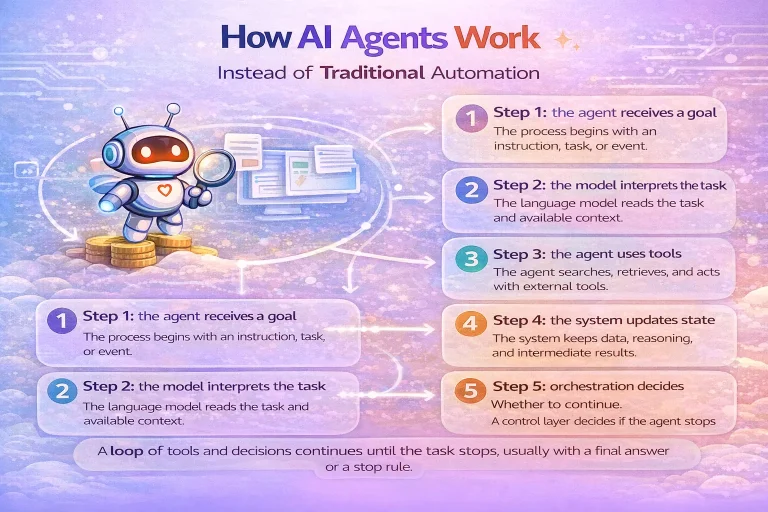
The framework starts with agent creation, then layers in tools, multi-turn conversations, memory and persistence, workflows, and hosting. Microsoft’s getting-started path reflects that sequence directly: build an agent, add tools, maintain thread-based conversation state, inject persistent context, compose workflows, and then host the result.

This tells you a lot about the intended design. Microsoft Agent Framework is not only for one-shot model calls. It is for systems that need state, controllable behavior, and progression from prototype to deployable service.

Quick reference table

Aspect Microsoft Agent Framework
Main purpose Build and orchestrate AI agents and workflows
Languages Python and .NET
Core strengths Agent abstractions, workflows, state, telemetry, enterprise features
Best for Developers and enterprises building production-oriented agents
Not ideal for Teams looking for purely no-code AI automation

Who it is for

Microsoft Agent Framework is for developers who want a structured way to build agents that are more than prompt wrappers. It is also for enterprise teams that care about type safety, observability, hosting, model flexibility, and workflow composition in a Microsoft-supported ecosystem.

If your team is already working in Python or .NET and wants to align with Microsoft’s current platform direction for agentic systems, this framework is worth understanding early.

Common use cases

Internal enterprise assistants

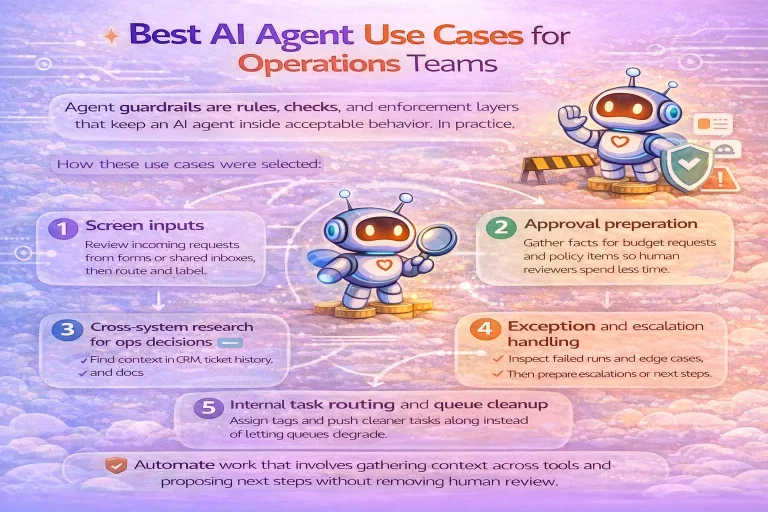
Examples include assistants that retrieve records, call internal tools, summarize cases, prepare recommendations, or route work to people. The framework is suitable when state, policy, and controlled tool access matter.

Multi-agent workflows

Because Microsoft explicitly supports multi-agent patterns, the framework is relevant when several specialized agents need to coordinate across a workflow rather than act as isolated chatbots.

Production agent services

The framework is designed with hosting and deployment in mind. That makes it a better fit than lighter libraries when the goal is not just experimentation but a durable internal or customer-facing service.

How it differs from nearby concepts

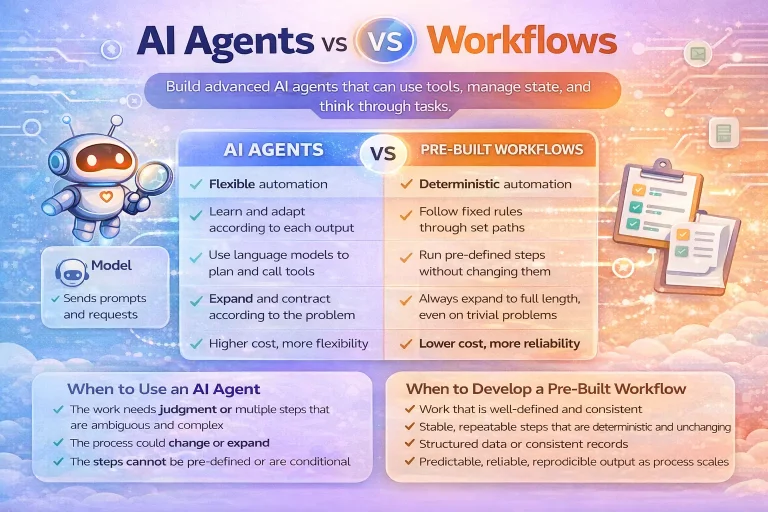
It differs from automation platforms like n8n because its center of gravity is code-first agent construction, not visual workflow automation across SaaS tools. n8n can support AI agent workflows operationally, but Microsoft Agent Framework is designed as a developer framework for building the agent systems themselves.

It also differs from LangGraph in emphasis. LangGraph is often chosen for graph-based control, durable execution, and explicit stateful orchestration in the LangChain ecosystem. Microsoft Agent Framework is more directly aligned with Microsoft’s own platform direction and combines workflow concepts with enterprise-oriented abstractions from its internal lineage.

Limitations and what it is not

Microsoft Agent Framework is not the right tool if your team wants fast no-code automation with minimal engineering. It is also not useful just because it is from Microsoft; it only makes sense when your problem actually needs a code-first agent framework.

Another misconception is assuming that understanding the framework is enough to build good agents. You still need to define tool permissions, workflow boundaries, evaluation, monitoring, and what counts as a successful action in production.

Where templates fit

A template or prebuilt workflow can help around the framework, especially for adjacent automation tasks such as data collection, notification, or record sync. But templates do not replace framework-level design decisions about memory, workflows, state, and hosting.

FAQ

What is Microsoft Agent Framework in simple terms?

It is Microsoft’s framework for building AI agents and multi-agent workflows in Python and .NET.

Is it the same as Semantic Kernel or AutoGen?

No. Microsoft describes it as the direct successor that combines ideas and capabilities from both lines.

Who should use it?

Developers and enterprise teams building production-oriented agents with tools, workflows, and state.

Is it a no-code tool?

No. It is a code-first framework, not a visual automation platform.

Conclusion

Microsoft Agent Framework is best understood as Microsoft’s current answer to production-oriented agent development. It matters because it unifies agent and workflow ideas into one framework with Python and .NET support and a clear enterprise posture. If you are evaluating modern agent stacks, it is now a real framework to compare directly against tools like LangGraph and orchestration layers such as n8n.

Related Guides