Is n8n Good for AI Agents?

A practical evaluation of where n8n fits well for AI agents and where a dedicated framework is the better choice.

This guide explains whether n8n is a good platform for AI agents, what kinds of agent workflows it supports well, and when to choose a code-first framework instead.

Difficulty Intermediate
Read Time 15 minutes

Related Tools

Details

n8n is good for AI agents when the goal is operational automation with tool use, external system actions, and clear workflow control. It is less ideal when you need deeply stateful, code-first agent orchestration with fine-grained control over memory, graph behavior, and long-running execution. That is the shortest honest answer.

n8n has become much more relevant for AI agents than traditional automation tools because it now has a dedicated AI Agent node, a public AI-agents product narrative, and built-in MCP server support for exposing workflows to compatible clients. Those additions make n8n a real option for action-oriented AI workflows, not just a connector layer around model calls.

Who should read this guide

This guide is for builders deciding whether n8n is enough for internal agents, assistant workflows, research automations, and AI-powered operations. It is also for teams comparing n8n with programming-first tools such as LangGraph or Microsoft Agent Framework.

What n8n does well for AI agents

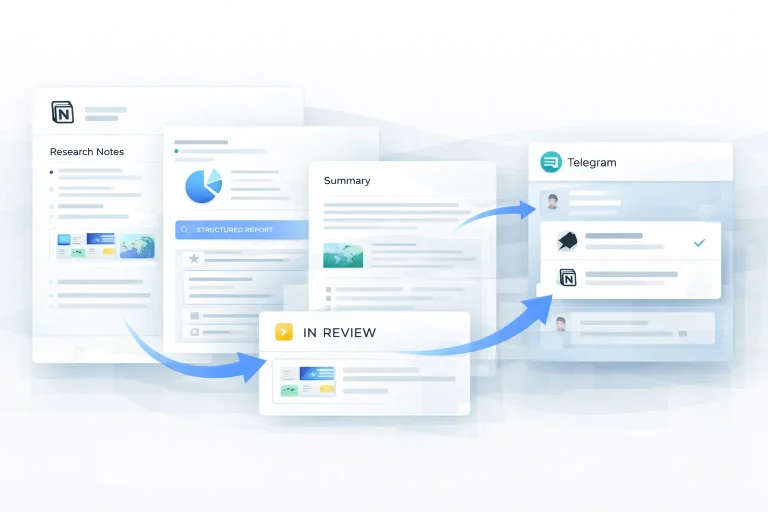
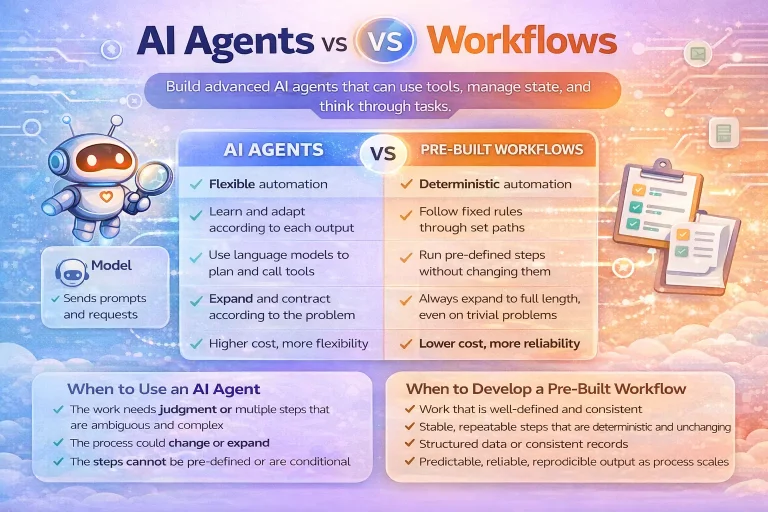
n8n is strong when an “agent” really means a workflow that can gather context, call tools, route decisions, and take real actions in business systems. For example, an internal research assistant can search sources, summarize findings, score relevance, write a report to Notion, and notify Slack in one orchestrated flow. A support assistant can classify requests, pull CRM context, suggest a response, and escalate edge cases to humans.

That is exactly where n8n fits. It is good at connecting tools, moving data across systems, triggering downstream actions, and making the flow visible enough for operators to understand. It is also useful when you want a faster path to production than building a custom agent architecture from code.

Where n8n is weaker

n8n is weaker when the hard part is not the tool connectivity but the agent architecture itself. If you need durable long-running execution, graph-level control, complex memory strategies, or custom multi-agent patterns where the orchestration logic is the product, programming-first frameworks are usually better.

This does not mean n8n is “bad” for AI agents. It means it is best for a specific class of AI agent: practical agents embedded in business operations, not every possible agent system.

Quick evaluation table

Question n8n answer What it means in practice
Can it connect tools and APIs well? Yes Strong fit for action-oriented agents
Can it support self-hosting? Yes Useful for internal systems and compliance-sensitive setups
Can it handle AI workflows quickly? Yes Good for fast prototyping and operational deployment
Is it the best choice for complex agent orchestration? Not usually Graph-oriented frameworks often have the stronger ceiling
Can non-developers participate? Partly More accessible than code-first frameworks, but still not pure no-code

Best AI agent use cases for n8n

Internal research agents

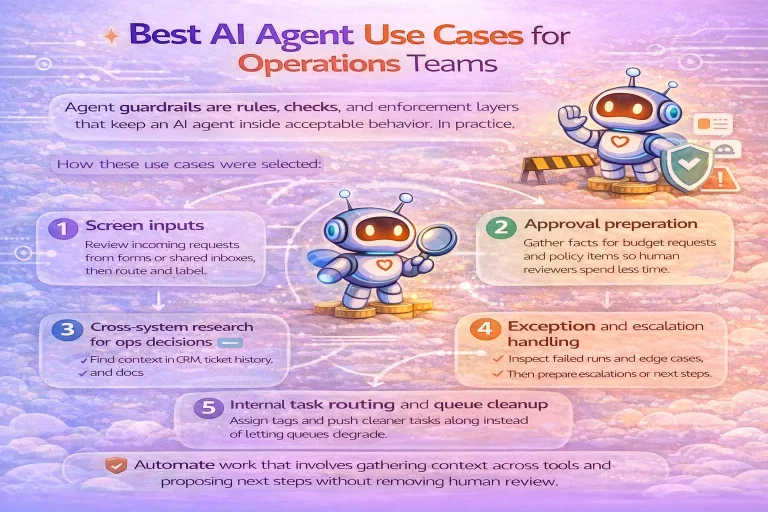
n8n works well when the agent needs to gather inputs from search APIs, websites, documents, spreadsheets, or internal records and then produce a structured output. The flow is visible, the integrations are practical, and human checkpoints are easier to add than in many custom code stacks.

Operational assistants

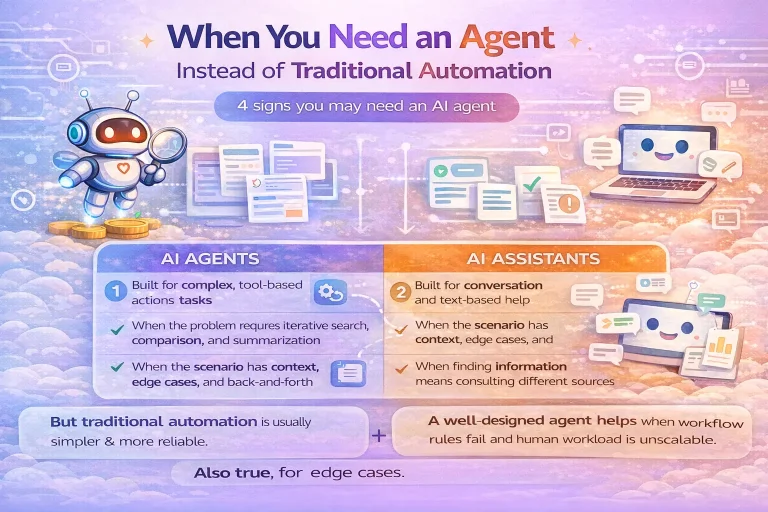
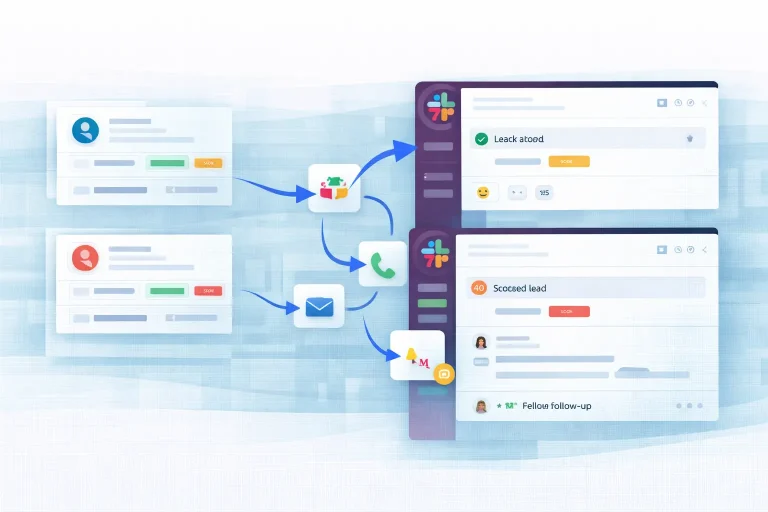
These include assistants for lead qualification, customer follow-up preparation, support triage, or internal ticket routing. The agent does not need open-ended autonomy. It needs clear tasks, access to relevant tools, and strong boundaries around outputs and actions.

Agent-triggered workflows via MCP

n8n’s MCP server support makes it useful when you want another client, such as a desktop AI interface, to discover and run exposed workflows. This is a practical bridge between conversational interfaces and structured automation.

When to choose a framework instead

Choose a framework like LangGraph when the central problem is orchestrating agent state over time, handling interruptions and resumes in a controlled way, or designing a graph where the agent’s reasoning path matters as much as the tool calls. Choose Microsoft Agent Framework when you want a code-first platform from Microsoft that combines agent abstractions with enterprise-oriented features, workflows, type safety, and multi-language support.

What teams often get wrong

The first mistake is treating every LLM workflow as an “agent.” If your use case is basically prompt in, structured output out, and then one downstream action, n8n can do it well without pretending it is a sophisticated autonomous system.

The second mistake is going straight to a code-first agent framework when the real need is operational integration. If the problem is mostly moving data between systems, adding classification or summaries, and taking constrained actions, n8n may get you to value faster.

The third mistake is overtrusting model outputs. An n8n agent workflow still needs guardrails, approval logic, validation, and observability. Templates can accelerate setup, but they do not decide what actions your agent should be allowed to take.

How templates help

Templates help most when you need a working layout for tool calls, prompts, branching, and outputs. They are useful for research agents, support routing, and lead enrichment flows with AI steps. They do not remove the need to define permissions, review points, or what should happen when the model output is empty, wrong, or ambiguous.

FAQ

Is n8n an agent framework?

Not in the same sense as LangGraph or Microsoft Agent Framework. It is better understood as an automation platform that now supports agent-like workflows and AI-oriented orchestration.

Is n8n good for beginners building AI agents?

It is often better for pragmatic beginners than code-first frameworks, especially when the goal is business automation rather than advanced agent research.

Can n8n be used with MCP?

Yes. n8n provides built-in MCP server support for exposing workflows to supported MCP clients.

When should I avoid n8n for AI agents?

Avoid it when you need highly customized graph orchestration, long-running stateful behavior, or agent infrastructure that is itself a core engineering domain.

Conclusion

n8n is good for AI agents when “agent” means tool-connected operational automation with clear actions, system integration, and practical control. It is less compelling when the agent architecture is deeply custom and programming-first. For many business teams, that makes n8n not a compromise, but the more useful starting point.

Related Guides