
How to Use MCP for Internal Ops Automation

A practical guide to using MCP for internal operations workflows that need live context, bounded actions, and clear ownership.

This guide shows how to use MCP for internal ops automation without turning internal systems into a broad agent surface. It focuses on narrow tool exposure, structured decisions, and operational tasks such as routing, task creation, and notifications.

Difficulty Intermediate
Read Time 10 minutes

Related Tools

Details

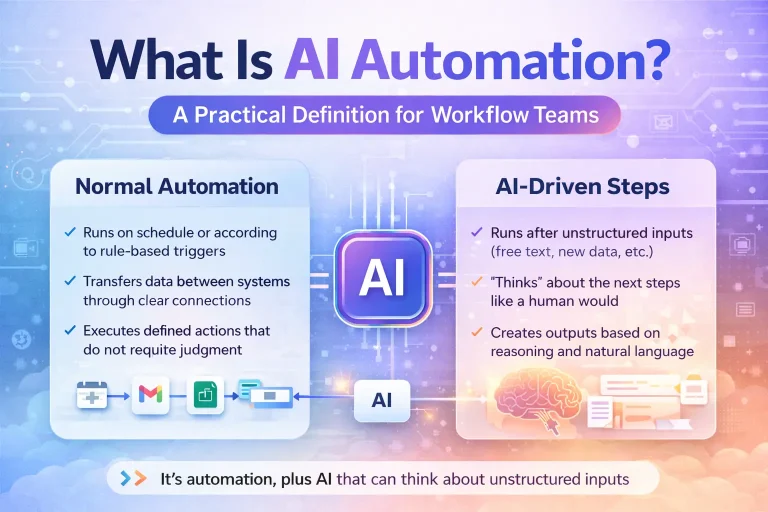
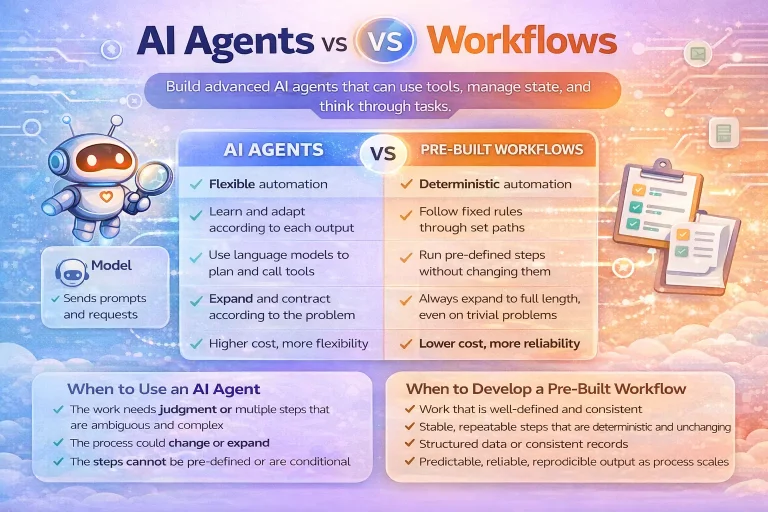
MCP is useful for internal ops automation when the work depends on real context from internal systems and still needs bounded actions. Instead of building one giant custom agent that can do everything, MCP lets you expose specific tools for internal operations such as policy lookup, ticket creation, checklist updates, queue routing, and status reporting.

This works well for internal operations because most ops tasks are repetitive but not fully identical. A workflow may need to read a policy, check a request type, gather context from a few systems, and then create a task, notify a team, or route work to the right queue.

What you will build

You will build an MCP-backed internal ops workflow where an AI step can retrieve internal context, prepare a structured decision, and trigger bounded operational actions such as task creation, routing, or notification.

When to use this workflow

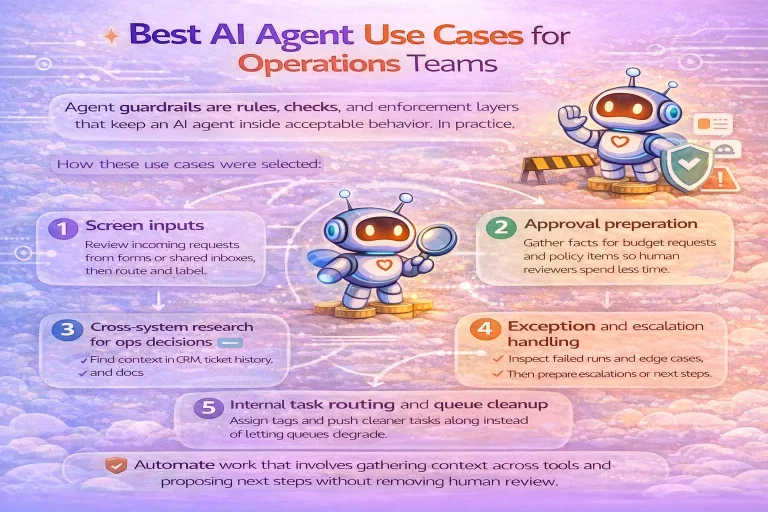
Use it for IT requests, onboarding checklists, internal approvals, account handoffs, procurement intake, incident coordination, or recurring operational triage where the same few systems show up repeatedly.

What you need before you start

  • At least one internal system to read from, such as a knowledge base, spreadsheet, ticketing system, or chat channel
  • One or more bounded actions, such as create task, assign owner, notify channel, or write note
  • A workflow platform or MCP-capable agent runtime
  • Clear ownership rules and fallback handling

Step-by-step setup

Step 1: Choose one internal ops path

Pick a workflow that has clear inputs and outputs. Good examples include routing an internal request, creating an onboarding checklist, or opening the right follow-up task after an approval.

Step 2: Expose the minimal internal tools

For an onboarding workflow, that may be read policy, create task, assign owner, and send notification. For an IT intake workflow, it may be search help docs, create ticket, and post to a Slack channel.

Step 3: Retrieve context before deciding

Use MCP tools to gather policy, requester details, current queue status, or linked records before the AI step proposes an action.

Step 4: Return a structured plan

Ask the model for a small plan: classification, owner, priority, and next action. This is easier to validate than free-form reasoning.

Step 5: Execute bounded actions

Let the workflow create the task, route to the correct owner, or notify the correct channel. Keep high-risk writes or identity changes behind approval.

Step 6: Track completion

Internal ops workflows become much more useful when they log not just the request, but the outcome: who owns it, which queue it entered, and what action happened next.

How to test the workflow

  • Run one standard request and verify the right owner and queue are selected.
  • Run an edge case and verify the workflow routes to fallback handling instead of guessing.
  • Test a request with missing context and confirm the system either asks for more information or stops safely.

Common problems and fixes

The workflow routes too aggressively

Add a low-confidence or missing-context branch instead of forcing the model to guess.

The action set is too broad

Break large internal tools into smaller, clearer operations. Internal ops benefits from bounded tasks, not generic admin access.

Too many systems are involved at once

Start with one ops path and one or two systems. Broader internal ops stacks are easier to build after the first path is stable.

When to use a template instead of building from scratch

Templates help when the pattern is common, such as intake routing, notification, and task creation. They are less helpful when your operational rules depend on custom ownership logic or internal policy exceptions.

Final notes

MCP works well for internal ops because it gives agents live access to the few systems that matter without requiring broad, unsafe permissions. The strongest internal ops workflows stay narrow, explicit, and easy to audit.

Related Guides