
How MiniMax Office Skills Handle Word, Excel, and PowerPoint Workflows

A practical walkthrough of how MiniMax's Office Skills map different file types to different workflow paths instead of treating office work as a single generic document task.

This guide explains how MiniMax Office Skills approach Word, Excel, and PowerPoint workflows in practice. It focuses on the workflow logic behind each file type, what the system appears to do well, and where human review still matters.

Difficulty Intermediate
Read Time 10 minutes

Related Tools

Details

MiniMax Office Skills appear to handle Word, Excel, and PowerPoint as three different workflow problems, not as one generic “document generation” feature. That is the important starting point. Public MiniMax materials describe separate Office Skills and emphasize format-specific technical decisions, which suggests the system is tuned for the structure of each file type rather than relying on a single export step after generation.

That distinction matters because office workflows fail in different ways depending on the file. A Word workflow usually breaks on layout, tracked changes, tables, or template fidelity. An Excel workflow breaks on formulas, validation logic, and workbook structure. A PowerPoint workflow breaks on slide layouts, master consistency, or content-to-layout mapping. MiniMax’s office strategy is aimed at those failure modes.

How the workflow model works

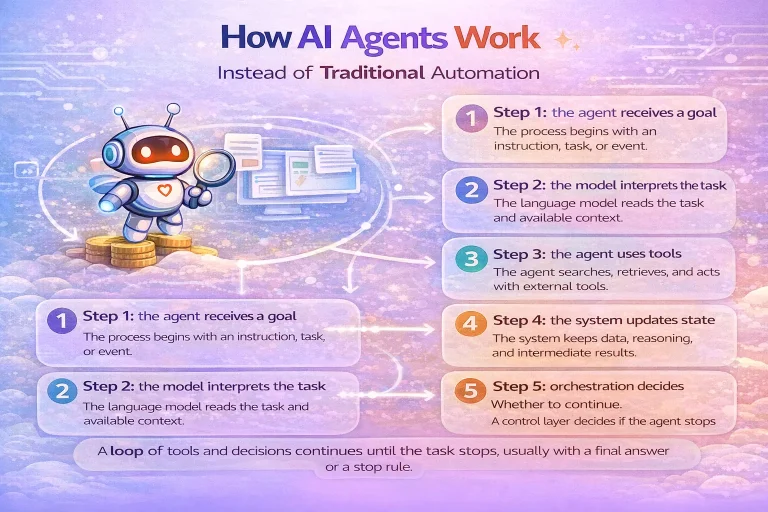
The public description of MiniMax Agent says Office Skills are loaded based on file type in office scenarios. In practical terms, that means the workflow changes depending on the artifact you are trying to produce or edit. A Word task can trigger a document-focused path, an Excel task can trigger a spreadsheet-focused path, and a PowerPoint task can trigger a presentation-focused path. That is a more workflow-aware approach than asking one model to emit markdown and hoping a converter preserves everything.

MiniMax also describes combining those skills with experts or task-specific operating procedures. That means the file skill is not the whole workflow. It sits inside a broader process that might include research, assumptions, source validation, drafting, and revision.

Word workflows

Word is the clearest fit when the goal is a formatted, client-ready or team-ready document rather than plain generated text. MiniMax’s own examples describe research reports and formal documents that follow an established framework. In that workflow, the model is not just writing paragraphs. It is expected to respect headings, sections, formatting, and reusable document standards.

That makes Word Skills useful for workflows such as analyst reports, proposal drafts, policy documents, board summaries, and research memos. The value is highest when there is an existing document style to follow. If the task is only “draft a rough answer,” a simple LLM response may be enough. If the task is “produce a report someone can open, edit, and circulate,” file-aware handling matters much more.

Excel workflows

Excel is where ordinary document automation often becomes unreliable. MiniMax’s office materials explicitly call out Excel calculations and financial modeling, and the open-source Office Skills announcement focuses on preserving real workbook behavior rather than flattening the file into a simple table.

That makes Excel Skills relevant for workflows such as revenue forecasting, operating assumptions, KPI models, and spreadsheet updates driven by source documents. The useful pattern is not “make a spreadsheet from scratch every time.” It is closer to “read source material, apply business logic, update a workbook, validate formulas, and keep the file usable for the next person.”

Teams should still treat Excel output carefully. Even if the file stays structurally intact, the underlying assumptions still need review. MiniMax can reduce mechanical spreadsheet labor, but it does not eliminate the need for finance or operations ownership.

PowerPoint workflows

PowerPoint workflows are usually about mapping content into a visual structure without damaging the deck. MiniMax appears well suited to that problem because it has both office-editing capabilities and presentation-focused experts in its public ecosystem. The practical use case is updating a template-driven deck, not just generating bullet points.

Examples include earnings summaries, client presentations, internal strategy updates, and training materials. A strong PowerPoint workflow is one where the AI can insert, revise, and restructure slide content while preserving slide order, style consistency, and editability. That is significantly more useful than generating slide text in a chat and manually rebuilding the deck afterward.

Where these workflows are strongest

Format Best-fit workflow Main value Main risk
Word Reports, proposals, research memos Structured document output Weak source reasoning still needs review
Excel Models, calculations, workbook updates Formula-aware file handling Business assumptions can still be wrong
PowerPoint Template-based decks and revisions Preserving layout and editability Slide logic can still need human refinement

Where templates matter most

Templates are especially valuable in MiniMax-style workflows because they reduce ambiguity. A report template tells the Word workflow what “done” looks like. A financial model template narrows the Excel workflow. A slide master gives the PowerPoint workflow stable layout rules. Without those constraints, the agent has to make too many structural decisions on its own.

For that reason, MiniMax Office Skills make most sense in organizations that already have reusable document patterns. The AI is then filling, updating, and extending a known format instead of inventing the whole document system from scratch.

What these workflows do not solve

They do not solve approvals, records retention, access controls, or cross-system workflow orchestration on their own. They also do not replace domain review. If a legal report is wrong, a beautiful DOCX is still wrong. If a spreadsheet has the wrong assumptions, preserving formulas does not save the decision.

FAQ

Does MiniMax use one workflow for all office files?

No. Public materials strongly suggest format-specific skills and file handling paths for Word, Excel, and PowerPoint.

Is this mainly for creating new files or editing existing ones?

Both. MiniMax’s recent office write-up emphasizes multi-round editing on existing files as well as generating new deliverables from templates and skills.

Where is the biggest advantage?

The biggest advantage is when the output file must remain editable and structurally usable after the AI step.

Conclusion

MiniMax Office Skills handle office work best when the workflow is built around a real artifact: a report, workbook, or presentation that must survive review and revision. Word, Excel, and PowerPoint are treated as different execution paths because they are different workflow problems. That is the main reason MiniMax is more interesting here than a generic model with a file export button.

Related Guides