
MiniMax Agent for Office Work: What It Can Actually Do

A practical look at where MiniMax Agent is genuinely useful for office work and where it is still better treated as a first-draft system.

This guide explains what MiniMax Agent can actually do in office work today, with a focus on Word, Excel, PowerPoint, and multi-step deliverable workflows. It is written for readers who want an operational view of the product rather than a broad AI productivity pitch.

Difficulty Beginner
Read Time 10 minutes

Related Tools

Details

MiniMax Agent is best understood as an office-work agent layer built around deliverable document tasks, not as a generic chatbot with a few file tools attached. In MiniMax’s own product and model announcements, office work is treated as a first-class scenario: the system can use standardized Office Skills for Word formatting, PowerPoint editing, Excel calculations, and template-based output generation. That makes it more relevant for research reports, slide updates, spreadsheet modeling, and file revision loops than for simple one-shot writing prompts.

What it can actually do depends on the task. It appears strongest when the end result is a file that needs structure, formatting, and multiple revisions rather than a plain-text answer. MiniMax has explicitly positioned M2.5 and M2.7 around deliverable office outputs, and has described workflows where the agent follows a research framework, fetches data, applies template logic, and outputs a formatted report, model, or presentation. That is meaningfully different from asking a chat model to “write a report” and pasting the answer into Word later.

What MiniMax Agent is doing in office workflows

In practice, MiniMax Agent combines a frontier model with a skill system. The public MiniMax materials describe Office Skills that are automatically loaded based on file type in office tasks. That means the system is not relying on one generic document action for everything. Instead, Word, PowerPoint, Excel, and PDF-style outputs are treated as separate execution paths with different file-handling logic.

That matters because office work usually fails at the file layer, not the prompt layer. A model can generate good text and still break a table of contents, flatten formulas into values, ruin a slide template, or damage an existing workbook structure. MiniMax’s office positioning is aimed at that exact problem: producing outputs that are editable and usable after the AI step, not just impressive in a chat window.

What it is good at today

  • Research and report generation: MiniMax has published examples where the agent combines a research SOP with Word Skills to fetch information, structure analysis, and generate a formatted report.
  • Excel modeling tasks: MiniMax specifically calls out Excel financial modeling as a strengthened scenario, which suggests it is aiming beyond basic table generation into assumption-driven models and formula-heavy workbooks.
  • PowerPoint and deck updates: The product ecosystem includes presentation-oriented experts and PowerPoint skills, making deck creation and editing one of the clearest visible use cases.
  • Revision-heavy office work: M2.7 is described as stronger at multi-round revisions and high-fidelity editing on existing files, which is often where ordinary document automation breaks down.

What it is not the best fit for

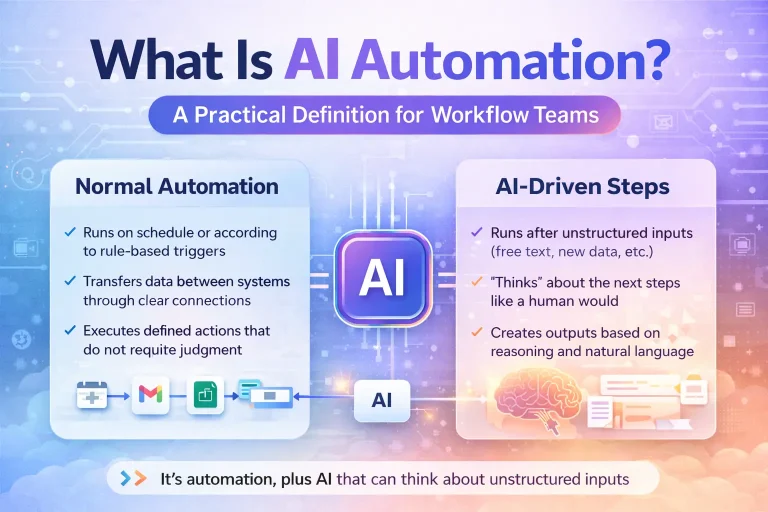
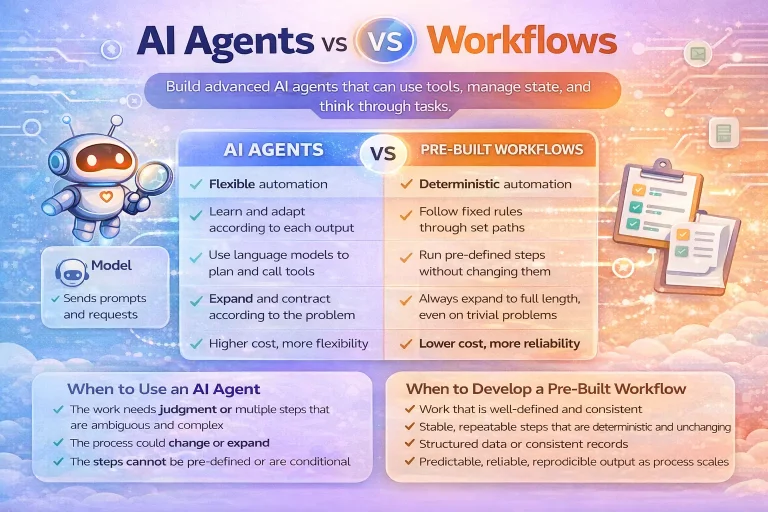
MiniMax Agent is not the obvious choice for every office automation problem. If your workflow is a fixed trigger-action pipeline such as “new form submission → create CRM record → send Slack alert,” a traditional automation platform is still simpler, easier to observe, and easier to audit. MiniMax is more interesting when the task includes judgment, document interpretation, formatting, restructuring, or iterative editing.

It is also not the same thing as a document management system. If your main problem is approvals, retention, permissions, or records governance, you still need a document platform or workflow stack around it. MiniMax can help produce the file, but it does not replace the surrounding business process by itself.

Typical workflows where it makes sense

Research report workflow

A realistic workflow is: gather source material, inspect documents, extract the relevant facts, shape the argument, then output a Word report that follows a house style. MiniMax has explicitly described this kind of scenario, including combining industry-specific expertise with Word Skills so the result is closer to a properly formatted first draft than to raw generated prose.

Finance workflow

Another realistic pattern is a spreadsheet-centered workflow where the agent reads source material, designs assumptions, builds a revenue or operating model, then produces supporting slide and Word outputs. MiniMax’s own examples around TSMC revenue modeling sit squarely in this category.

Presentation update workflow

If a team already has a slide template and wants the AI to update numbers, revise wording, restructure sections, and preserve the layout, MiniMax is better positioned than a plain LLM plus export script. This is one of the clearest use cases for file-specific PowerPoint skills.

What makes MiniMax different from ordinary document generation

The main difference is that MiniMax is trying to solve the “deliverable file” problem. Its recent open-source Office Skills write-up focuses on preserving structure and editability in Word, Excel, and PowerPoint rather than simply generating content. That pushes the product closer to office-agent infrastructure than to AI writing software.

For WorkflowLibrary readers, the practical takeaway is simple: MiniMax Agent matters when the output file itself is part of the workflow logic. If the file must survive editing, review, handoff, and reuse, MiniMax is worth evaluating. If the file is just a temporary wrapper around generated text, the advantage is smaller.

When a template still helps

MiniMax does not remove the need for templates. In fact, it appears to work best when strong document standards already exist. A report outline, finance modeling standard, or slide master gives the agent a much better target. The AI step can then fill, update, or extend the artifact instead of improvising the whole structure from scratch.

That is why MiniMax makes sense as part of a workflow stack: standard inputs, standard templates, then agent-driven execution inside those constraints.

FAQ

Is MiniMax Agent mainly a writing tool?

No. The more useful framing is file-oriented office execution. Writing is part of it, but the differentiator is handling structured Word, Excel, and PowerPoint outputs.

Can it replace Make, n8n, or Zapier?

Not directly. Those tools are stronger for deterministic business automation. MiniMax is stronger when the hard part is interpreting material and producing a deliverable document.

Do you still need review?

Yes. For anything client-facing, finance-sensitive, or policy-sensitive, human review still matters. MiniMax can reduce drafting and reformatting time, but it does not remove accountability.

Conclusion

MiniMax Agent for office work is worth paying attention to if your workflows end in files that people actually need to open, edit, and ship. Its strongest use cases are research reports, spreadsheet models, presentation editing, and other office tasks where structure and revision fidelity matter as much as content generation. It is less compelling for simple trigger-action automation, but much more interesting for deliverable document workflows where ordinary chat outputs are not enough.

Related Guides