How to Expose n8n Workflows to AI Agents

A practical tutorial for turning selected n8n workflows into callable tools for external AI agents.

This guide shows how to expose n8n workflows to AI agents without opening up your entire automation stack. It covers the MCP Server Trigger, workflow tools, endpoint design, auth, and the validation steps that keep agent tool calling predictable.

Difficulty Intermediate
Read Time 5 minutes

Related Tools

Details

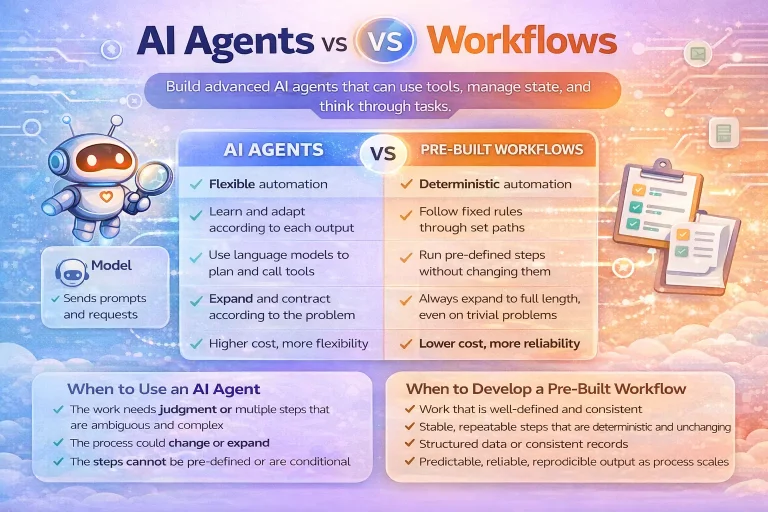
If you want an AI agent to do real work through n8n, the goal is not to expose your whole instance. The goal is to expose a small, well-scoped set of workflows as tools the agent can discover and call safely. In n8n, the native MCP path now makes that possible.

The cleanest approach is to decide which workflows should behave like tools, wrap them clearly, and publish them through an MCP server endpoint. This keeps the agent interaction structured while letting n8n remain the execution layer for integrations, branching logic, and downstream actions.

What you will build

You will expose one or more n8n workflows so an external AI agent can list them as tools and call them on demand. The finished setup typically includes an MCP Server Trigger workflow, one or more connected tool nodes or workflow tools, and a client such as Claude Desktop, Cursor, or another MCP-compatible agent environment.

When to use this workflow

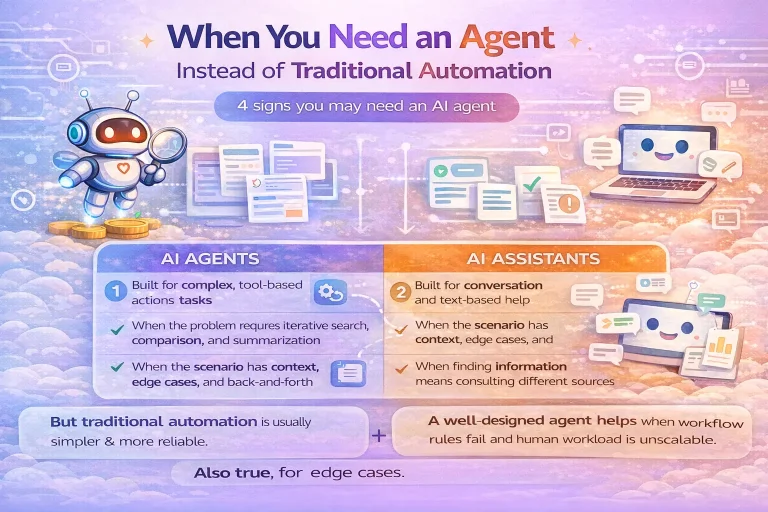
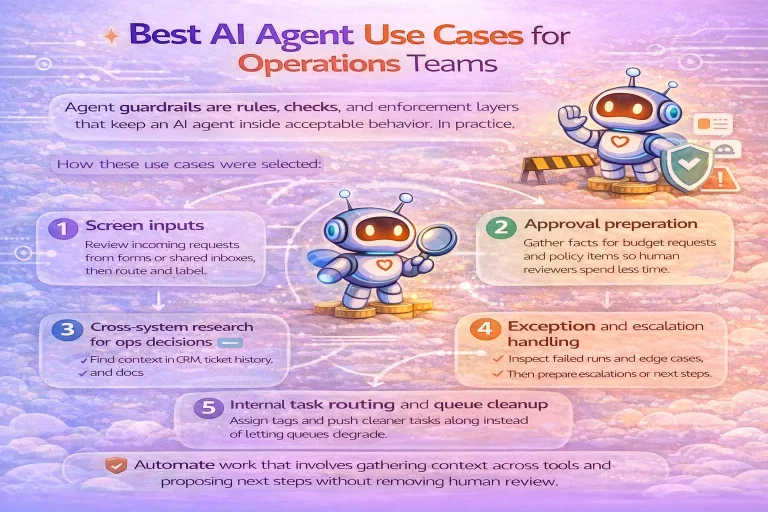
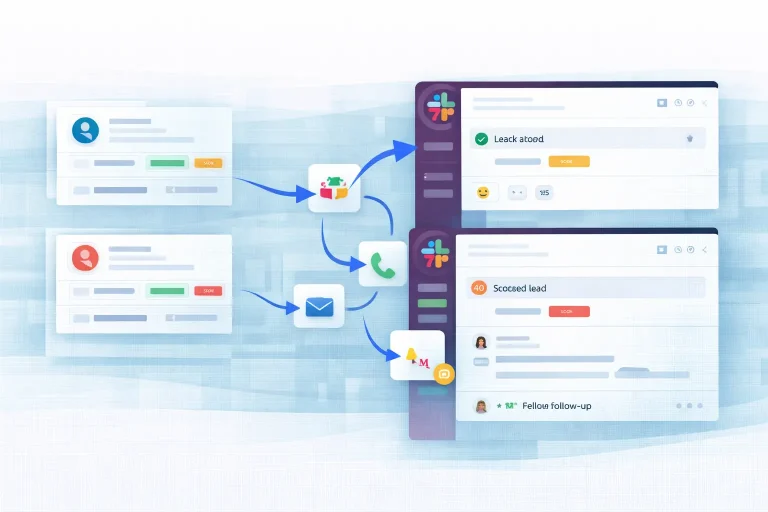
This setup is useful when an agent needs to perform bounded business actions such as creating a lead, looking up a record, drafting a reply, or triggering a reporting workflow. It is less useful when the logic is so open-ended that the agent would need broad admin access to your n8n instance.

What you need before you start

  • An n8n instance with MCP support
  • Workflows that already perform useful business actions
  • A plan for auth and environment separation
  • An external AI client that supports MCP
  • Clear tool definitions for each exposed action

Before exposing anything, decide which workflows are genuinely agent-friendly. If the workflow needs manual judgment at every step, it may be better as an internal automation than as an agent tool.

Step 1: Choose the workflows worth exposing

Start by listing workflows that already have clear inputs and outputs. Good candidates include “create CRM contact,” “search internal docs,” “fetch invoice status,” or “generate a weekly summary.” Poor candidates are sprawling automations with ambiguous side effects.

A useful rule is that one workflow tool should correspond to one clear business action.

Step 2: Decide whether to expose nodes or workflow tools

In n8n, you can expose direct tool nodes for small actions, but many teams get better results by exposing a separate workflow through the Custom n8n Workflow Tool node. That makes the MCP-facing surface cleaner and lets you refactor the internal workflow without changing the public tool contract too often.

If the agent calls a workflow that itself contains branching, retries, enrichment, and validation, that complexity stays inside n8n rather than leaking into the MCP tool interface.

Step 3: Build the MCP entry workflow

Create a workflow with the MCP Server Trigger node. This acts as the agent-facing gateway. Connect it only to the tools you want the external AI client to see. Avoid the temptation to dump every possible action into one server.

At this point, check the MCP URL, path, and auth settings. Keep the path stable if the client will rely on it long term.

Step 4: Write clear tool descriptions

Agents use tool metadata to decide when and how to call a tool. A vague tool description causes bad routing. A clear one improves both discovery and execution quality.

For example, “Search approved policy documents by keyword and return the top three matches with titles and links” is much better than “search docs.”

Also define inputs explicitly. If a workflow needs customer_email and ticket_reason, do not assume the model will infer the right fields from a generic text blob.

Step 5: Add authentication and access controls

Exposed workflows are tool endpoints. Treat them like production interfaces. Use authentication from the start, and separate testing from production wherever possible. In many teams, the safer pattern is to create a dedicated MCP-facing workflow layer rather than reusing every internal workflow directly.

This reduces the risk of an AI client calling internal workflows that were never designed for external use.

Step 6: Test with one simple agent action first

Use one small, low-risk workflow to confirm the path works end to end. The first successful test should prove four things:

  • The client can connect to the MCP endpoint
  • The workflow appears as a tool
  • The tool accepts the expected input shape
  • The workflow output is understandable to the agent

If any of those fail, do not add more workflows yet. Fix the interface before increasing the tool count.

How to validate the workflow

  • Check whether the external agent lists the expected tools only
  • Run the tool with a known sample input
  • Inspect the n8n execution details for field mapping and side effects
  • Confirm the output contains enough structure for the agent to use it
  • Verify that failure cases return usable errors instead of silent null results

Agent compatibility is not just about successful execution. It is also about whether the result is clean enough for the model to act on reliably.

Common problems and fixes

The agent connects but calls the wrong tool

This is often a metadata problem, not a transport problem. Tighten the tool name, description, and required inputs.

The workflow works in n8n but fails from the agent

Check auth first, then inspect the exact payload the agent sent. Tool calls often fail because the input schema was underspecified or an expected field was omitted.

The agent sees too many tools

Reduce the exposed set. Too many similar tools make selection worse. Build separate MCP endpoints if you need to group workflows by domain or permission level.

The output is technically correct but not useful

Reshape the workflow output. Return concise, structured results instead of dumping raw payloads from downstream APIs.

When to use a template instead of building from scratch

If you are exposing a common use case such as search, calendar lookup, or contact creation, a template can save setup time. Build manually when your workflow includes custom field mapping, internal rules, or approval steps that generic templates do not capture well.

Final implementation notes

The best pattern is to think of n8n as the execution engine and the MCP layer as the contract. Keep that contract narrow and explicit. AI agents perform better when each exposed workflow looks like a dependable tool rather than a vague automation endpoint.

FAQ

Can one n8n instance expose multiple MCP servers?

Yes. n8n’s MCP support allows you to run multiple MCP servers from the same instance, which is useful for separating domains or permission scopes.

Should I expose all my workflows to the agent?

No. Expose only the workflows that are safe, well-scoped, and useful as callable tools.

What is the best type of workflow to expose first?

Start with a low-risk action that has clear inputs and outputs, such as a lookup or a draft-generation workflow.

Do I need MCP to let n8n agents use external tools too?

For the opposite direction, n8n also provides MCP client nodes that let n8n agents call external MCP servers.

Related Guides