
How to Turn Make Scenarios into Tools for AI Agents
A practical guide to redesigning Make scenarios so AI agents can call them reliably as tools.
This guide explains how to turn Make scenarios into usable tools for AI agents. It focuses on tool boundaries, inputs and outputs, metadata, and the setup choices that affect whether the agent can actually use the workflow well.
Related Tools
Details
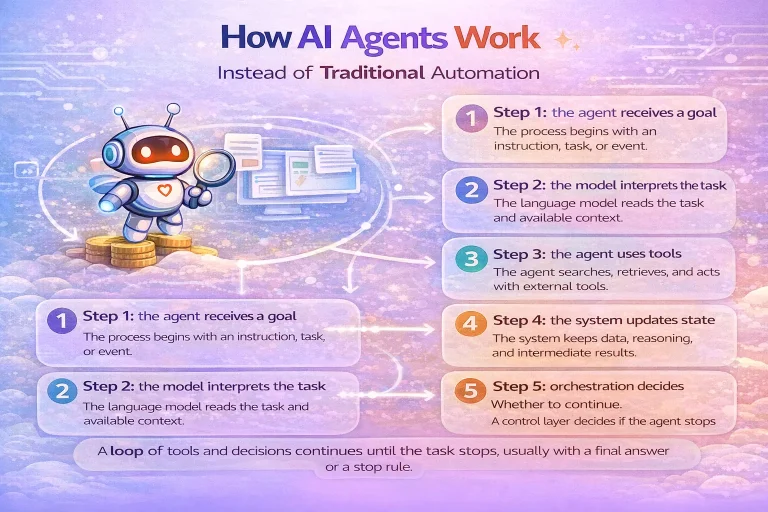
Turning Make scenarios into tools for AI agents means converting ordinary automations into callable actions an agent can choose when it needs them. In Make, that usually means one of two paths: exposing a scenario through MCP so an external client can use it, or adding the scenario directly as a tool inside Make AI Agents.
The scenarios that work best as tools are not the longest or most complex ones. They are the ones with a clear purpose, stable inputs, and predictable outputs. If the agent cannot tell what a scenario does from its name and description, it will either ignore it or call it at the wrong time.
What you will build
You will prepare a Make scenario so it behaves like a tool rather than a general automation. That includes narrowing its scope, defining inputs and outputs, improving naming, and deciding whether it should be exposed through an MCP Toolbox, the full Make MCP server, or directly inside Make AI Agents as a scenario tool.
When this approach is useful
This approach is useful when you want an agent to perform actions instead of only reasoning over text. Good examples include looking up a CRM record, drafting a message, creating a task, searching a spreadsheet, or checking a knowledge base. These are concrete jobs with clear success criteria.
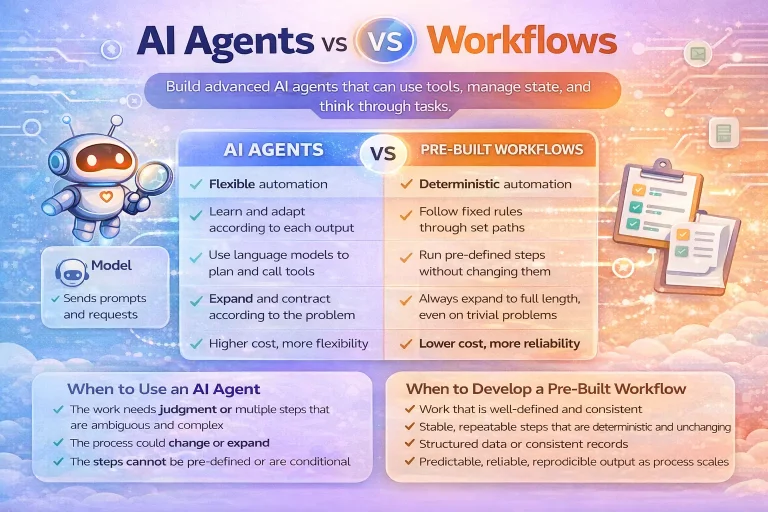
It is less useful for workflows that depend on a large number of hidden conditions, vague human judgment, or long-running operations that exceed MCP time limits.
What makes a Make scenario a good tool
- One clear job per scenario.
- Inputs that are simple and easy to map.
- Outputs that are structured and useful for the next step.
- A name and description that tell the agent when to use it.
- A predictable runtime.
Step 1: Narrow the scenario to a single action
If your scenario currently captures leads, enriches them, updates the CRM, writes to a spreadsheet, and sends a Slack message, it may be a fine automation but a poor tool. Split it into smaller units that the agent can call intentionally. For example, one tool could enrich a lead, another could create the CRM record, and a third could draft the Slack summary.
Step 2: Define the scenario inputs
Agents need clear parameters. If the scenario requires an email address, company domain, ticket ID, or row number, define that explicitly. Avoid tools that require the agent to guess which fields matter.
In Make, this often means adjusting scenario inputs and outputs so the tool accepts the exact fields needed by the downstream modules. Keep the required inputs short and concrete.
Step 3: Define the outputs the agent actually needs
Do not return every module response just because the scenario can. Return the fields the agent needs to continue: success status, created record ID, matching row data, generated draft text, or the summary object. This reduces confusion and token waste.
If an output is intended for another tool call, structure it so the next step can use it directly.
Step 4: Name and describe the tool for model selection
This is one of the most important steps. In Make’s current AI agent guidance, tool names and descriptions strongly affect whether the agent picks the right tool. A good tool name is specific and action-oriented. A good tool description explains what the tool does, what it expects, and any cases where it should not be used.
For example, “Create follow-up task in Asana” is clearer than “Task helper.” A description like “Creates a follow-up task after a qualified sales call; do not use for support tickets” is much easier for the model to reason about.
Step 5: Choose the right exposure path
Use a scenario tool inside Make AI Agents
This is the best option when the agent itself lives inside Make and needs multi-step workflows, filters, and custom inputs and outputs.
Use module tools
This is the fastest path for simple actions, but it is less flexible than a purpose-built scenario.
Use MCP tools
This is the best route when an external AI client—such as Claude or ChatGPT—needs to call the scenario through an MCP server.
Step 6: Test with real prompts, not only technical test cases
After the scenario works technically, test how an agent actually invokes it. Give the agent realistic prompts and check whether it chooses the right tool, passes the right inputs, and interprets the outputs correctly. A scenario that works perfectly in Make can still fail as a tool if the name is vague or the output is noisy.
Common mistakes
Using one tool for both lookup and mutation
Split read-only and write behavior. It is easier for the model to handle and safer in production.
Returning too much output
Agents perform better when tools return only the information needed for the next decision.
Skipping tool descriptions
Default names and generic descriptions are one of the main reasons agents call the wrong workflow.
Exposing fragile scenarios
If the scenario depends on brittle branching, manual assumptions, or fields that often go missing, it is not ready to become a tool.
When to use a template instead of building from scratch
If the workflow pattern already exists in a template, start there. Templates are useful for standard jobs like CRM updates, support routing, enrichment, or content drafting. They reduce setup time for modules and field mapping.
But a template does not automatically become a good tool. You still need to simplify the scenario, define the inputs and outputs, and rewrite the metadata so an agent can understand when to call it.
FAQ
Can any Make scenario become a tool?
Technically, many can. Practically, only scenarios with clear boundaries, stable inputs, and useful outputs make good tools.
Should I use scenarios or module tools for agents?
Use module tools for simple one-step actions. Use scenarios when the logic needs multiple modules, filters, or defined I/O.
What is the best first tool to build?
A read-only lookup tool is usually the best first step because it is safer and easier to validate.
How do I know if a tool is ready?
The agent should be able to choose it correctly from the name and description, pass the needed inputs, and get a clean result without manual correction.
Final notes
Good AI tools are designed, not merely exposed. In Make, the most useful tool-building work happens before the connection step: simplifying the scenario, shaping the data, and giving the agent enough context to make the right call.