How to Build Agentic Workflows with Responses API
A practical setup guide for building tool-using OpenAI workflows that go beyond single-turn prompts.
This tutorial explains how to build agentic workflows with the Responses API, including tool design, state decisions, approvals, and validation. It is aimed at teams moving from simple model calls to real workflow logic.
Related Tools
Details
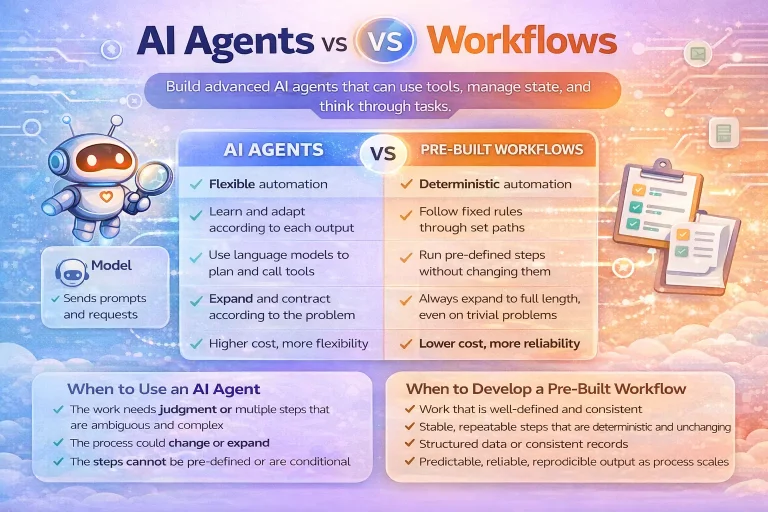
To build agentic workflows with the OpenAI Responses API, you should treat the model as one decision-making component inside a larger workflow, not as the whole application. The Responses API is a strong fit because it can combine model output, tool calls, built-in tools, and multi-turn state in one response flow, while the Agents SDK adds orchestration, handoffs, and tracing when you need more structure.
The most useful way to think about this is not “how do I make an agent?” but “what loop should the model run inside, what tools can it use, and what actions still need guardrails?” That framing leads to workflows that are more reliable than a prompt-only demo.
What you are building
An agentic workflow usually includes these parts:
- a user request or upstream trigger
- a model that interprets the task
- tools or functions the model can call
- optional state across multiple turns
- logic for approvals, retries, and failure handling
- a final structured output or action
What you need
- an OpenAI API key and SDK setup
- a clear workflow goal, such as triage, retrieval, drafting, or routing
- one or more tools the model can call safely
- a decision on whether the flow should be stateless or conversation-based
- an evaluation method for correctness before broader rollout
Step 1: Start with one narrow workflow
Do not begin by exposing every business system to the model. Pick one workflow with a clear success condition. Good starter examples include:
- retrieve account context and draft a support reply
- look up internal docs and summarize next steps
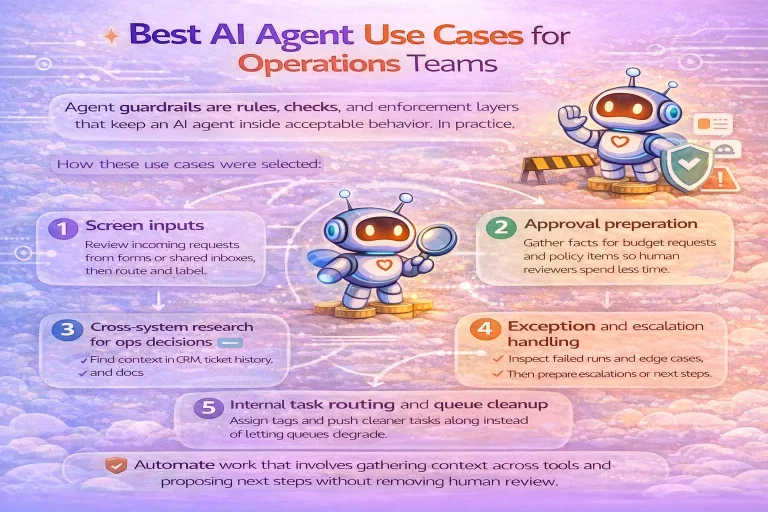
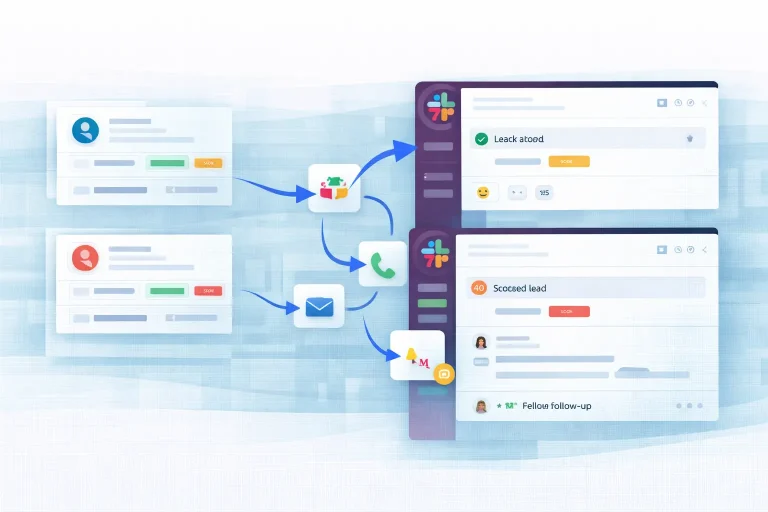
- classify an incoming request and route it to the right queue
The narrower the first workflow, the easier it is to debug tool behavior and prompt instructions.
Step 2: Define the tool layer
Agentic workflows are only as good as their tools. Define a small set of well-scoped functions with clear descriptions and inputs. Avoid exposing raw internal APIs directly if they were not designed for model use.
A better pattern is to create task-level tools such as lookup_customer, search_docs, or create_ticket_draft rather than a huge generic backend surface.
Step 3: Choose state strategy
If every request stands alone, keep the workflow stateless at first. If the task depends on longer conversations or work across sessions, use Conversations with Responses. Do not add durable state unless the workflow actually needs it.
Step 4: Build the response loop
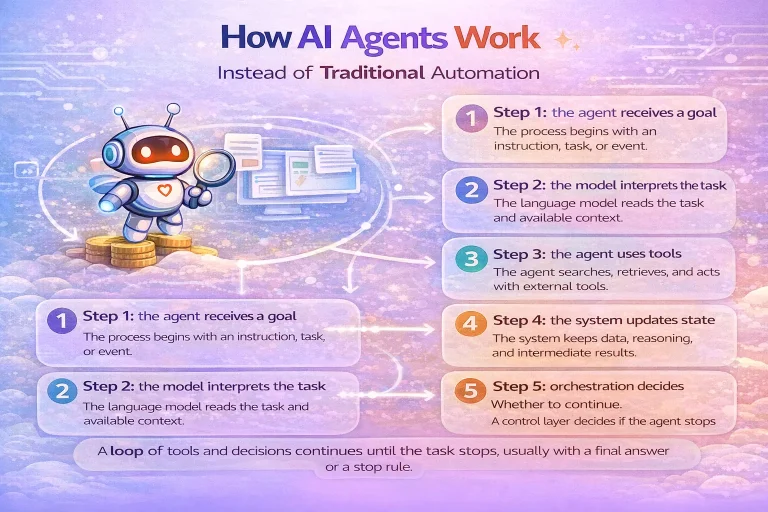
In the core request, send the user input, your instructions, and the list of available tools. Let the model decide whether it can answer directly or whether it should call a tool first. Then pass tool outputs back into the workflow so the model can continue.
This is the point where Responses becomes useful: one interaction can include reasoning, tool calls, tool outputs, and the final answer without you having to force everything into a single chat-message abstraction.
Step 5: Add control flow where needed
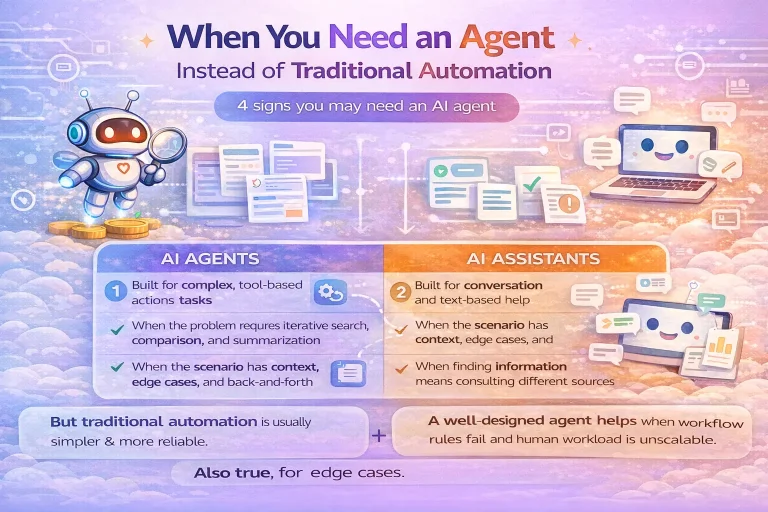
For simple workflows, your own application code may be enough. For more complex systems with handoffs, specialized agents, streaming, and traces, OpenAI’s Agents SDK can provide more structure. Use it when you need orchestration, not just because the word “agent” sounds appealing.
Step 6: Put approvals around risky actions
Do not let the model write to high-impact systems without guardrails. Reads are usually easier to start with than writes. If the workflow can create tickets, update records, send messages, or trigger transactions, add an approval checkpoint or require constrained write tools with narrow scopes.
Step 7: Validate on one real sample path
Before scaling, confirm that one complete path works end to end:
- the input is interpreted correctly
- the right tool is chosen
- the tool output is passed back correctly
- the final answer or action matches the expected format
- the workflow handles one known edge case without failing silently
Common mistakes
- giving the model too many tools at the start
- using tool names that are vague or overlapping
- skipping evaluation and relying on a single happy-path test
- letting the model write directly to sensitive systems too early
- trying to make one giant agent before proving one useful loop
Troubleshooting
- The model does not call the tool: tighten tool descriptions and make the workflow objective more explicit
- The wrong tool is called: reduce overlap between tool purposes and input schemas
- Outputs are unstructured: define your output format more clearly and validate it in code
- The agent loops badly: reduce available actions and add explicit stopping conditions
- State is inconsistent: confirm whether you are using stateless chaining or Conversations, and avoid mixing patterns casually
Where templates help
Templates help when the workflow pattern is already common, such as support triage, document retrieval, or structured routing. They speed up the first working version. They do not remove the need to define safe tools, set approvals, and adapt output handling to your product.
Conclusion
The fastest path to a useful agentic workflow is usually not a bigger prompt. It is a smaller, safer loop: one task, a few well-designed tools, a clear state strategy, and explicit validation. The Responses API is well-suited to that pattern, and the Agents SDK becomes useful once the workflow needs more orchestration than a simple tool-calling loop can handle.