What Is the OpenAI Responses API
A clear explanation of OpenAI’s current response interface for generation, tools, multimodal input, and agent-style workflows.
This guide explains what the OpenAI Responses API is, how it differs from older interfaces, and why it has become the default starting point for many new OpenAI integrations.
Related Tools
Details
The OpenAI Responses API is the company’s current primary interface for generating model outputs and building agent-like applications. It accepts text and image inputs, returns structured response items, and supports built-in tools, function calling, and stateful workflows.
In plain terms, Responses is the layer OpenAI now wants most developers to build on. It is not just a rename of Chat Completions. It is a broader response model designed to handle multi-turn reasoning, tool use, and richer application behavior without forcing developers into the older Assistants object model.
What the Responses API does
At the simplest level, the Responses API creates a model response from your input. But its practical role is larger than basic text generation. It also supports:
- built-in tools such as web search, file search, computer use, and code interpreter
- function calling for your own application tools
- stateful interaction by passing prior response context or using Conversations
- multimodal input flows that combine text and images
How it works
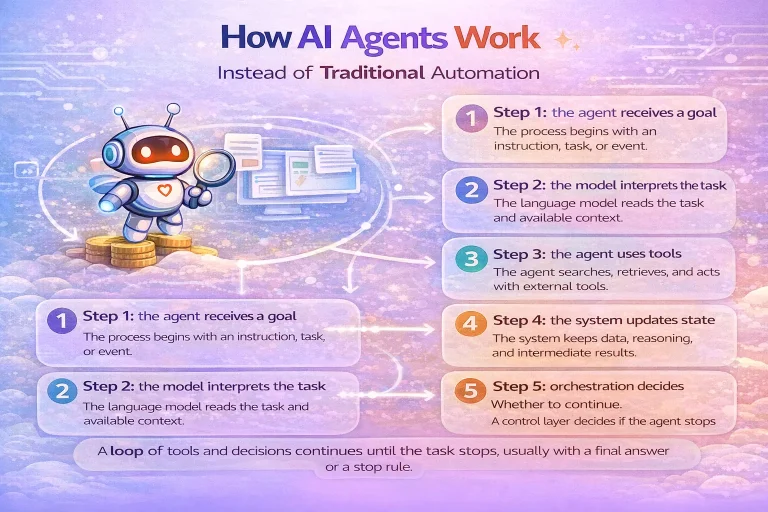
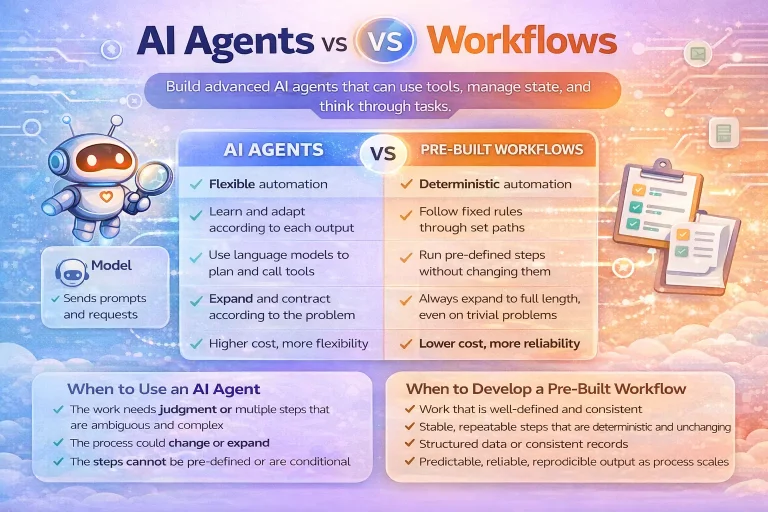
Instead of centering everything on chat messages alone, Responses uses a broader items-based model. That matters because a modern model interaction is not always just user text in and assistant text out. A response may include normal output, tool calls, tool outputs, and intermediate steps that belong to the same overall interaction.
That makes the API easier to use for agentic workflows where the model needs to look up information, call a tool, continue reasoning, and then return a final answer.
Who it is for
The Responses API is for developers and product teams building anything from standard AI features to more advanced tool-using assistants. It is especially useful if your application needs one or more of the following:
- multi-turn interactions
- reasoning models
- tool use inside a single response flow
- durable state through Conversations
- a path that aligns with OpenAI’s current platform direction
Common use cases
| Use case | Why Responses fits |
|---|---|
| Support copilots | Can combine retrieval, tool calls, and answer generation in one workflow |
| Internal knowledge assistants | Works well with file search and conversation state |
| Research workflows | Supports built-in tools and richer multi-step responses |
| Product copilots | Lets you connect custom functions to real product actions |
| Reasoning-heavy tasks | OpenAI recommends Responses for better intelligence and performance with reasoning models |
How it differs from Chat Completions
Chat Completions still exists and remains supported, but Responses is the recommended interface for new projects. The difference is not only naming. Responses adds more native support for tools, state, and agent-like interactions, while Chat Completions remains closer to a simpler turn-based chat pattern.
How it differs from Assistants API
Assistants wrapped persistent assistants, threads, and runs into one higher-level abstraction. Responses is simpler and more flexible. OpenAI now positions Responses, often paired with Conversations, as the successor path for those use cases.
When you should use it
You should generally use the Responses API for any new OpenAI build unless you have a specific reason to stay with a narrower legacy pattern. It is especially appropriate if you expect the application to evolve toward tool use, longer workflows, or model-driven orchestration.
Limitations and misconceptions
The Responses API does not remove the need for application design. You still need to decide what tools the model can access, how state is stored, and how to evaluate output quality. It also is not automatically the fastest path for every tiny use case. If you only need a minimal single-turn generation endpoint, the broader capabilities may be more than you need right away.
A common misconception is that Responses is just an “agent API.” It can support agentic patterns, but it also works perfectly well for simpler apps that want one cleaner path rather than mixing older APIs.
When a template helps
A prebuilt template helps when you already know the workflow pattern you want, such as retrieval plus summary, structured extraction, or tool-calling support actions. It saves time on orchestration and output structure. It does not remove the need to connect your own tools and data correctly.
FAQ
Is the Responses API only for advanced agents?
No. It can power simple text features and more advanced tool-using applications.
Is Chat Completions deprecated?
No. It is still supported, but OpenAI recommends Responses for new projects.
Do I need Conversations to use Responses?
No. You can use Responses statelessly. Conversations becomes useful when you need durable multi-turn state.
Conclusion
The Responses API is OpenAI’s current general-purpose foundation for model-powered applications. It combines generation, tool use, multimodal input, and richer workflow support in one interface. If you are starting fresh, it is usually the safest and most future-aligned place to begin.