Why MCP Matters for AI Agents
MCP matters because it gives AI agents a reusable, discoverable, and governable way to access tools and context.
This guide explains why MCP has become important for agent workflows and what problems it solves that ordinary tool calling does not. It is aimed at teams deciding whether agent infrastructure should stay vendor-specific or move to a shared protocol layer.
Related Tools
Details
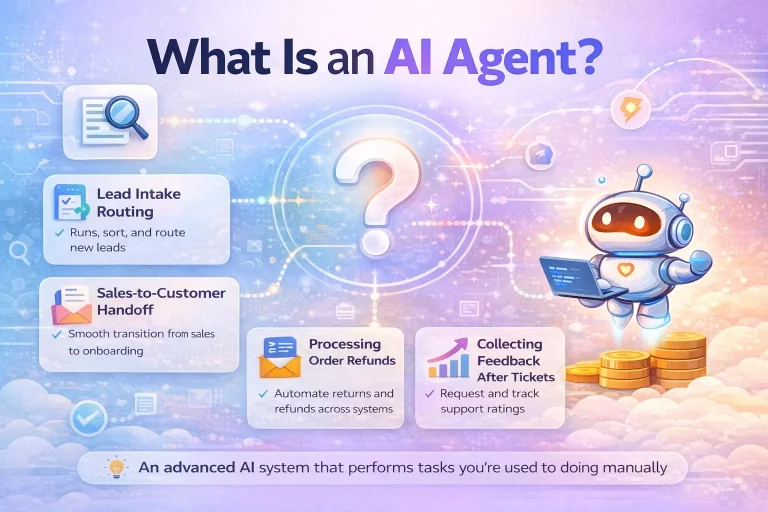
MCP matters for AI agents because it turns tool access from a one-off integration problem into a reusable protocol layer. An agent is only as useful as the systems it can safely read from and act on. Without a standard interface, every new agent, model, or client ends up rebuilding the same connector logic. MCP reduces that duplication and gives agents a clearer way to discover capabilities, retrieve context, and call tools.
That does not mean MCP is the only way to build agents. Plenty of teams can still ship useful agent workflows with direct function calling or client-specific integrations. The reason MCP matters is that those approaches become harder to manage as the number of tools, clients, and workflows grows.
The core problem MCP solves for agents
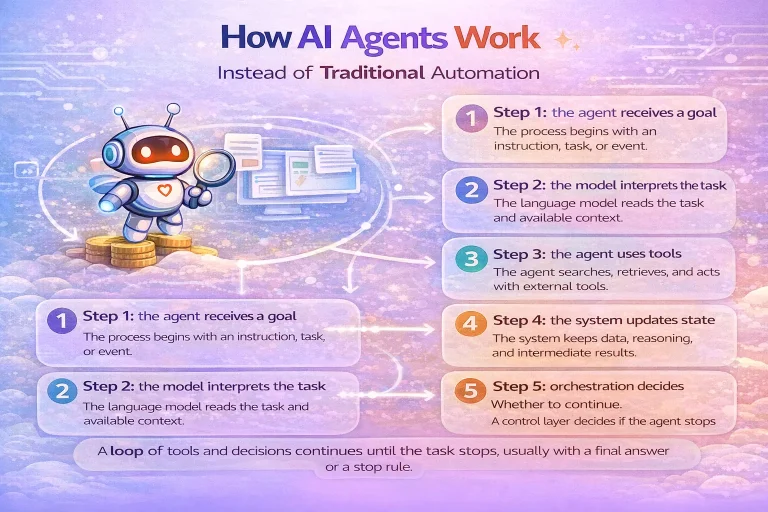
Agents usually need three things beyond model reasoning: context, actions, and control. They need context to understand the task. They need actions to do something in the world. They need control so humans and systems can constrain what the agent is allowed to do. MCP gives a standard way to represent those layers.
- Resources provide the context layer.
- Tools provide the action layer.
- Prompts and related capabilities help structure how users and clients invoke workflows.
This matters because agents do not fail only on reasoning. They also fail on missing context, badly shaped tools, inconsistent schemas, and poor operational boundaries.
Why agents need more than vendor-specific tool calling
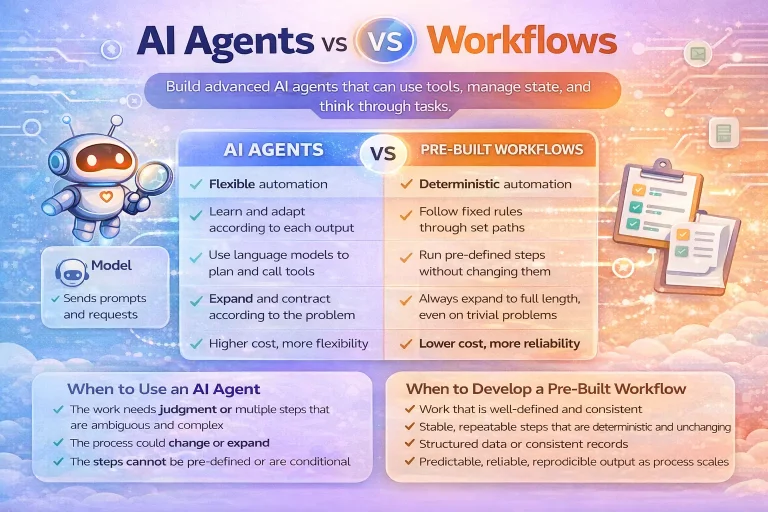
Vendor-native function calling is useful, but it is usually scoped to one model API or one client runtime. MCP matters when you want the same capability to be portable across different clients or when you want tool discovery to happen through a shared contract rather than duplicated configuration.
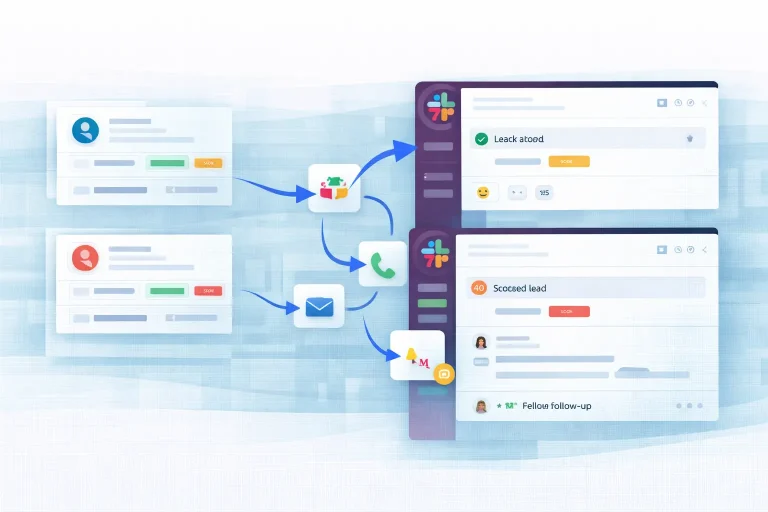
For example, if one team defines a lead qualification tool set for an internal assistant, they may want that same capability to work in a coding agent, a chat assistant, and a workflow review client. MCP makes that goal more realistic because the integration is described once as a server capability instead of redefined separately in each environment.
Why MCP is a better fit for multi-tool agents
| Agent need | Why MCP helps |
|---|---|
| Dynamic tool discovery | Clients can list available tools and resources at runtime |
| Cross-client reuse | The same server can be used by different compatible clients |
| Structured context access | Resources give the agent more than a flat prompt dump |
| Human oversight | Hosts can keep approval and consent in the loop for sensitive actions |
| Operational governance | Capabilities can be scoped, reviewed, and managed more systematically |
Where MCP changes real agent workflows
In a simple chatbot, MCP may not feel essential. In a real agent workflow, the difference becomes obvious. Consider an account operations agent that needs to inspect customer history, read policy docs, generate a draft resolution, and escalate for approval if the workflow crosses a financial threshold. Without MCP, that workflow may rely on custom connectors, prompt stuffing, and client-specific tool definitions. With MCP, the same workflow can pull structured resources, call scoped tools, and route the approval through a host that makes the action explicit.
This structure becomes even more important as agent workflows move into environments with audit requirements, multiple owners, or mixed human and machine decision-making.
Why MCP matters now, not later
MCP matters now because the agent ecosystem is moving beyond experiments. Teams are no longer just asking whether a model can call one function. They are asking how to run tool-rich agents across different environments, how to discover trusted capabilities, and how to keep humans involved when the model reaches a decision point.
The broader MCP ecosystem is also expanding beyond basic tool calls. Interactive UI through MCP Apps and ecosystem discovery through the registry both make MCP more relevant to production agent workflows, not less.
Who benefits most
MCP is especially useful for platform teams, enterprise AI teams, internal tooling teams, and product teams building agents that need durable access to business systems. It is also valuable when one group needs to expose capabilities and another group needs to consume them from several clients.
It is less critical for highly constrained agents with fixed logic, no reuse requirements, and no need for cross-client compatibility.
Tradeoffs and what MCP does not solve
MCP does not make bad tools good. If the inputs are vague, the permissions are too broad, or the workflow has no review step, the protocol will not save the design. It also does not replace orchestration logic, testing, or operational ownership. Teams still need to decide what the agent should be allowed to do and how to measure whether it did it correctly.
There is also a practical adoption cost. Introducing MCP means thinking in terms of servers, capability negotiation, and client support rather than only writing a prompt plus one API call. That extra structure is worthwhile when reuse and governance matter. It is overkill when they do not.
When templates help
A template can help teams move from “MCP matters in theory” to “this agent workflow now works in our stack.” Templates are useful for recurring patterns such as approvals, ticket triage, lead routing, or internal knowledge lookup. They reduce orchestration work, but they still need business-specific scoping and permissions.
FAQ
Does every AI agent need MCP?
No. Small, single-purpose agents can work well with direct integrations.
Is MCP mainly about tools?
No. Tools are central, but MCP also matters because of structured resources, prompts, client-server boundaries, and growing support for richer interaction patterns.
Why not just keep using custom APIs?
You can. MCP matters when repeated custom integrations start slowing down reuse, consistency, and governance across agents.
Conclusion
MCP matters for AI agents because it gives them a cleaner operational foundation. It standardizes how capabilities are exposed, how context is retrieved, and how actions are controlled. If your agent strategy is moving from one-off demos toward shared, multi-system, multi-client workflows, MCP is no longer a niche concept. It is becoming part of the infrastructure choice.