
What Is Manus?
A clear introduction to Manus, the AI agent product focused on delivering completed work rather than just chat responses.
This guide explains what Manus is, what it actually does, and how it differs from a normal assistant or an open-source agent framework. It is especially useful if you are deciding whether you need a polished agent product or a build-it-yourself stack.
Related Tools
Details
Manus is a proprietary AI agent product designed to complete tasks, create files, and deliver finished outputs instead of stopping at conversational answers. Its product positioning is straightforward: rather than only telling you how to do something, Manus aims to actually do the work through tools such as browser access, file handling, and workflow execution.
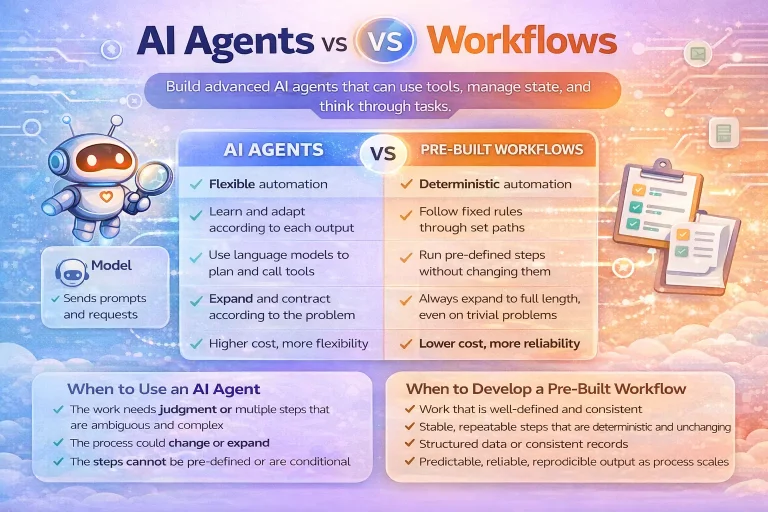
That makes Manus different from both a basic chatbot and a low-level agent framework. A chatbot is primarily an interface for asking questions. A framework gives developers primitives for building agents. Manus is closer to an end-user agent system: the focus is execution, not just explanation.
What does Manus do in practice?
Manus is built for tasks that go beyond a single prompt-response exchange. The official product examples include creating slides, building websites, developing desktop apps, and running broader research tasks. Its tools page emphasizes browser and file-system access, which matters because those capabilities let an agent work across multiple steps and produce artifacts rather than just prose.
In practical terms, that means Manus is aimed at deliverables. Instead of receiving a checklist for how to prepare a deck, you ask for the deck. Instead of receiving a description of how to browse sources, you ask for a research result. The product promise is “finished work” rather than “good suggestions.”
How does Manus work?
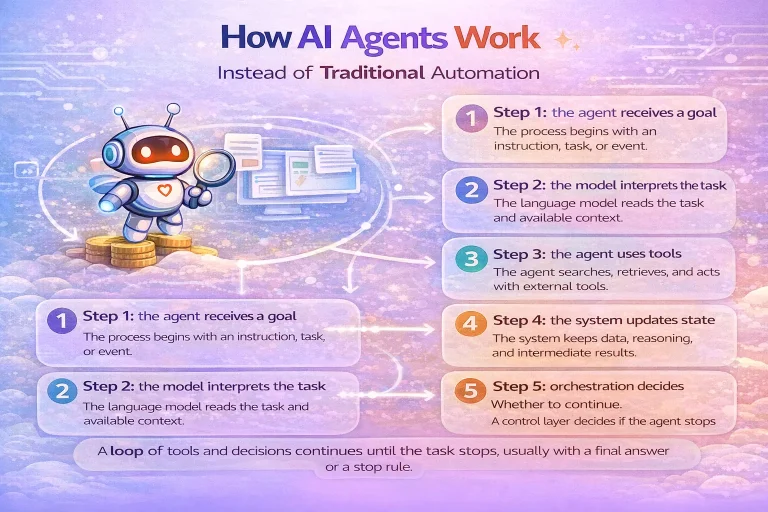
Manus combines model reasoning with tool use. The important point is not the underlying model brand; it is the execution environment around it. Manus can operate in a browser-style workflow, access files, and run reusable skills. Its Agent Skills feature is built around a portable skills format and a sandboxed execution model, which is meant to make workflows reusable instead of prompt-only.
This matters because many so-called AI agents are still mostly wrappers around chat. Manus tries to cross that line by giving the agent somewhere to act. A real execution environment makes it possible to assemble web research, file creation, and multi-step logic into a single task flow.
Who is Manus for?
- Users who want the easiest path to agent execution without building infrastructure themselves.
- Teams that value polished product experience more than low-level control.
- Operators and knowledge workers who care about outputs like slides, reports, or web artifacts.
Manus is not the best fit for someone whose main priority is open-source transparency or deep framework customization. If you want to inspect every orchestration decision, swap internal components freely, or self-host the whole stack, a framework such as LangGraph or an open project like DeerFlow will usually make more sense.
What is Manus used for?
- Research and synthesis
- Creating files such as slide decks and websites
- Running browser-based task execution
- Packaging repeatable workflows as reusable skills
The common thread is that Manus is built for multi-step digital work. It is less about one clever answer and more about moving through a task end to end.
How is Manus different from nearby options?
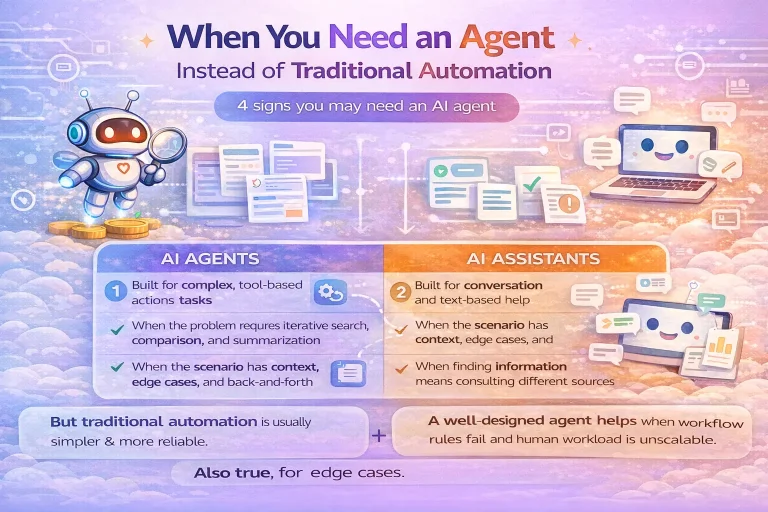
Compared with ChatGPT or Claude in normal chat mode, Manus is more execution-oriented. The difference is not that other assistants cannot reason; it is that Manus is positioned around completing the work through tools and artifacts.
Compared with OpenManus or DeerFlow, Manus is the easier product to start with because it is delivered as a polished service. The tradeoff is lower infrastructure control. Open alternatives can be more adaptable, but they usually ask you to handle setup, deployment, or framework choices.
Compared with LangGraph, Manus is not really a framework competitor. LangGraph is what developers use to build stateful agents. Manus is what many users would rather use when they do not want to build the stack themselves.
When should you care about Manus?
Manus matters when the task is bigger than chat but you do not want to assemble your own agent platform. It is especially relevant if you care more about speed to useful output than about deep customization. For a founder, analyst, or operator who wants results fast, that can be a meaningful advantage.
It matters less when your workflow needs hard control over infrastructure, strict self-hosting, or a heavily customized orchestration layer. In those cases, frameworks and open projects are usually better long-term choices even if they are slower to adopt.
Limitations and misconceptions
The biggest misconception is that an execution-oriented agent automatically guarantees correct outputs. It does not. Acting on the web or creating files is useful, but quality still depends on instructions, source quality, and model behavior. Finished work can still need review.
The second limitation is that proprietary agent products are usually less transparent than open stacks. You may not get the same visibility into orchestration logic, error handling, or internal decision paths that you would have in an open-source system.
The third limitation is fit. If your needs are mostly internal automation pipelines, API-heavy logic, or controlled enterprise workflows, a general-purpose agent product may not replace a dedicated orchestration framework.
FAQ
Is Manus an open-source framework?
No. Manus is best understood as a productized AI agent platform rather than an open-source orchestration framework.
Is Manus just a chatbot?
No. Its product focus is task execution and deliverables, not only question answering.
Does Manus replace the need for agent frameworks?
Not for developers building custom systems. Manus can reduce the need to build your own stack for many use cases, but it does not replace a framework when you need deep control.
When is Manus the wrong choice?
It is the wrong choice when self-hosting, deep customization, or infrastructure transparency matters more than convenience.
Conclusion
Manus is an AI agent product for people who want outputs, not just guidance. Its main value is that it packages tool use, execution, and reusable workflows into a more accessible experience than most open agent stacks. That makes it strong for speed and ease of use, but less attractive for builders who want full control.