What Is Open Deep Research?

A practical explainer of the open-source deep research agent built to run multi-step web research with configurable models, search tools, and MCP integrations.

This guide explains what Open Deep Research is, how it works, and when it makes more sense than a chat-first AI assistant. It is most useful for people who want a transparent, configurable research workflow instead of a closed product.

Difficulty Beginner
Read Time 10 minutes

Related Tools

Details

Open Deep Research is an open-source deep research agent built to plan, search, read, synthesize, and write reports across multiple steps. In practice, it sits between a simple chat assistant and a custom agent stack: you give it a research goal, and it can use search tools, models, and MCP-connected tools to gather evidence and produce a structured answer.

The main reason people care about Open Deep Research is control. Instead of using a closed “research mode” inside a hosted product, you can inspect the workflow, swap model providers, choose search backends, and adapt the reporting logic to your own use case. That makes it relevant for builders, analysts, and teams that want repeatable research workflows rather than one-off prompts.

What does Open Deep Research do?

At a practical level, Open Deep Research automates the boring parts of complex research. It can break a topic into sub-questions, search across the web, evaluate sources, keep track of findings, and compile a report. The output is usually more structured than a standard chat reply because the system is designed around research steps rather than a single answer turn.

A typical use case is market scanning. Instead of manually opening ten tabs, comparing sources, and merging notes into a document, you can define the goal once and let the agent collect findings, identify gaps, and draft a report. That same pattern also works for competitive analysis, technical landscape reviews, and early-stage due diligence.

How does it work?

Open Deep Research is designed as a configurable research agent. You can choose different model providers, different search tools, and even MCP servers if your workflow needs external capabilities. That means the system is not tied to one model vendor or one data source.

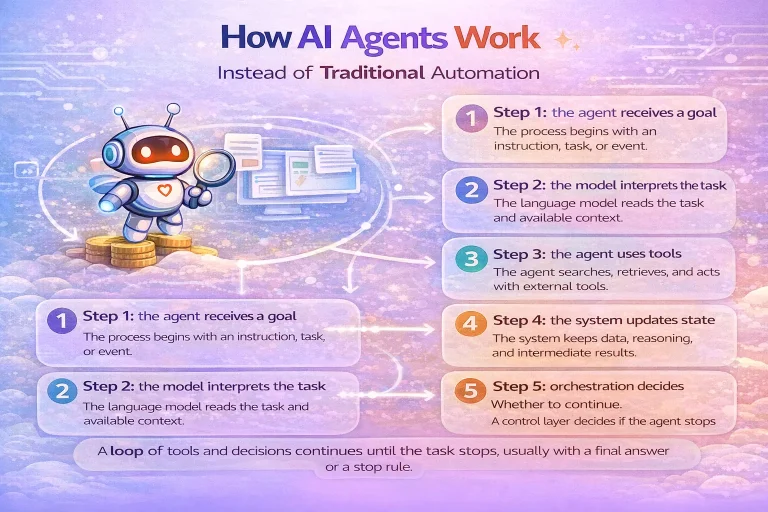
The workflow is usually: define the question, generate a research plan, run search and browsing steps, evaluate retrieved material, then synthesize the findings into a report. Because the process is explicit, it is easier to debug than a black-box assistant. If results are weak, you can often improve them by changing the search tool, the prompts, or the report structure instead of rewriting the entire system.

Who is Open Deep Research for?

  • Developers and technical operators who want to inspect or modify the research workflow.
  • Teams with strict tool preferences that need specific model providers, search APIs, or MCP integrations.
  • People comparing open alternatives to proprietary deep research products.

It is less ideal for someone who wants the simplest possible consumer experience. If your priority is “open the app and get a polished result with no setup,” a hosted product like Manus will usually feel easier. Open Deep Research is stronger when configurability matters more than convenience.

Common use cases

  • Competitive analysis reports
  • Technology landscape reviews
  • Vendor and tool evaluations
  • Research briefs that need repeatable structure
  • Internal workflows where the team wants to control models and search providers

How is it different from a normal AI assistant?

A normal assistant is optimized for conversation. Open Deep Research is optimized for multi-step research. That difference sounds subtle, but it changes the product behavior. A chat assistant usually answers from a single interaction, while a deep research agent is designed to revisit sources, branch into follow-up searches, and produce a more deliberate written output.

It is also different from a general agent framework like LangGraph. LangGraph is the orchestration layer you use to build long-running agents. Open Deep Research is a more specific implementation aimed at the research use case. If you need a ready starting point for research, Open Deep Research is closer to the problem. If you want to build your own broader agent system, LangGraph is the lower-level option.

When does it make sense to use it?

Use Open Deep Research when your task needs source gathering, iterative search, and a written synthesis. It is a strong fit when you would otherwise spend a lot of time manually collecting links, notes, and summaries. It is also useful when you want an open baseline that you can adapt for your own domain.

It is overkill for simple requests like “summarize this article” or “compare these two paragraphs.” In those cases, a normal chat assistant or a lightweight workflow is faster.

Limitations and common misunderstandings

The biggest misconception is that “deep research” automatically means higher factual quality. The workflow can improve coverage and structure, but results still depend on the underlying model, the search tool quality, and the source material it finds. Open systems are not magically accurate just because they are configurable.

The second limitation is setup overhead. Hosted products remove friction; open projects move some of that work to you. You may need to configure environment variables, choose providers, and tune prompts before the system becomes genuinely useful for your workflow.

A third limitation is that research outputs often still need human judgment. The agent can collect, cluster, and draft, but someone still needs to decide whether the evidence is strong, current, and relevant enough for the final decision.

FAQ

Is Open Deep Research a product or a framework?

It is best understood as an open-source research agent implementation. It is more opinionated than a low-level framework, but more configurable than a closed SaaS feature.

Is Open Deep Research only for developers?

No, but developers will get more value from it because they can modify the workflow, models, and tools. Non-technical users can still try it, though the setup burden is higher than in a hosted product.

Can it replace proprietary deep research tools?

For some teams, yes. If your priority is transparency and flexibility, it can be a strong alternative. If your priority is the smoothest out-of-the-box experience, a hosted tool may still be easier.

Does a template help?

Yes. A template can speed up the last mile by giving you a starting report structure, prompt flow, or automation path. But templates do not remove the need to choose the right model, search provider, and evaluation logic for your use case.

Conclusion

Open Deep Research is an open-source answer to the growing demand for multi-step AI research. Its value is not just that it can browse and write; it is that you can control how the research is done. That makes it most useful for teams that want a research system they can inspect, adapt, and reuse.

Related Guides