DeerFlow vs OpenClaw: Which One Fits Your AI Workflow Better?

A practical comparison of DeerFlow and OpenClaw for research workflows, self-hosting, messaging access, and agent setup.

DeerFlow and OpenClaw are both open-source AI agent projects, but they solve different problems. DeerFlow is built around deep research, report generation, tools, and long-running agent tasks, while OpenClaw is built around self-hosted agent access through messaging channels like WhatsApp, Telegram, Discord, and iMessage. This guide breaks down where each one fits, what tradeoffs matter, and which setup makes more sense depending on the kind of workflow you want to run.

Difficulty Intermediate
Read Time 20 minutes

Related Tools

Details

DeerFlow and OpenClaw can both sit inside an AI workflow stack, but they are not direct substitutes in the way many people first assume. They overlap at the broad “open-source agent” level, yet their actual product shapes are quite different. DeerFlow is centered on deep research, structured execution, tool use, code running, memory, and report-style outputs. OpenClaw is centered on self-hosted access to AI agents through messaging channels, with a Gateway process that routes sessions, channels, and agent interactions.

If you compare them as if they were two versions of the same product, the result will be confusing. The better question is this: are you trying to build a research-oriented agent workflow, or are you trying to make an agent available across channels like WhatsApp, Telegram, Discord, and iMessage while keeping it self-hosted? Once that distinction is clear, the DeerFlow vs OpenClaw decision becomes much easier.

Quick verdict

Choose DeerFlow if your main goal is deep research, source gathering, coding inside the workflow, report generation, or longer multi-step tasks that need planning and synthesis.

Choose OpenClaw if your main goal is persistent self-hosted agent access through messaging apps, session routing, multi-channel delivery, and a gateway layer that lets you talk to an agent from wherever you already work.

For some teams, the real answer is not DeerFlow or OpenClaw. It is DeerFlow for the research engine and OpenClaw for the access layer. That combination makes more sense than forcing one tool to do the other tool’s job.

What DeerFlow is built for

DeerFlow started as an open-source deep research framework and has continued evolving toward a broader “super agent” direction. Its public project materials emphasize web search, crawling, Python execution, MCP integration, report generation, memory, sandboxed file work, skills, tools, subagents, and long-running tasks. In practical terms, DeerFlow is designed for workflows where the system needs to plan, investigate, gather material, execute technical steps, and return a structured output rather than a short answer.

That makes DeerFlow a strong fit for use cases such as:

  • market and competitor research
  • technical briefings and report generation
  • document-grounded analysis with private knowledge sources
  • research workflows that mix browsing, crawling, and code execution
  • multi-step tasks that may run for longer than a normal chat session

The underlying shape is closer to a research system than a chat gateway. Even when DeerFlow expands into broader agent tasks, its core identity is still tied to planning, retrieval, and output production.

What OpenClaw is built for

OpenClaw is built around a different center of gravity. Its official documentation describes it as a self-hosted Gateway for AI agents across messaging platforms including WhatsApp, Telegram, Discord, and iMessage. The Gateway acts as the single source of truth for sessions, routing, channels, and control, while a browser-based dashboard handles chat, configuration, and session management.

That means OpenClaw is less about deep research workflow design and more about access, persistence, and delivery. It is useful when you want an assistant that you can message from your phone, team chat, or other familiar channels without depending on a fully hosted SaaS product.

OpenClaw makes the most sense for use cases such as:

  • self-hosted personal AI assistants
  • multi-channel agent access for developers or operators
  • session-based agent routing for teams or different workspaces
  • mobile-first access to agent workflows
  • agent systems where the channel layer matters as much as the model layer

Core positioning difference

The easiest way to think about DeerFlow vs OpenClaw is this:

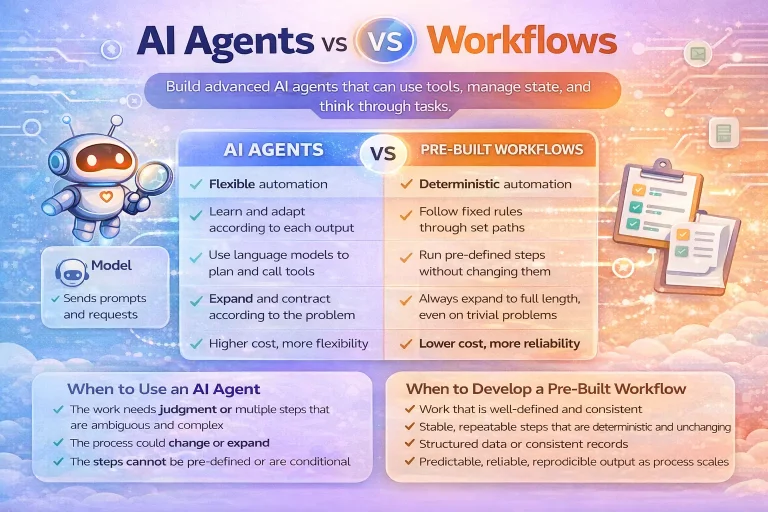
  • DeerFlow is a workflow engine for research-heavy and execution-heavy tasks
  • OpenClaw is a gateway layer for reaching agents through real communication channels

DeerFlow is stronger when the work itself is complicated. OpenClaw is stronger when access and orchestration across channels are complicated.

If your main problem is “how do I get better research and structured outputs,” DeerFlow is the cleaner fit. If your main problem is “how do I make my agent reachable and persistent across messaging apps,” OpenClaw is the cleaner fit.

Deep research and knowledge workflows

This is the category where DeerFlow clearly leads. DeerFlow is built around web search, crawling, Python execution, report generation, and private knowledge integrations such as vector databases and RAG systems. It also uses a modular architecture with planner, researcher, coder, and reporter roles, which makes it easier to understand why it performs well on multi-step research tasks.

OpenClaw can still be part of a research workflow, but it is not designed first as a deep research framework. You could absolutely connect a research-oriented agent behind OpenClaw and then access it through Telegram or Discord, but the research engine would be coming from elsewhere. OpenClaw itself is not the thing that turns a vague topic into a multi-stage report.

If research is the priority, DeerFlow is the stronger choice.

Messaging and channel access

This is where OpenClaw clearly stands out. Its main value is that you can run one Gateway process and connect multiple messaging channels at once. That means the agent does not live only in a browser tab. It lives where you already communicate.

DeerFlow has a web-based interface and broader super-agent ambitions, but public materials do not position it as a multi-channel messaging gateway in the same way. Its strength is not “message your assistant from anywhere.” Its strength is “run a more capable task workflow.”

If channel access is the priority, OpenClaw is the stronger choice.

Architecture and workflow model

DeerFlow architecture

DeerFlow uses a modular multi-agent architecture built on LangGraph. Public documentation describes a coordinator, planner, research team, coder, and reporter, with human-in-the-loop plan editing and configurable tool integrations. That architectural shape is very useful for tasks that require decomposition, iterative execution, and structured outputs.

OpenClaw architecture

OpenClaw revolves around a central Gateway process. The Gateway manages sessions, routing, channels, auth, and related operations. Around that, OpenClaw exposes a control UI and channel integrations, making it feel more like agent infrastructure and operational middleware than a research pipeline.

In other words, DeerFlow is workflow-centric. OpenClaw is gateway-centric.

Self-hosting and control

Both DeerFlow and OpenClaw are open source and self-hostable, which is one reason they get compared. But the kind of control they offer is different.

With DeerFlow, self-hosting is mostly about controlling your research stack: model providers, search providers, crawling tools, memory, sandboxing, and workflow execution.

With OpenClaw, self-hosting is mostly about controlling your access layer: where the gateway runs, how channels are configured, how sessions are routed, and how messages move between users and the underlying agent.

So while both projects appeal to users who want more ownership than a hosted product gives them, the operational focus is not the same. DeerFlow ownership is workflow ownership. OpenClaw ownership is runtime and channel ownership.

Setup complexity

Neither tool is aimed at complete beginners, but the setup complexity shows up in different places.

DeerFlow setup

DeerFlow requires a Python and Node-based environment, plus configuration for models, search tools, crawling tools, and optional integrations such as MCP or private knowledge systems. The complexity is usually front-loaded into the workflow stack and the external services you want it to use.

OpenClaw setup

OpenClaw requires Node 22+, onboarding, gateway configuration, authentication, and optional channel pairing. The complexity is usually front-loaded into service management, auth, and channel operations rather than research tooling.

In simple terms, DeerFlow setup is heavier if you care about research quality and tool configuration. OpenClaw setup is heavier if you care about messaging access, always-on operation, and secure multi-channel routing.

Model support and tool extensibility

DeerFlow is explicitly designed to combine language models with search, crawling, Python execution, MCP services, and knowledge systems. It also supports multiple model providers and can be expanded with tools, skills, and subagents. This gives it a broad surface area for research and task execution.

OpenClaw is also agent-native and depends on external model providers, but the public positioning is more focused on using models through the gateway rather than building a full research orchestration layer around them. It supports sessions, tool use, routing, and agent interaction, but not with the same clear deep-research emphasis as DeerFlow.

If your selection criteria are tool breadth, research integrations, and long-task flexibility, DeerFlow usually comes out ahead.

Security and privacy tradeoffs

Both tools appeal to users who want more control than hosted agent platforms provide, but neither one should be treated as “private by default” in a simplistic sense.

With DeerFlow, your privacy and exposure depend on which model providers, search tools, crawlers, and knowledge systems you connect. The framework can be self-hosted, but many of the useful integrations still involve external APIs.

With OpenClaw, local state and gateway control live on your machine or server, but the documentation makes clear that prompts still go to model providers and messages still pass through the relevant chat platforms. That means the security model has to account for both the gateway and the external services around it.

So the real privacy question is not just whether the project is open source. It is what services sit around it, what data moves through them, and how carefully you configure the system.

Best use cases for DeerFlow

  • deep research workflows
  • competitive analysis and market reports
  • technical reports that require code execution
  • longer agent tasks that benefit from planning and sub-tasking
  • internal research assistants that use private knowledge plus web retrieval

Best use cases for OpenClaw

  • self-hosted personal AI assistants
  • always-on agents reachable from messaging apps
  • team agent access across multiple channels
  • mobile-first AI workflows
  • using chat platforms as the front door to an internal agent stack

When DeerFlow is the wrong fit

DeerFlow is often too much if what you actually need is an always-on assistant in Telegram or Discord. If the workflow itself is not research-heavy or tool-heavy, DeerFlow can feel like unnecessary machinery.

When OpenClaw is the wrong fit

OpenClaw is often the wrong fit if you expect it to behave like a fully developed deep research system out of the box. It can expose agents through channels, but it is not the main engine for planning, searching, crawling, and synthesizing long reports.

Can DeerFlow and OpenClaw work together?

Yes, and this is one of the more useful ways to think about them. DeerFlow can serve as the workflow engine for research and complex multi-step tasks, while OpenClaw can serve as the access layer that lets you trigger or interact with those workflows through messaging apps.

That architecture will not make sense for everyone, but for teams that want both deeper workflow capability and broader accessibility, it is a more realistic pairing than trying to force either project into a role it was not designed for.

Final verdict

If you need a deep research framework, choose DeerFlow.

If you need a self-hosted messaging gateway for agents, choose OpenClaw.

If you need both a capable workflow engine and a flexible access layer, the strongest answer may be to use DeerFlow behind the scenes and OpenClaw in front of it.

The mistake is not choosing the “wrong” open-source agent. The mistake is comparing two tools at the wrong layer of the stack. DeerFlow and OpenClaw overlap just enough to create confusion, but in practice they serve different primary jobs. Once you compare them on that basis, the right choice becomes much more obvious.

[workflowlibrary_related_templates]

Related Guides