LangGraph
LangGraph is an AI agent framework for building graph-based workflows and orchestrating stateful LLM systems.
Visit Website
About This Tool
LangGraph is an AI agent framework for building graph-based workflows and orchestrating stateful LLM systems. Developed as part of the LangChain ecosystem, it enables developers to define workflows as graphs where nodes represent steps and edges control execution flow. LangGraph is commonly used for building AI agents, multi-step reasoning pipelines, and automation workflows that require memory, persistence, and complex control logic.
Why people use LangGraph
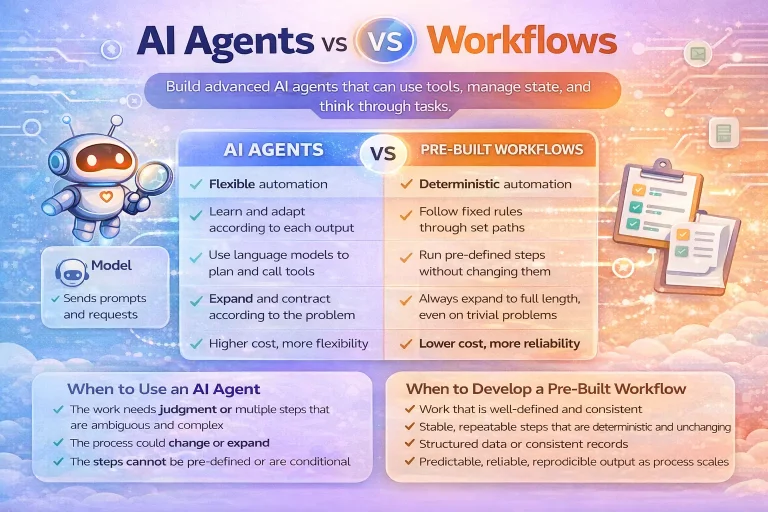
Developers use LangGraph when they need more control over AI workflows than traditional linear pipelines provide. Its graph-based architecture allows for branching, looping, and stateful execution, making it suitable for building long-running agents and complex decision systems. It is often used for AI applications such as research agents, copilots, and autonomous workflows that require structured reasoning and state management. On workflowlibrary.ai, LangGraph is commonly used as the foundation for advanced AI agent templates and LLM orchestration workflows.
Core capabilities
- Graph-based workflow design for AI agents and LLM systems
- Stateful execution with memory and persistence support
- Flexible control flow including loops, branches, and retries
- Integration with LangChain and LLM providers
- Support for long-running and autonomous workflows
- Customizable node-based workflow architecture
Who it is best for
LangGraph is best for developers, AI engineers, and technical teams building advanced AI agent systems and LLM workflows. It is particularly suitable for projects that require stateful execution, complex control flow, and graph-based orchestration of tasks. It also works well for teams building research agents, copilots, and automation systems where memory, persistence, and structured reasoning are essential.
Best For
LangGraph is best for developers, AI engineers, and technical teams building advanced AI agent systems and stateful LLM workflows. It is particularly suitable for projects that require graph-based orchestration, complex control flow, and long-running execution with memory and persistence. It also works well for teams developing research agents, copilots, and autonomous workflows where structured reasoning and flexible execution are critical.
Key Features
- Graph-based workflow architecture
- Stateful LLM execution with memory
- Flexible control flow with loops and branching
- Integration with LangChain ecosystem
- Support for long-running workflows
- Node-based workflow design
- Customizable execution logic
- LLM orchestration capabilities
Pros
- Powerful graph-based workflow model
- Strong support for stateful AI systems
- Flexible control over complex workflows
- Open source and extensible
- Deep integration with LangChain ecosystem
- Suitable for advanced AI agent use cases
Cons
- Requires strong technical and Python knowledge
- Not suitable for non-technical users
- Steeper learning curve compared to simpler frameworks
- Ecosystem still evolving
- Requires setup and infrastructure management
- Limited visual tooling compared to no-code platforms