Best AI Agent Use Cases for Support Teams
The best AI agent use cases for support teams are the ones that combine case context, tool access, and controlled actions rather than fully unsupervised customer handling.
This guide covers practical AI agent use cases for support teams, which ones are worth implementing first, and where human approval still matters.
Related Tools




Details
The best AI agent use cases for support teams are not “replace the support team” use cases. They are the ones that gather context, reduce repetitive handling, and help agents move faster without removing human judgment where it still matters.
Support work is a good fit for agents because many tickets require reading account context, checking product history, classifying the issue, drafting a response, and deciding whether the case should be escalated. That is exactly the kind of bounded reasoning plus tool use that agents can help with.
How these use cases were selected
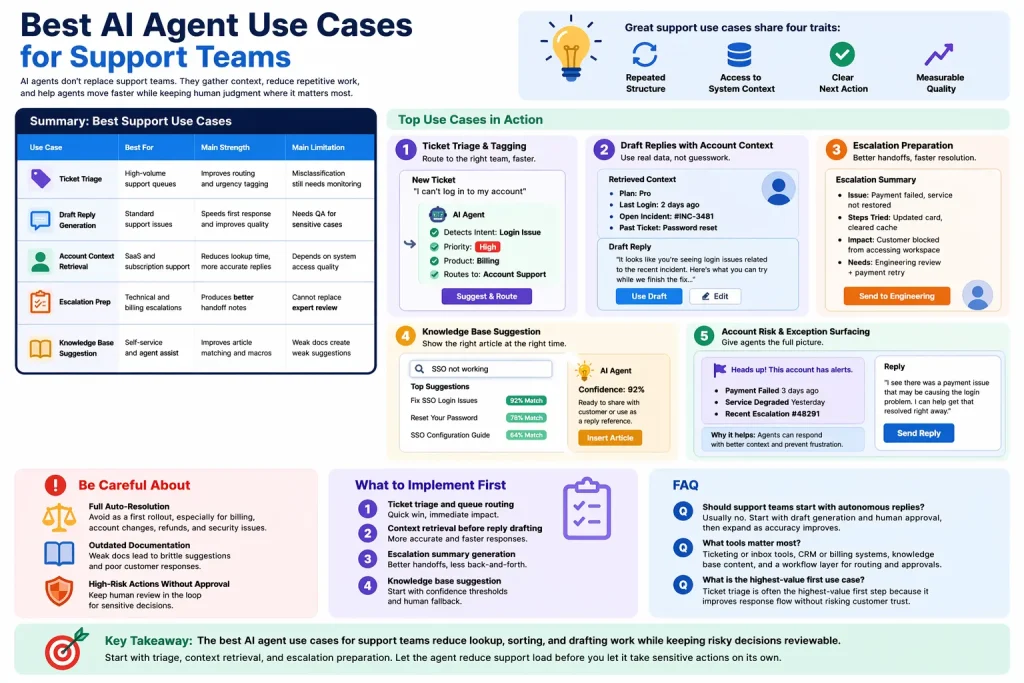
The strongest support use cases share four traits: repeated structure, access to system context, a clear next action, and measurable quality. The weakest use cases are the ones where the agent would need too much policy judgment or where an incorrect action would create account, billing, or trust problems.
Summary table
| Use case | Best for | Main strength | Main limitation |
|---|---|---|---|
| Ticket triage | High-volume support queues | Improves routing and urgency tagging | Misclassification still needs monitoring |
| Draft reply generation | Standard support issues | Speeds first response | Needs QA for sensitive cases |
| Account context retrieval | SaaS and subscription support | Reduces lookup time | Depends on system access quality |
| Escalation prep | Technical and billing escalations | Produces better handoff notes | Cannot replace expert review |
| Knowledge base suggestion | Self-service support | Improves article matching | Weak docs create weak answers |
The best support use cases
1. Ticket triage and tagging
An agent can read the incoming message, detect intent, assign priority, identify product area, and route the ticket into the right queue. This is one of the best first use cases because the output is easy to review and the impact is immediate.
2. Drafting replies with account context
Instead of responding from the ticket text alone, the agent can retrieve subscription level, recent incidents, past tickets, or feature flags, then prepare a more accurate reply. This is stronger than generic reply generation because it uses actual support context.
3. Escalation preparation
Before handing off to engineering or billing, the agent can summarize the issue, list reproduction clues, attach prior interactions, and flag missing information. That reduces handoff friction.
4. Knowledge base and workflow suggestion
For repetitive issues, the agent can suggest the closest article, macro, or next workflow. This works especially well when combined with confidence thresholds and fallback to a human.
5. Account risk and exception surfacing
An agent can warn the support rep that the account has an unresolved outage, failed payment, or recent escalation, so the reply takes the full context into account.
Where support teams should be careful
Full auto-resolution is usually not the best first rollout, especially for billing disputes, account changes, refunds, and security issues. These flows need stronger approval controls and clearer boundaries.
Support teams should also avoid relying on agents when internal documentation is outdated. Weak documentation produces brittle suggestions and poor customer responses.
What to implement first
- Triage and queue routing
- Context retrieval before reply drafting
- Escalation summary generation
- Knowledge base suggestion with confidence thresholds
FAQ
Should support teams start with autonomous replies?
Usually no. Start with draft generation and human approval, then expand only after measuring accuracy.
What tools matter most?
Ticketing or inbox tools, CRM or billing context, knowledge base content, and a workflow layer for routing and approvals.
What is the highest-value first use case?
Ticket triage is often the highest-value first use case because it improves response flow without requiring immediate customer-facing automation.
Conclusion
The best support-team agent use cases are the ones that reduce lookup, sorting, and drafting work while keeping risky decisions reviewable. Start with triage, context retrieval, and escalation preparation. Let the agent reduce support load before you let it take sensitive actions on its own.
Related Guides
AI Agents vs Assistants
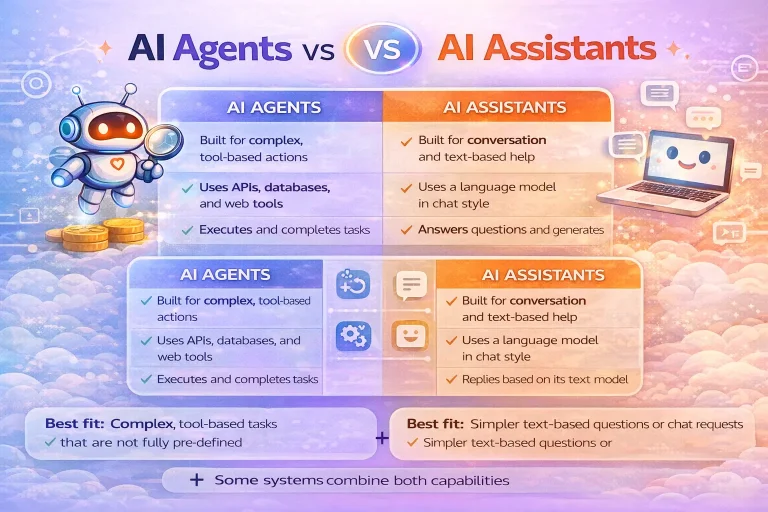
This guide compares AI agents and assistants in plain terms so you can decide which model fits your product or workflow. It focuses on...
Read Guide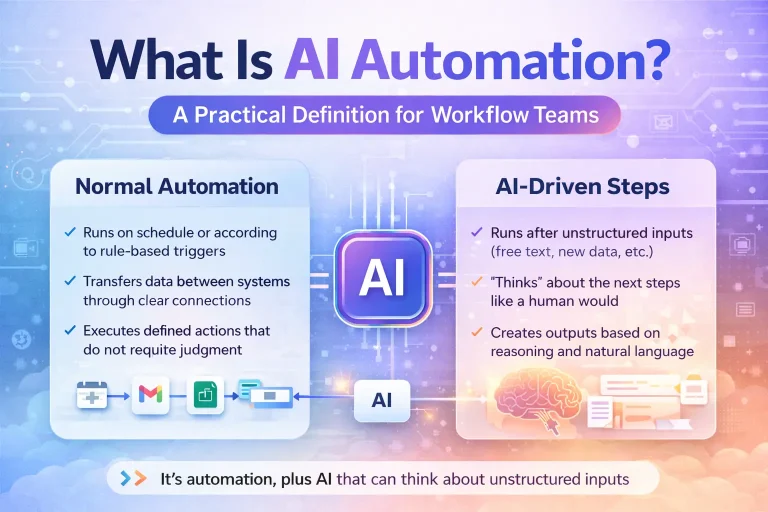
What Is AI Automation? A Practical Definition for Workflow Teams
This guide explains what AI automation actually means for workflow teams, not just in theory but in day-to-day operations. It covers how AI automation...
Read Guide
How to Build Human Approval into AI Workflows
This guide shows how to add human approval to AI workflows without turning automation into a manual queue. It focuses on approval boundaries, reviewer...
Read Guide
What Are Agent Guardrails
This guide explains what agent guardrails are, how they work in practice, and why they matter once an agent can call tools or take...
Read Guide