What Is OpenClaw and How Does It Work?
A practical introduction to OpenClaw, what it does, and when a self-hosted AI agent makes sense.
OpenClaw is an open-source AI agent platform that runs on your own machine and connects to chat apps, tools, and model providers. This guide explains what OpenClaw actually is, how it works, and where it fits compared with a normal chatbot or hosted AI assistant.
Related Tools




Details
OpenClaw is a self-hosted gateway for AI agents that connects chat channels such as WhatsApp, Telegram, Discord, and iMessage to an always-available assistant. In the current official docs, the project describes itself as a single Gateway process that routes messages, manages sessions, and lets users interact with agent workflows from familiar messaging apps rather than a standalone web app alone. It is MIT licensed, community-driven, and designed for people who want control over where the agent runs and how it is configured.
That description is important because OpenClaw is easy to misunderstand. It is not just another chatbot front end, and it is not exactly the same thing as a research agent like DeerFlow. OpenClaw is closer to an agent access layer and runtime gateway. It gives you a way to run an agent on your own machine or server, connect it to messaging channels, and manage sessions, routing, media, and basic control from a central hub.
What OpenClaw actually is
At its core, OpenClaw is a self-hosted agent gateway. The official documentation says one Gateway process can connect multiple chat apps at the same time, including WhatsApp, Telegram, Discord, and iMessage, while also exposing a browser-based control UI for chat, configuration, sessions, and nodes. It supports plugin channels, multi-agent routing, media handling, and mobile nodes for device-connected workflows.
In plain language, that means OpenClaw is built for a very specific use case: you want an AI assistant you can message from wherever you already work, and you do not want that assistant locked inside a single hosted product. Instead of opening a browser tab every time, you can interact with the system through the channels you already use on desktop or mobile.
This makes OpenClaw different from many “agent” tools that focus mainly on planning or research. OpenClaw is more about persistent access, orchestration across channels, and self-hosted control. The AI model itself is not the product. The gateway that manages the experience is the product.
How OpenClaw works
The official docs describe the Gateway as the system’s single source of truth for routing, sessions, and channel connections. You install OpenClaw, run its onboarding flow, configure authentication and channels, and then the Gateway becomes the bridge between users, messaging platforms, and the underlying agent stack.
1. A single gateway process
OpenClaw is designed around one main process rather than a scattered set of disconnected bots. That matters because messaging-based agents can become messy quickly when different channels each maintain their own state. OpenClaw centralizes this, which makes it easier to manage sessions, access control, and routing logic in one place.
2. Channel-based interaction
One of OpenClaw’s defining ideas is that the user interface can be a messaging platform rather than a dedicated app. The docs explicitly highlight support for WhatsApp, Telegram, Discord, and iMessage, with extensions for other channels such as Mattermost. This is a practical advantage for users who want agent access from their phone or team chat without building a custom client.
3. Agent routing and session isolation
OpenClaw also supports multi-agent routing and isolated sessions per agent, workspace, or sender. In practice, that means the system can keep conversations and workflows separated instead of dumping everything into one long context window. For teams or power users, this is one of the more useful parts of the architecture because it makes the system feel more like an operator console than a casual chatbot.
4. Control UI and configuration
Although messaging is the main access pattern, OpenClaw also includes a web-based control interface. The docs note that you can open a local dashboard in the browser for chat, configuration, session inspection, and node management. Configuration is stored locally, with the default config path under the user’s home directory.
What OpenClaw is good for
OpenClaw makes the most sense when the problem is not just “I need an answer” but “I need an assistant I can reach from multiple channels, keep running persistently, and control on my own infrastructure.” That distinction matters.
- Personal AI assistants that stay available through messaging apps
- Developer-facing assistants that need tool use, sessions, and persistent routing
- Team setups where different users or workspaces need separate agent contexts
- Mobile-first access to an AI workflow without relying on a browser-only interface
- Self-hosted agent systems where privacy, deployment control, or custom integrations matter
The official setup guidance also makes clear that OpenClaw can run locally or on a server, with a browser dashboard for fast testing even before channels are configured. That lowers the barrier somewhat for experimentation, but it is still fundamentally a self-hosted system rather than a casual SaaS tool.
What OpenClaw is not
It helps to be clear about what OpenClaw is not, because the broader AI agent category has become crowded.
It is not mainly a deep research framework
If your core need is web research, source collection, structured report writing, and multi-step research planning, something like DeerFlow will usually be a more direct fit. OpenClaw can still participate in those workflows if connected to the right agent stack, but that is not the main shape of the product.
It is not a no-code automation tool
OpenClaw is also not the same as n8n or Make. Those tools are better for trigger-based workflows, app-to-app automation, and business process routing. OpenClaw is more about agent access and orchestration through messaging and self-hosted sessions.
It is not a simple chat app for beginners
The docs list Node 22 or newer as a prerequisite and guide users through installation, onboarding, authentication, gateway setup, and optional channel pairing. That is manageable for developers and technical operators, but it is still more involved than signing into a hosted assistant.
Setup considerations before using OpenClaw
Infrastructure and runtime
The official getting started flow requires Node 22+, installation of the OpenClaw package or install script, and running the onboarding wizard. For many users, that is straightforward. For non-technical users, it may already be more setup than they want.
Model choice still matters
OpenClaw is not the model itself. The docs note that the default model is configurable and referenced in a provider/model format, and they recommend using the strongest model you can reasonably afford for high-stakes work. In other words, OpenClaw solves the gateway and orchestration layer, but output quality still depends heavily on the model behind it.
Security and access control matter a lot
This is one of the most important parts of evaluating OpenClaw. The project’s FAQ makes clear that not all data stays purely local in every sense: local state and config live on the Gateway host, but prompts still go to model providers and channel traffic still goes through messaging platforms. The docs also warn users to treat inbound DMs as untrusted input and describe pairing, allowlists, mentions, and token-based auth as part of the security model.
That is a more realistic framing than the simplistic claim that self-hosted automatically means everything is private. OpenClaw gives you more control, but your actual exposure still depends on model providers, channel platforms, and how carefully you configure the gateway.
Operational complexity grows with channels
As soon as an agent touches WhatsApp, Telegram, Discord, or mobile nodes, the system becomes more operationally sensitive. Authentication, remote access, media handling, and device pairing all add convenience, but they also add points of failure. This is part of the tradeoff of choosing a gateway-centric architecture.
Common mistakes people make when evaluating OpenClaw
Comparing it directly to a hosted AI assistant
OpenClaw and a hosted AI agent product may overlap at the use-case level, but they solve different problems. Hosted tools are usually about speed and convenience. OpenClaw is about ownership, routing, channel access, and self-hosted control.
Assuming self-hosting removes all risk
It does not. Channel providers and model APIs still see some of the traffic that passes through them. Self-hosting improves control, but it does not eliminate the need for careful security design.
Using it for the wrong category of work
OpenClaw is strongest when you want agent access through chat platforms and persistent self-hosted operation. If your job is mainly research planning, data collection, or report writing, a deep research tool may be a cleaner fit. If your job is app automation, a workflow builder may be cleaner still.
When OpenClaw makes sense for a workflow library
For a site like WorkflowLibrary.ai, OpenClaw is interesting because it sits at the intersection of agents, messaging, and self-hosted operations. It is not just another model wrapper. It is a distinct workflow foundation for people who want agents they can reach from real communication channels rather than from one browser tab.
That also means OpenClaw-related templates or guides should not be framed too generically. The best angle is usually one of these:
- how to run a self-hosted AI assistant through messaging apps
- how to configure OpenClaw for multi-channel agent access
- how OpenClaw compares with DeerFlow, OpenManus, or hosted agent products
- how to use OpenClaw as the access layer for an internal AI operator
Those are stronger editorial entry points than vague “AI agent” coverage because they match what the product actually does.
Final take
OpenClaw is best understood as a self-hosted gateway for AI agents, not just a chatbot and not just a research framework. Its official documentation emphasizes multi-channel messaging access, a central Gateway process, session routing, a browser control UI, local configuration, and self-hosted deployment with MIT-licensed open-source code.
If you want an assistant you can message from WhatsApp, Telegram, Discord, or similar channels while keeping the runtime on your own machine or server, OpenClaw is a meaningful tool to look at. If you mainly want deep research or app automation, it may not be the first tool to choose. The value of OpenClaw is not that it tries to do everything. It is that it gives agent workflows a durable, self-hosted access layer that fits how many people already communicate.
[workflowlibrary_related_templates]
Related Guides
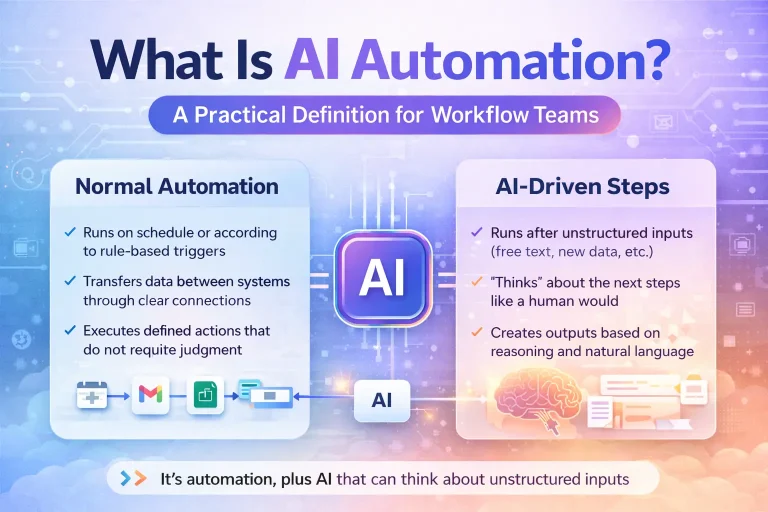
What Is AI Automation? A Practical Definition for Workflow Teams
This guide explains what AI automation actually means for workflow teams, not just in theory but in day-to-day operations. It covers how AI automation...
Read Guide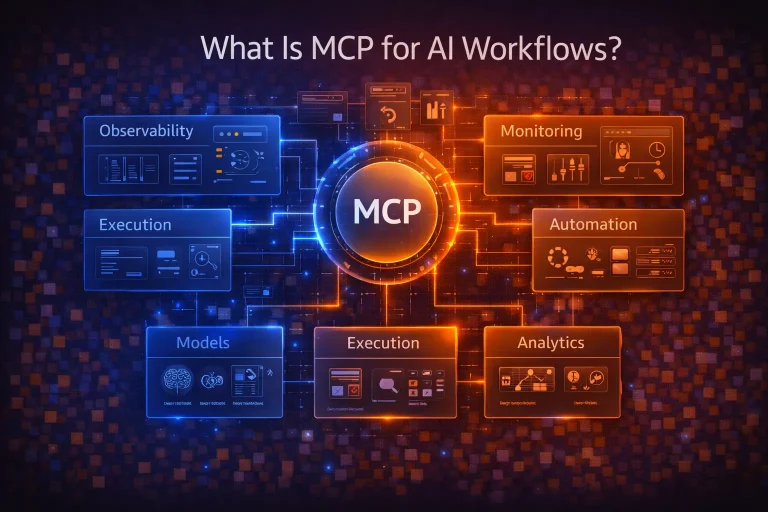
What Is MCP for AI Workflows?
This guide explains MCP for AI workflows in practical terms, including how it changes tool access, where it fits, and what it does not...
Read Guide
What Is the n8n MCP Server?
This guide explains the n8n MCP server in practical terms, including how it works, what it is for, and where it fits in an...
Read Guide