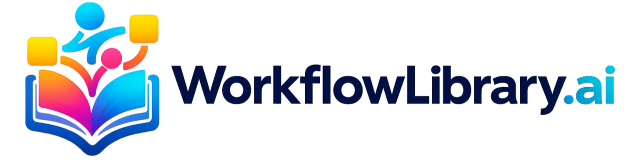
n8n vs LangGraph: Which One Fits AI Workflows Better?
A practical comparison of n8n and LangGraph for teams deciding between operational AI workflows and code-first agent orchestration.
This guide compares n8n and LangGraph across ease of use, integration depth, stateful orchestration, and team fit so you can choose the right layer for AI workflows.
Related Tools
Details
Choose n8n if your priority is operational AI workflows that connect models to business systems quickly. Choose LangGraph if your priority is building stateful, code-first agent systems with explicit control over graph behavior, persistence, and human-in-the-loop patterns. That is the clearest useful verdict.
The main mistake in this comparison is assuming one of these tools replaces the other directly. They overlap around AI workflows, but they solve different layers. n8n is an automation and orchestration platform that now supports AI agents and MCP workflows. LangGraph is a programming-first framework for building long-running, stateful agent applications with durable execution and human oversight capabilities.
What each option is
n8n is a workflow automation platform with hosted and self-hosted deployment paths, strong integration capabilities, and a growing AI agent focus. It is especially useful when the agent must interact with CRMs, spreadsheets, messages, APIs, internal tools, and operational workflows.
LangGraph is part of the LangChain ecosystem and is designed for graph-based orchestration of stateful agents. Its official documentation emphasizes durable execution, comprehensive memory, and human-in-the-loop control. It is best suited to developers building custom agent logic in code.
Quick comparison table
| Option | Best for | Main strength | Main limitation | Skill level |
|---|---|---|---|---|
| n8n | Operational AI workflows and system integration | Fast integration with business tools and actions | Less control over deep agent architecture | Intermediate |
| LangGraph | Stateful code-first agents | Graph control, durability, memory, human-in-the-loop | Higher engineering overhead and less turnkey ops integration | Advanced |
Which one is easier?
n8n is easier for most teams, especially when the goal is to get an AI-powered workflow into production without building a custom orchestration framework. It is more visual, more operational, and more immediately useful when the workflow ends in actions across business systems.
LangGraph is harder because it is code-first and expects you to think in graphs, state, interrupts, and execution flow. That extra complexity is justified when those architectural concerns are the real problem to solve.
Which one is more flexible?
This depends on what kind of flexibility you mean. n8n is more flexible at the system-integration layer. It is easier to connect APIs, CRMs, spreadsheets, databases, and messaging tools into one practical flow. LangGraph is more flexible at the agent-orchestration layer. It gives developers finer control over state, branching, memory, resume behavior, and human review patterns.
If your main workflow complexity comes from external systems and business actions, n8n is usually the more useful flexibility. If your complexity comes from how the agent thinks and progresses over time, LangGraph has the stronger ceiling.
AI agents and long-running execution
LangGraph has the stronger story for long-running, stateful agent execution. Its official docs highlight durable execution and memory as core capabilities. That matters when an agent must pause, persist state, wait for human input, and resume without losing context.
n8n can absolutely support AI agents in a practical business sense, but it is not primarily an agent architecture framework. It is better when the AI layer is embedded inside an operational workflow rather than when the agent runtime itself is the main engineering concern.
Integrations and operational delivery
n8n wins clearly here. If your use case touches SaaS systems, internal tools, message channels, spreadsheets, CRMs, or structured workflow actions, n8n will usually get you to production faster. It has the advantage of being built around connectors, API work, and downstream action flows.
LangGraph can still integrate with anything a developer can wire up, but that is not the same as being an automation platform. The work is more custom, and the burden sits more heavily on engineering.
Best fit by use case
Choose n8n when:
- You need an AI workflow that ends in business actions.
- You want self-hosted operational automation with AI steps.
- You need faster delivery for internal assistants, research flows, or lead workflows.
- You want templates and visual workflow control to reduce setup time.
Choose LangGraph when:
- You are building a code-first agent system where graph logic matters.
- You need durable execution, state persistence, and custom memory patterns.
- You expect human-in-the-loop control to be a first-class architectural requirement.
- You have engineering resources and want a higher customization ceiling.
Tradeoffs and common mistakes
The biggest mistake is choosing LangGraph for a problem that is mostly system integration. That usually creates more engineering work than the use case requires. The opposite mistake is choosing n8n for an agent platform problem where state management, interruptions, and graph control are the real source of complexity.
Another mistake is ignoring team ownership. If operations or growth teams need to participate in maintaining the flow, n8n is usually easier to operationalize. If the workflow belongs entirely to engineers and is becoming application logic, LangGraph is more natural.
Templates, frameworks, and where each helps
n8n templates can save significant time for operational AI workflows because they shorten the distance from trigger to action. LangGraph does not play the same template game. Its value comes from architectural control, not prebuilt workflow shells. That difference alone is often enough to reveal which tool fits your need.
FAQ
Is n8n better than LangGraph?
It is better for operational AI workflows and system integration. LangGraph is better for code-first stateful agent orchestration.
Can n8n replace LangGraph?
Sometimes, yes, if your actual need is operational automation with AI steps rather than custom agent architecture.
Can LangGraph replace n8n?
It can, but only with more engineering work. It is not the faster default for business-system automation.
Which one is better for internal AI assistants?
n8n is often better when the assistant needs to fetch records and trigger actions across systems. LangGraph is better when the assistant itself needs a more customized runtime and state model.
Conclusion
n8n and LangGraph are best understood as tools for different layers of AI workflow building. n8n is better when AI needs to drive operational workflows across real systems. LangGraph is better when the agent’s stateful runtime and orchestration logic are the core engineering problem. If you choose based on where your complexity actually lives, the decision usually becomes much easier.
Related Guides
Workato Pricing in 2026: What It Really Costs
This guide explains how Workato pricing works in 2026 and what enterprise buyers are actually paying for beyond the surface-level contract. It is designed...
Read Guide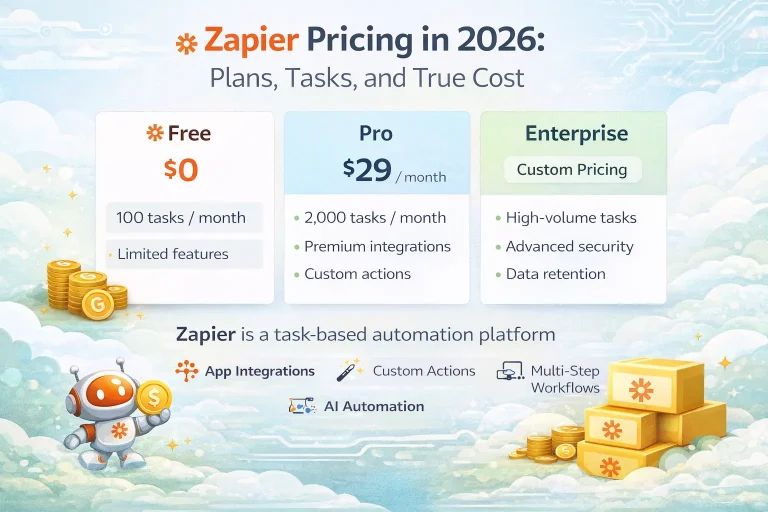
Zapier Pricing in 2026: Plans, Tasks, and True Cost
This guide explains Zapier pricing in 2026 and where the true cost comes from once workflows move beyond simple automations. It is written for...
Read Guide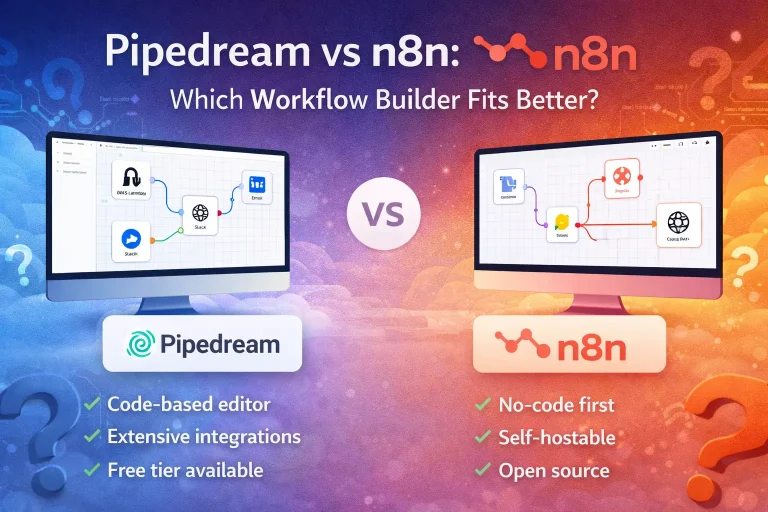
Pipedream vs n8n: Which Workflow Builder Fits Better?
This guide compares Pipedream and n8n for technical workflow teams, with a focus on developer experience, visibility, self-hosting, integrations, and pricing logic. It is...
Read Guide