
Microsoft Agent Framework vs LangGraph
A practical comparison of Microsoft Agent Framework and LangGraph for teams choosing a code-first agent orchestration framework.
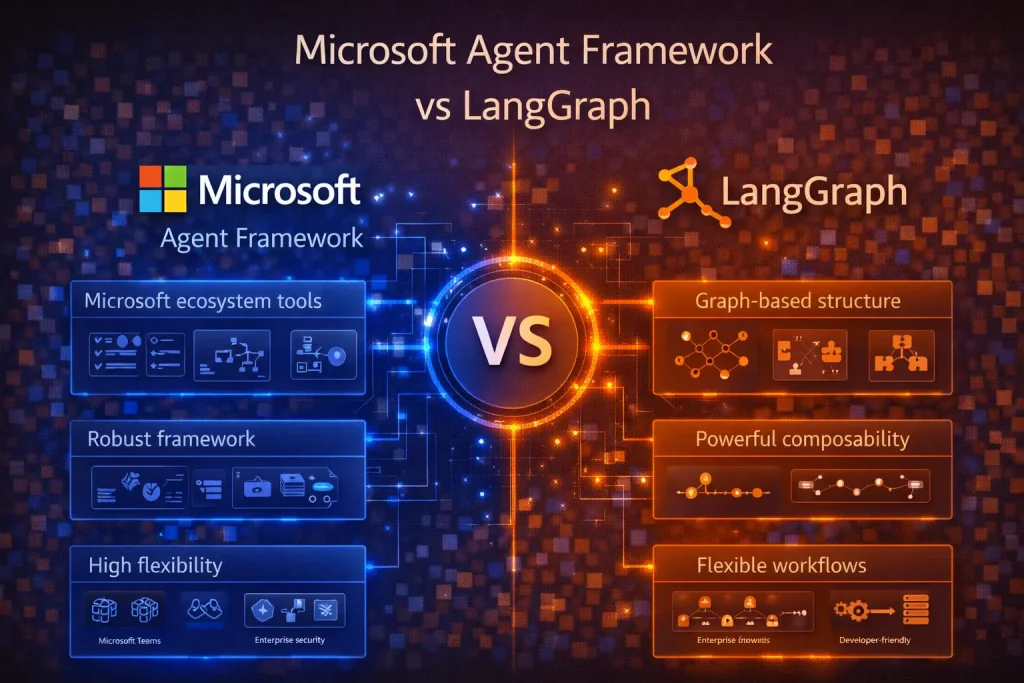
This guide compares Microsoft Agent Framework and LangGraph across orchestration model, ecosystem fit, language support, and production tradeoffs.
Related Tools

Details
LangGraph is the stronger choice if you want graph-based control, durable execution, and an agent framework already associated with stateful orchestration patterns. Microsoft Agent Framework is the more interesting choice if your team wants Python or .NET support, a newer framework built around agent and workflow concepts, and a path that fits enterprise Microsoft environments.
This comparison matters because these tools sit closer together than many buyers first assume. Both target code-first agent systems rather than visual workflow automation. Both are relevant for multi-step AI systems. But they come from different design contexts and are likely to feel very different in day-to-day development.
What each framework is
LangGraph is a framework for building stateful, graph-based agent systems with emphasis on control, durable execution, and human-in-the-loop patterns.
Microsoft Agent Framework is Microsoft’s newer code-first framework for building and orchestrating AI agents and multi-agent workflows in Python and .NET. Microsoft positions it as a successor built from the experience of the AutoGen and Semantic Kernel teams.
Quick comparison table
| Framework | Best for | Main strength | Main limitation | Skill level |
|---|---|---|---|---|
| LangGraph | Developers who want graph-native control | Durable execution and explicit orchestration patterns | More engineering-heavy than many teams expect | Advanced |
| Microsoft Agent Framework | Enterprise teams using Python or .NET | Strong multi-agent and workflow orientation with Microsoft ecosystem relevance | Newer framework with evolving ecosystem | Intermediate to Advanced |
Ease of use
Neither tool is designed for absolute beginners. LangGraph can feel conceptually heavy because it asks you to think in graphs, state, and control flow. Microsoft Agent Framework can be easier to justify in organizations already comfortable with Microsoft-oriented engineering patterns, especially when .NET support matters.
Control and orchestration model
LangGraph has a stronger identity around graph-based orchestration. That makes it attractive when the agent system must be designed as a controlled state machine rather than a loose chain of calls.
Microsoft Agent Framework also supports workflow-oriented thinking, but its selling point is broader than graph purity. It aims to cover agent construction, orchestration, and enterprise-friendly workflow patterns in one framework family.
Language and ecosystem fit
LangGraph is most naturally associated with Python-centric agent development patterns. Microsoft Agent Framework stands out because Microsoft explicitly supports both Python and .NET.
Production fit
LangGraph is compelling when observability, checkpoints, and human review need to be designed into the orchestration model from the start. Microsoft Agent Framework is compelling when enterprise compatibility, multi-agent workflows, and organizational fit matter as much as the raw orchestration model.
Which one should you choose?
- Choose LangGraph if you want graph-first orchestration and are comfortable with a more explicit control model.
- Choose Microsoft Agent Framework if your team values Python plus .NET support, wants a newer Microsoft-backed agent framework, or expects deeper enterprise alignment.
- Choose neither yet if your use case is still a bounded workflow with tool calls and business actions. A workflow platform may be the better first step.
Common mistakes
- Treating framework choice as a brand choice instead of a control-model choice.
- Assuming a code-first agent framework is necessary before validating the business workflow.
- Overlooking language and org fit, especially when .NET matters.
- Comparing features without comparing how the system will actually be operated.
FAQ
Is Microsoft Agent Framework replacing Semantic Kernel or AutoGen?
Microsoft describes Agent Framework as a direct successor built from the work of the Semantic Kernel and AutoGen teams, which makes it a strategic framework to watch.
Is LangGraph more mature for graph-style orchestration?
That is the current perception many developers bring to the comparison, especially around durable, graph-based control patterns.
Can these frameworks work with workflow tools?
Yes. Many teams may combine a code-first framework with a workflow platform for action execution and business system orchestration.
Conclusion
Choose LangGraph when graph-native control is the center of the design. Choose Microsoft Agent Framework when enterprise fit, Microsoft ecosystem alignment, and dual Python or .NET support matter more.
Related Guides
Workato Pricing in 2026: What It Really Costs
This guide explains how Workato pricing works in 2026 and what enterprise buyers are actually paying for beyond the surface-level contract. It is designed...
Read Guide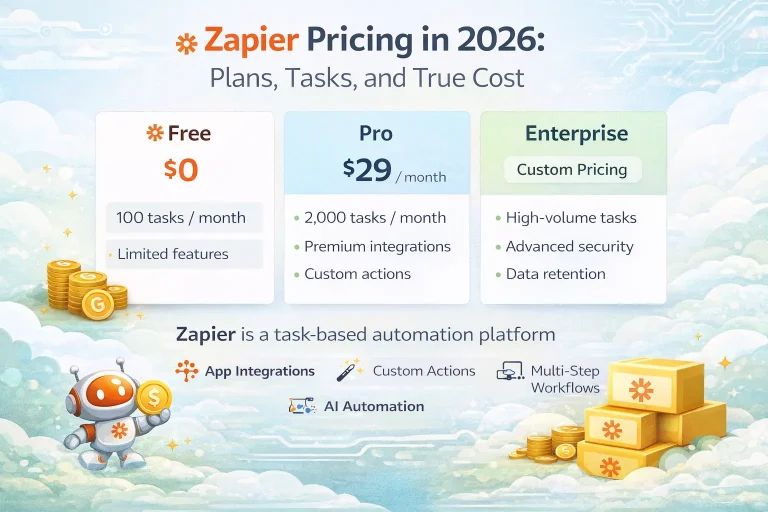
Zapier Pricing in 2026: Plans, Tasks, and True Cost
This guide explains Zapier pricing in 2026 and where the true cost comes from once workflows move beyond simple automations. It is written for...
Read Guide
Pipedream vs n8n: Which Workflow Builder Fits Better?
This guide compares Pipedream and n8n for technical workflow teams, with a focus on developer experience, visibility, self-hosting, integrations, and pricing logic. It is...
Read Guide