
MCP vs Traditional API Integrations for AI Workflows
MCP is better for reusable agent tooling, while traditional API integrations are often faster for one fixed workflow.
This guide compares MCP with ordinary API-based integrations for AI workflows and explains when the extra protocol layer is worth it. The goal is not abstract architecture advice but a practical decision for builders and operators.

Details
If you are building an AI workflow, MCP is usually the better choice when you need reusable tool access across multiple clients or more structured agent behavior. Traditional API integrations are usually the better choice when the workflow is fixed, narrow, and unlikely to be reused outside one application. That is the short verdict.
The main difference is simple: traditional API integrations connect your workflow directly to each service, while MCP adds a standard client-server layer that describes tools, resources, and prompts in a reusable way. You pay for that extra abstraction with more setup and design work. You gain portability, discoverability, and a cleaner path for agent-style workflows.
What each option is
MCP
MCP is an open protocol for exposing tools, context, and related capabilities to AI clients. You publish an MCP server, the client connects, negotiates capabilities, and discovers what it can use. This makes MCP a good fit when several AI clients or agents need access to the same capability layer.
Traditional API integrations
A traditional API integration wires a workflow directly to the underlying service. Your code or automation platform decides when to call the API, what payload to send, and what to do with the response. This is still the default and often the simplest method for deterministic automations.
Quick comparison table
| Attribute | MCP | Traditional API integrations |
|---|---|---|
| Best for | Reusable agent tooling and multi-client access | Single workflow or fixed product feature |
| Main strength | Standard discovery and capability reuse | Direct control and faster narrow implementation |
| Main limitation | More architecture and governance work up front | More duplication as clients and tools multiply |
| Ease for beginners | Moderate | Usually easier |
| Cross-client portability | Strong | Weak |
| Best for advanced workflows | Stronger when workflows are agentic and tool-rich | Stronger when workflows are deterministic and tightly scoped |
Which one is easier to start with?
Traditional API integrations are easier to start with in most cases. If the workflow is “read form submission, enrich one record, write to CRM, send notification,” a direct API call or a no-code connector is usually quicker than introducing an MCP layer. There are fewer moving parts and fewer protocol decisions to make.
MCP becomes easier later, not earlier. Once you have multiple tools, multiple clients, or multiple agent workflows reusing the same business actions, direct integrations start to scatter across the stack. MCP centralizes those capabilities into a layer you can publish once and use many times.
Which one is more flexible?
MCP is more flexible if flexibility means runtime discovery, cross-client reuse, and cleaner separation between the AI client and the underlying systems. A client can ask what tools and resources are available instead of relying on a hard-coded list. That matters for agents that need to reason about what they can do.
Traditional APIs are more flexible if flexibility means low-level control over one specific implementation. You can shape every endpoint call, every retry rule, and every payload exactly as you want. The tradeoff is that your integration logic is often bound tightly to one workflow or one client.
Which option is better for beginners?
Beginners should usually start with direct APIs or existing automation connectors unless they already know they need multi-client agent infrastructure. The learning curve for MCP is not extreme, but it adds concepts such as capability negotiation, server design, and host-client boundaries that are unnecessary for many first workflows.
If your team is still validating whether the workflow itself is useful, direct integration is often the right first step. Once the pattern is proven and starts spreading across assistants or internal tools, MCP becomes a stronger candidate.
Which option is better for advanced AI workflows?
MCP is usually better for advanced AI workflows, especially when the model needs to discover tools dynamically, retrieve context from several systems, or operate inside a governed environment with human approvals. The protocol layer helps standardize how those capabilities are exposed.
Traditional APIs remain strong for advanced cases that require deep product-specific control, very high performance tuning, or a tightly constrained application that will never need to be reused by another client.
Integrations, ecosystem, and maintenance
With direct APIs, every additional client tends to create repeated work. The same CRM action may need to be defined in a web app, a support assistant, and an internal copilot separately. With MCP, those capabilities can be exposed once at the server layer and then consumed by different clients that support the protocol.
The maintenance tradeoff is important. MCP can reduce duplicated integration work over time, but it also introduces a shared layer that must be designed and governed carefully. If your team cannot maintain that layer, direct APIs may remain simpler overall.
Pricing and cost logic
The cost question is less about protocol licensing and more about implementation effort. Traditional integrations are usually cheaper for a single narrow workflow. MCP becomes cheaper in organizational terms when it prevents repeated integration work across teams or clients. In other words, MCP has more upfront design cost and potentially lower long-run duplication cost.
When a template changes the decision
Templates narrow the gap. If you have a prebuilt workflow for a common use case such as approvals, CRM updates, or internal knowledge lookup, the direct build path becomes less painful. But templates do not eliminate the underlying choice. A template on top of direct APIs is still client-specific. A template built around MCP is still more reusable across compatible clients.
Tradeoffs and common mistakes
- Choosing MCP too early: teams sometimes introduce MCP before they know whether the workflow is worth standardizing.
- Choosing direct APIs for everything: this works until the same capability has to be rebuilt across multiple assistants.
- Exposing too much through MCP: a good server should publish useful, scoped actions, not mirror an entire backend.
- Ignoring approval and permissions: neither approach is safe by default. Sensitive write actions still need governance.
FAQ
Should I replace all my current API integrations with MCP?
No. Replace them only where reuse, discovery, or cross-client compatibility creates enough value to justify the extra layer.
Can MCP and direct APIs coexist?
Yes. Many teams will use direct APIs for some workflows and MCP for reusable capability layers.
Which should I choose right now?
Choose direct APIs if the workflow is narrow and immediate. Choose MCP if you already know the capability needs to support several agents or clients over time.
Conclusion
MCP is not automatically better than traditional API integrations. It is better for a specific class of AI workflows: reusable, tool-rich, agent-oriented systems that benefit from standardized discovery and governance. Traditional API integrations remain the faster path for fixed workflows with clear boundaries. The right choice depends less on technical fashion and more on whether the capability needs to live beyond one app.
Related Guides

Workato Pricing in 2026: What It Really Costs
This guide explains how Workato pricing works in 2026 and what enterprise buyers are actually paying for beyond the surface-level contract. It is designed...
Read Guide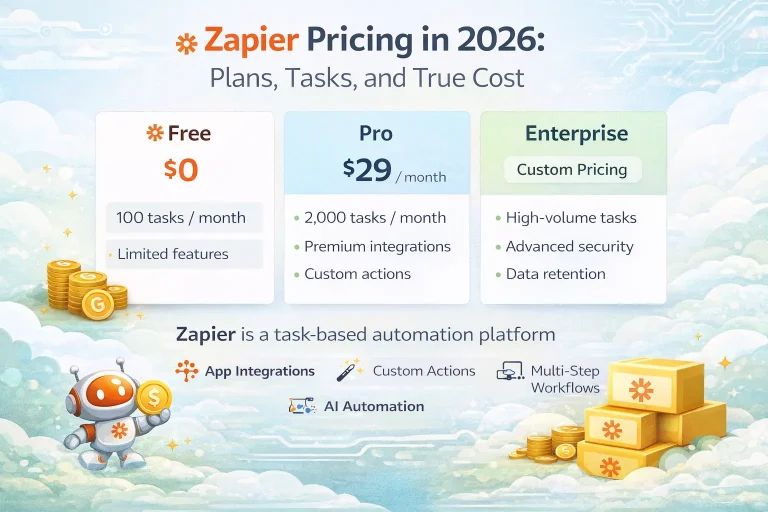
Zapier Pricing in 2026: Plans, Tasks, and True Cost
This guide explains Zapier pricing in 2026 and where the true cost comes from once workflows move beyond simple automations. It is written for...
Read Guide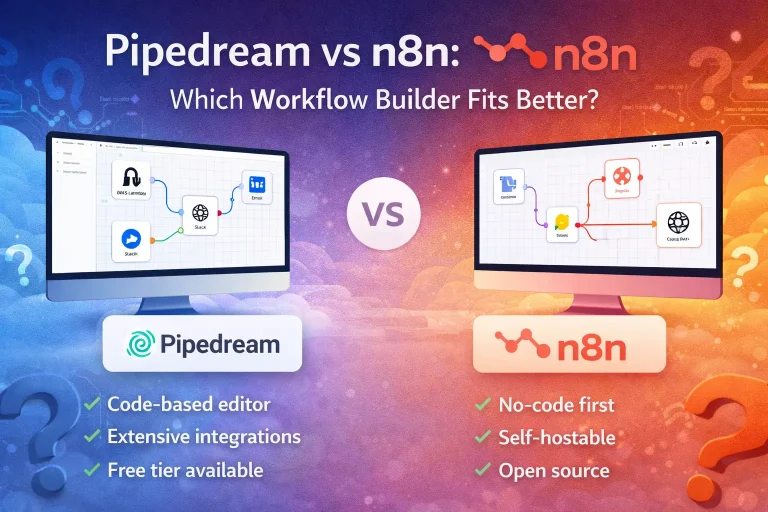
Pipedream vs n8n: Which Workflow Builder Fits Better?
This guide compares Pipedream and n8n for technical workflow teams, with a focus on developer experience, visibility, self-hosting, integrations, and pricing logic. It is...
Read Guide