
How to Build an n8n Research Workflow Automation Workflow with Google Docs, Google Sheets, and Google Drive
Build an n8n research workflow automation with Google Docs, Google Sheets, and Google Drive and verify the key logic before you scale it.
This guide shows how to set up an n8n research workflow automation using Google Docs, Google Sheets, and Google Drive. It focuses on the setup sequence, the fields and credentials that usually need work, and the checks that confirm the workflow is safe to run beyond a single test item.
Related Tools

Details
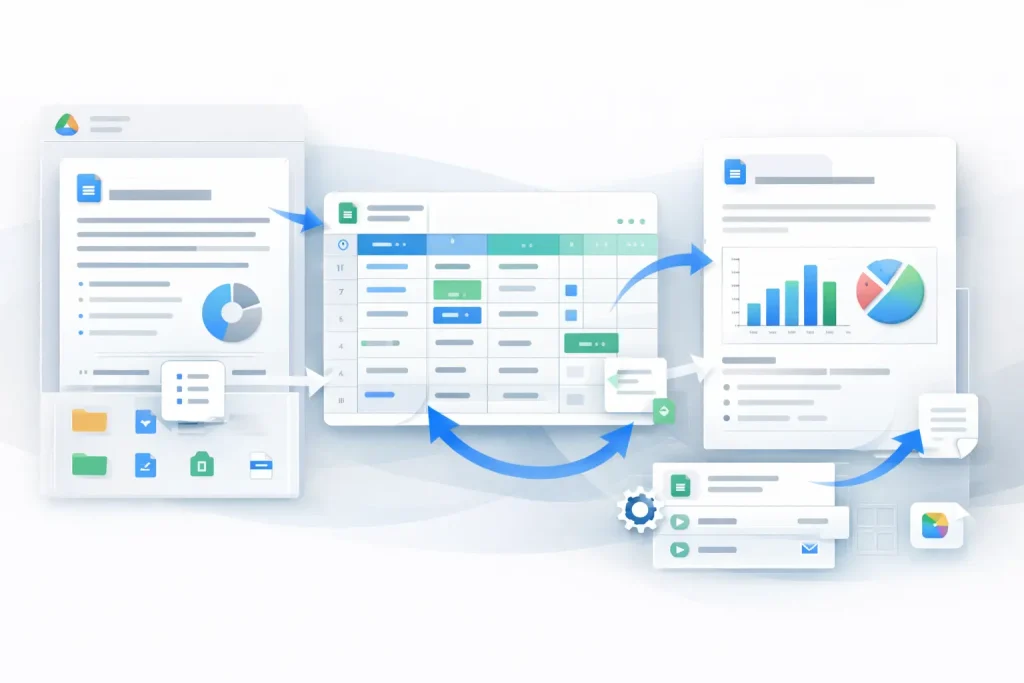
This tutorial shows how to build an n8n research workflow automation workflow with Google Docs, Google Sheets, and Google Drive. In practical terms, the flow starts by start from a manual run, passes through the processing steps that handle the core business logic, and finishes by write the final result to Google Docs. The goal is to get one clean end-to-end run first, then tighten credentials, field mapping, and branching before you turn the workflow into a repeatable system.
What you will build
You are building a repeatable research automation flow in n8n. This setup makes the most sense when gathering information manually is slowing down analysis or response time. It is usually faster to start from a template when the trigger, processing pattern, and destination app already match what your team is trying to automate.
- A trigger that starts the run by start from a manual run
- One or more processing steps that apply the main research automation logic
- A destination step that write the final result to Google Docs
- Connected tools for Google Docs, Google Sheets, and Google Drive
What you need before you start
- an n8n workspace with permission to import and edit workflows
- a working Google Docs credential or connected account inside n8n
- a working Google Sheets credential or connected account inside n8n
- a working Google Drive credential or connected account inside n8n
- one sample record, message, or payload so you can test the flow before turning on larger runs
This guide is most useful for research, strategy, and ops teams collecting, summarizing, or routing information. If your process changes heavily between customers or depends on business rules that do not appear in the imported nodes, treat the template as a starting point rather than a finished build.
Step-by-step setup
- Run the “Pinecone Vector Store” step.
- Run the “Embeddings Google Gemini” step.
- Run the “Default Data Loader” step.
- Run the “Recursive Character Text Splitter” step.
- Run the “Loop Over Items” step.
- Configure the trigger first and make sure it starts with the exact event, payload, or schedule you actually want in production.
How to test the workflow
- Run the flow once with a single sample item and confirm the trigger captures the fields you expect.
- Check the main processing step and make sure the next node receives the exact keys, IDs, or formatted output it needs.
- Verify that the final result appears in Google Docs, Google Sheets, and Google Drive once, in the right format, before you enable larger runs or schedules.
Common problems and fixes
The workflow succeeds but the destination app is empty or incomplete
Check credentials, required IDs, and field mapping. Most write steps fail quietly when a required column, property, or record key is missing.
You get duplicates during testing
Use one stable identifier such as email, domain, order ID, or message ID so the workflow can update or skip existing records instead of creating a new one on each run.
When to use a template instead of building from scratch
A prebuilt n8n template is usually enough when your input shape already matches the workflow and you mainly need to plug in credentials, rename fields, and test one or two routing decisions. If your process depends on unusual scoring, deep branching, custom validation, or multiple downstream systems, importing the template still saves setup time, but you should expect to edit the logic rather than treat the first import as final.
FAQ
What do I need before importing this workflow?
You need an n8n workspace, working credentials for Google Docs, Google Sheets, and Google Drive, and a sample event or record so you can test the flow end to end.
Can I use the template without changing anything?
Usually no. Most templates still need credential setup, field mapping, and at least one real test run before they match your actual workflow.
How do I know the workflow is ready for production?
Start with one controlled test item, confirm every major step behaves as expected, and check that the final result lands correctly in Google Docs, Google Sheets, and Google Drive before you scale it up.
Final implementation notes
The main value in this workflow comes from making the handoff between the trigger, the processing logic, and Google Docs, Google Sheets, and Google Drive consistent. Once one item passes through cleanly, you can decide whether to keep the template simple or extend it with extra validation, routing, retries, or reporting.
Related Templates
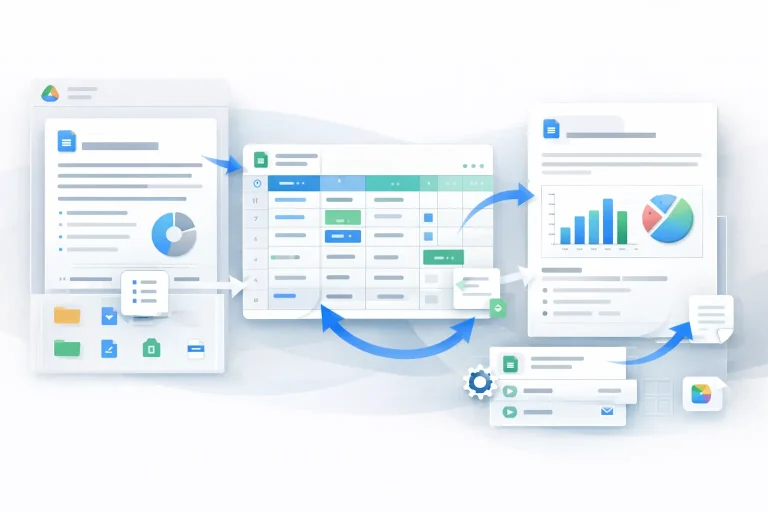
Research Workflow Automation Google Sheets Workflow Template
This workflow automates research workflow automation and keeps the output in sync across the tools used in the process.
View TemplateRelated Guides

How to Build a Self-Hosted Research Agent
This guide walks through how to build a self-hosted research agent, including the workflow layers you need, the setup order that works best, and...
Read Guide
How to Use MCP for CRM Automation
This guide explains how to use MCP for CRM automation in a way that is useful but still operationally safe. It focuses on bounded...
Read Guide
How to Use MCP for Internal Knowledge Search
This guide explains how to use MCP for internal knowledge search across documents, work data, and operational documentation. It focuses on retrieval design, permission...
Read Guide