
DeerFlow vs OpenManus
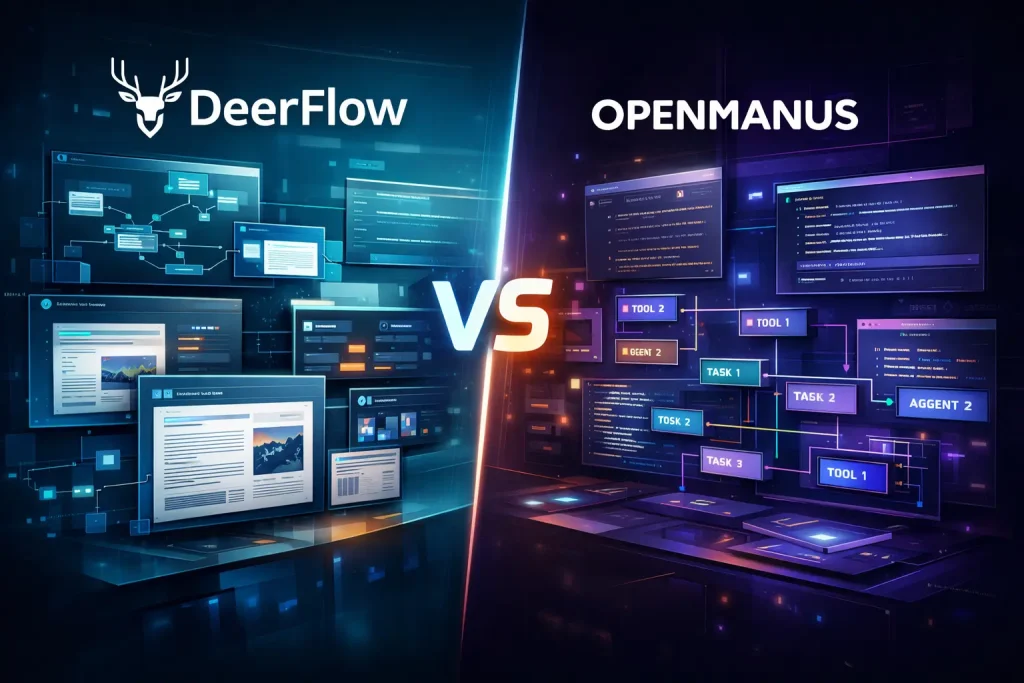
DeerFlow is better for a richer super-agent harness with memory and sandbox execution, while OpenManus is better as a lighter open framework for general AI agents.
This comparison helps technical users decide whether DeerFlow or OpenManus is the better open-source starting point for their agent stack.
Related Tools

Details
Verdict: choose DeerFlow if you want a richer open super-agent harness with sub-agents, memory, skills, and sandbox execution. Choose OpenManus if you want a lighter open framework for general AI agents and prefer to shape the rest of the stack yourself. DeerFlow is the more feature-complete harness; OpenManus is the more minimal general-agent starting point.
The main difference is architectural ambition. DeerFlow arrives with a clearer opinion about what a powerful agent system should contain. OpenManus is more open-ended as a general AI agent framework.
What each option is
DeerFlow is an open-source super-agent harness powered by LangGraph and built around sub-agents, memory, sandbox execution, skills, and a gateway layer.
OpenManus is an open-source framework for building general AI agents with tool integration. It is less obviously shaped as a full harness and easier to view as a framework layer.
Quick comparison table
| Option | Best for | Main strength | Main limitation | Skill level |
|---|---|---|---|---|
| DeerFlow | Complex open agent systems | Richer built-in capability surface | Higher complexity | Advanced |
| OpenManus | General open-agent building | Cleaner open framework starting point | Less feature-rich as a full harness | Intermediate |
Ease of use
OpenManus is easier to reason about if you simply want an open agent framework and do not yet know whether you need memory systems, sub-agents, or sandbox execution. DeerFlow asks you to adopt a bigger architectural worldview from the beginning.
That does not make DeerFlow worse. It just means DeerFlow is more naturally aimed at builders who already know they want a larger agent environment.
Flexibility and customization
Both are flexible because both are open. The difference is where the flexibility lives. DeerFlow gives you flexibility inside a more capable harness. OpenManus gives you flexibility by leaving more of the system for you to define.
If you want stronger default architectural depth, DeerFlow is better. If you want a thinner general-agent layer, OpenManus may be easier to adapt.
Workflow depth
DeerFlow has the stronger workflow story for long-running and multi-capability systems because of its memory, sandboxing, skills, and sub-agent structure. OpenManus is more general and therefore less specialized around that full super-agent pattern.
Best fit by use case
- Choose DeerFlow for open research-plus-execution systems, multi-agent workflows, and advanced builder use cases.
- Choose OpenManus for general agent experiments, self-hosted open alternatives, or cases where you want a simpler framework base.
Tradeoffs and limitations
The risk with DeerFlow is complexity overhead. Teams sometimes adopt a powerful harness before proving they need it.
The risk with OpenManus is the opposite: it can leave more of the heavy lifting to the team. That is acceptable if you want flexibility, but frustrating if you expected a near-finished platform.
FAQ
Which one is easier to start with?
OpenManus is usually easier to start with if you want a simpler open framework.
Which one is better for advanced workflows?
DeerFlow is better for advanced workflows because it ships with a richer system model.
Which one is more customizable?
Both are customizable, but DeerFlow gives you more built-in capability while OpenManus gives you a lighter base to customize.
Which one should I choose?
Choose DeerFlow if you already know you need a super-agent harness. Choose OpenManus if you want a more minimal general-agent framework.
Conclusion
DeerFlow is the stronger open choice for teams that want a more complete super-agent architecture. OpenManus is the better choice for teams that want an open general-agent framework without immediately committing to the heavier system surface.
Related Guides
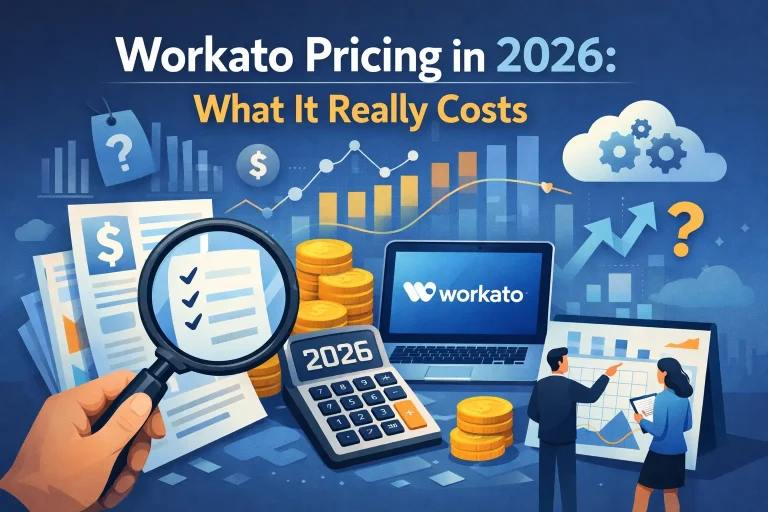
Workato Pricing in 2026: What It Really Costs
This guide explains how Workato pricing works in 2026 and what enterprise buyers are actually paying for beyond the surface-level contract. It is designed...
Read Guide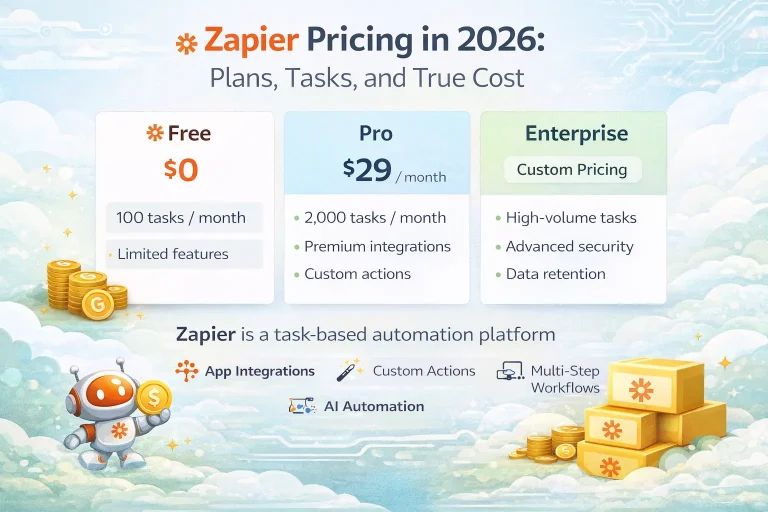
Zapier Pricing in 2026: Plans, Tasks, and True Cost
This guide explains Zapier pricing in 2026 and where the true cost comes from once workflows move beyond simple automations. It is written for...
Read Guide
Pipedream vs n8n: Which Workflow Builder Fits Better?
This guide compares Pipedream and n8n for technical workflow teams, with a focus on developer experience, visibility, self-hosting, integrations, and pricing logic. It is...
Read Guide