
Best n8n Workflows for AI Agents
A practical shortlist of the most useful n8n workflow patterns for AI agents and tool-driven automation.
This guide covers the n8n workflows that make the most sense for AI agents in real operations. It focuses on bounded agent patterns that create records, summaries, approvals, or actions rather than open-ended chat loops.
Related Tools
Details
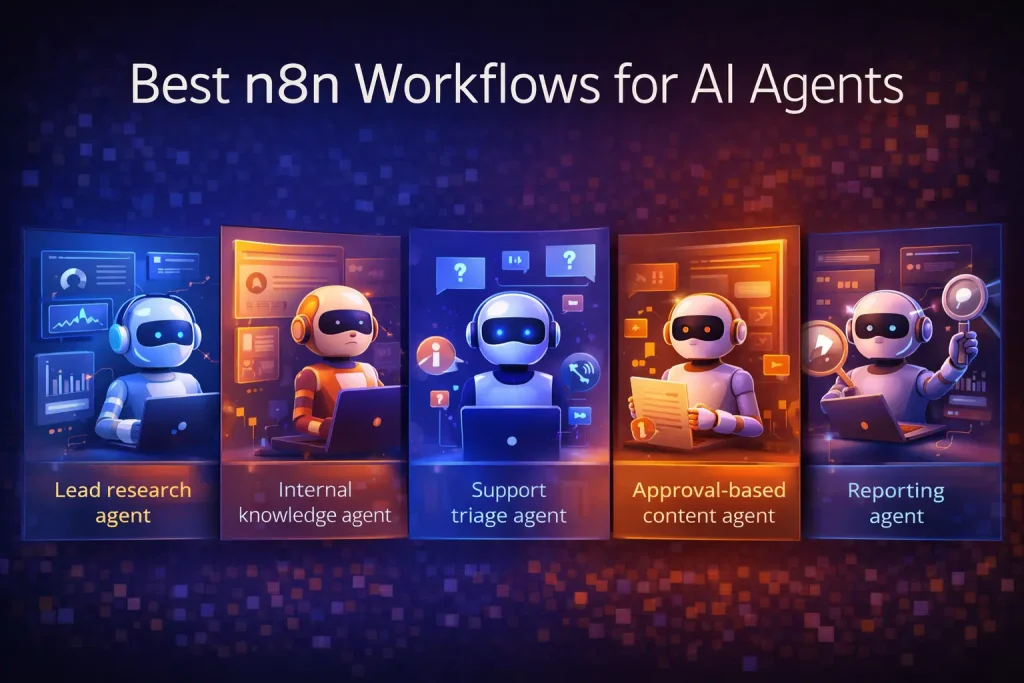
The best n8n workflows for AI agents are the ones that turn model output into controlled actions: lead research pipelines, internal knowledge lookup, ticket triage, report generation, approval-based content flows, and tool-driven internal assistants.
n8n is most useful when the agent needs more than chat. It becomes a workflow runtime that can fetch records, call APIs, route tasks, write structured outputs, and hand off to humans when needed.
How these workflows were selected
- Operational usefulness rather than novelty
- Clear handoff between model reasoning and deterministic workflow logic
- Real business outputs such as CRM records, summaries, support actions, or internal notifications
- Suitability for templates and repeatable setup
- Control over guardrails, approvals, and failure handling
Quick comparison table
| Workflow type | Best for | Why it works well in n8n | Main limitation |
|---|---|---|---|
| Lead research agent | Sales ops and outbound teams | Combines enrichment, prompts, scoring, and CRM writes | Needs careful source quality control |
| Internal knowledge agent | Ops and internal support | Routes questions to docs, sheets, or databases with structured outputs | Retrieval quality depends on your knowledge sources |
| Support triage agent | Support teams | Classifies tickets and routes them with rules and context | Bad taxonomy design creates noisy routing |
| Approval-based content agent | Marketing and content ops | Drafts content, sends for review, then publishes or stores | Still needs human review policy |
| Reporting agent | Operations and leadership updates | Turns multiple sources into recurring summaries | Narrative quality depends on input structure |
Lead research and enrichment agents
This is one of the strongest uses of n8n for AI agents. A trigger can start from a form, a spreadsheet row, a CRM record, or a prospecting source. The workflow then enriches a company or contact, summarizes relevance, scores fit, and writes structured fields back into a CRM or sheet.
Internal knowledge and research agents
An internal knowledge agent in n8n usually takes a question, fetches relevant internal data sources, runs a structured summarization step, and delivers an answer into Slack, email, or an internal tool. The strength here is orchestration. You can decide exactly which systems are queried and what the answer format must look like.
Support triage and routing agents
Support teams can use n8n to classify inbound tickets, detect urgency, identify likely category, and route items to the right queue. This works best when the model is used for interpretation and the workflow handles the actual routing, tagging, and notification logic.
Approval-based content and publishing agents
n8n is well suited to content workflows where the model drafts, rewrites, or summarizes, but a human still approves before publication. A content agent can collect source material, generate a structured draft, send it to review, and publish only after approval.
Reporting and recap agents
This pattern is useful for weekly sales recaps, research digests, ops summaries, or project update briefs. The workflow collects records from multiple tools, normalizes the input, asks the model to summarize changes, and sends a stable output to Slack, email, or docs.
Which n8n agent workflows are best for which teams?
- Sales teams: lead enrichment, account research, and contact prioritization.
- Operations teams: internal knowledge lookup, recurring reports, and request triage.
- Support teams: categorization, escalation detection, and queue routing.
- Content teams: research-to-draft workflows with explicit review checkpoints.
Common mistakes
- Treating an agent workflow like an autonomous black box instead of a controlled process.
- Skipping structured outputs and relying on free-form model text.
- Using AI for steps that should remain deterministic, such as field mapping or rule-based routing.
- Assuming a template is production-ready before prompts, data mappings, and guardrails are adjusted.
FAQ
Is n8n good for fully autonomous agents?
It can support agent-like flows, but it is usually strongest when the work is bounded and outcome-oriented rather than open-ended.
Do I need a separate agent framework?
Not always. If your main need is tool orchestration, API calls, approvals, and business actions, n8n may be enough. A dedicated framework becomes more attractive when you need more complex memory, graph-based orchestration, or agent-native programming patterns.
Should I start from a template?
Yes, especially for common patterns like lead routing, content workflows, and report generation. Templates shorten setup but do not remove the need for testing and business-specific editing.
Conclusion
The best n8n workflows for AI agents are the ones that connect model reasoning to concrete operational outcomes. Start with bounded workflows that produce records, decisions, and handoffs. That is where n8n creates the most practical value.
Related Templates
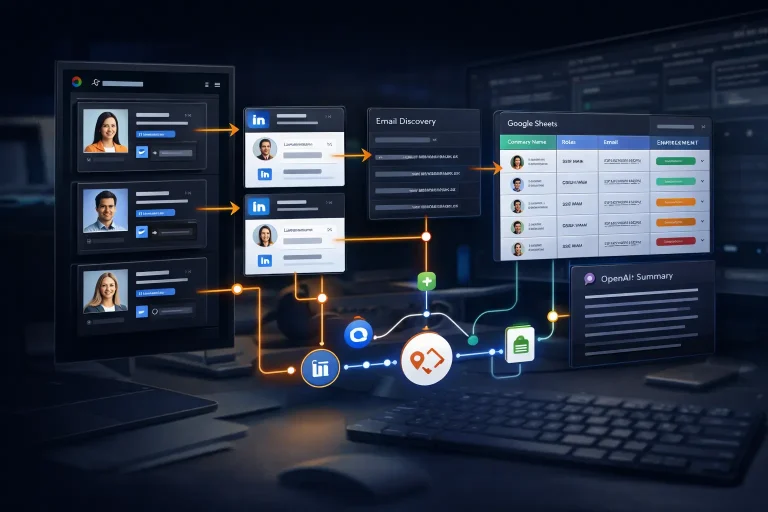
LinkedIn Lead Generation & Enrichment n8n Workflow Template
Collect LinkedIn prospects, enrich their contact and profile data, and organize the final output in Google Sheets with a multi-step n8n workflow.
View Template
Support Ticket Routing Google Drive Workflow Template
This workflow automates support ticket routing and keeps the output in sync across the tools used in the process.
View Template
Reporting Workflow Automation Google Analytics Workflow Template
This workflow automates reporting workflow automation and keeps the output in sync across the tools used in the process.
View TemplateRelated Guides
Workato Pricing in 2026: What It Really Costs
This guide explains how Workato pricing works in 2026 and what enterprise buyers are actually paying for beyond the surface-level contract. It is designed...
Read Guide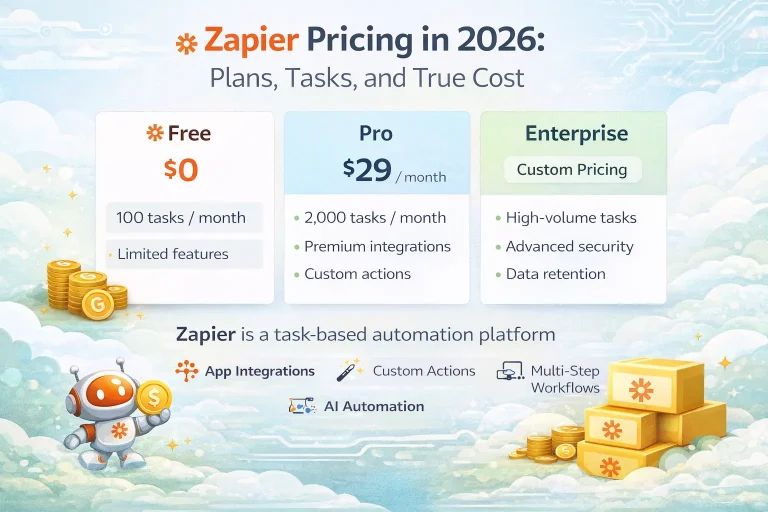
Zapier Pricing in 2026: Plans, Tasks, and True Cost
This guide explains Zapier pricing in 2026 and where the true cost comes from once workflows move beyond simple automations. It is written for...
Read Guide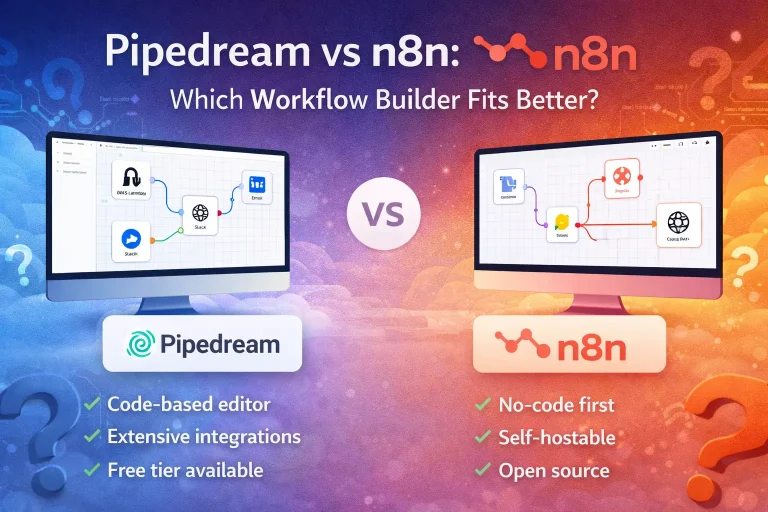
Pipedream vs n8n: Which Workflow Builder Fits Better?
This guide compares Pipedream and n8n for technical workflow teams, with a focus on developer experience, visibility, self-hosting, integrations, and pricing logic. It is...
Read Guide